
The idea of collecting $5,000 per month in dividend income — $60,000 per year — without selling a single share might sound like a fantasy. But the math is surprisingly achievable for disciplined investors who start early enough and follow a systematic approach. You don’t need to pick the next big thing or time the market. You need patience, consistency, and a basic understanding of dividend growth investing.
The Math Behind $5,000 per Month
To generate $60,000 in annual dividend income, the portfolio size you need depends entirely on your average dividend yield:
At a 3% yield: $2,000,000 portfolio. At a 4% yield: $1,500,000 portfolio. At a 5% yield: $1,200,000 portfolio.
These are large numbers — but they’re achievable over 20 to 25 years with consistent investing. A 30-year-old investing $1,500 per month in dividend growth stocks averaging 10% total return (7% price appreciation plus 3% dividend yield, with dividends reinvested) would accumulate approximately $1.37 million by age 50. With dividend growth increasing the yield on original cost, the actual income generated would likely exceed $5,000 per month.
The secret weapon is time. Dividend reinvestment creates a compounding loop: dividends buy more shares, which generate more dividends, which buy more shares. Albert Einstein may not have actually called compound interest the eighth wonder of the world, but dividend reinvestment compounding makes a strong case for the attribution.
The Dividend Growth Strategy
Not all dividend stocks are created equal. The strategy that builds lasting income focuses on dividend growth — companies that consistently increase their payouts — rather than simply chasing the highest current yield.
Why growth beats yield. A stock yielding 2% today that increases its dividend by 10% annually will yield 5.2% on your original investment after 10 years and 13.4% after 20 years. Meanwhile, a stock yielding 7% today with no growth will still yield 7% in 20 years — and likely has declining business fundamentals that threaten even that payout.
The Dividend Aristocrats — S&P 500 companies with 25+ consecutive years of dividend increases — have outperformed the broader market with lower volatility over virtually every long-term measurement period. These companies represent the gold standard of dividend reliability.
The three tiers of a dividend portfolio:
Tier 1: Foundation (60% of portfolio) — Dividend growth blue chips. Companies like Johnson & Johnson, Procter & Gamble, Coca-Cola, and Microsoft have raised dividends for decades. Current yields of 1.5% to 3% with dividend growth rates of 6% to 12% annually. These form the reliable backbone of your income stream.
Tier 2: Accelerator (25% of portfolio) — Higher-yield income producers. REITs, utilities, midstream energy companies, and telecoms yielding 4% to 6%. These boost current income while the growth tier compounds. Select companies with payout ratios below 75% and histories of maintaining dividends through recessions.
Tier 3: Opportunistic (15% of portfolio) — Special situations. Business development companies, closed-end funds, and preferred stocks yielding 6% to 9%. These carry more risk but can significantly boost current income. Position sizes should be smaller, and diversification within this tier is essential.
The Reinvestment Phase vs. The Income Phase
The journey to $5,000/month has two distinct phases:
Phase 1: Accumulation (ages 25-45). During this phase, every dividend gets reinvested. You’re buying more shares, not taking income. Your focus should be heavily weighted toward Tier 1 dividend growth stocks that are compounding at the fastest rate. The power of reinvestment during this phase cannot be overstated — delaying even one year costs significantly due to the compounding you miss.
Phase 2: Transition (ages 45-50). As you approach your income target, gradually shift new contributions toward Tier 2 and Tier 3 holdings to boost current yield. Simultaneously, begin turning off dividend reinvestment in your highest-yielding positions and directing that income to cash.
Phase 3: Income (age 50+). Stop reinvesting dividends entirely and begin living on the income. By this point, your Tier 1 holdings should be yielding 5%+ on your original cost basis due to years of dividend growth, and your Tier 2 and 3 holdings are generating higher current income.
Tax-Efficient Dividend Investing
Qualified dividends are taxed at preferential rates (0%, 15%, or 20%, depending on your taxable income). To maximize after-tax income:
Hold dividend stocks in taxable brokerage accounts for the qualified dividend tax rates. Use your Roth IRA for your highest-growth holdings — the tax-free growth is more valuable for compounding than for current income. Hold REITs and BDCs in tax-advantaged accounts (401k, IRA) because their dividends are typically taxed as ordinary income.
Optimizing your overall tax strategy alongside your dividend-income plan can add thousands of dollars in after-tax income annually.
The Risks to Monitor
Dividend cuts. Even great companies occasionally cut dividends. GE, once a blue-chip dividend stalwart, eliminated its dividend almost entirely in 2018. Diversification across 25 to 30 individual stocks (or broad dividend ETFs) helps mitigate single-company risk.
Interest rate sensitivity. When interest rates rise, high-yield stocks often decline because bonds become more competitive for income investors. This price volatility doesn’t affect your dividend income — the checks keep coming — but it can be psychologically challenging.
Inflation erosion. If your dividends aren’t growing, inflation is eating your purchasing power. This is why dividend growth stocks are essential — they provide a natural inflation hedge through rising payouts. A retirement plan that ignores inflation is a plan that slowly fails.
A Realistic Timeline
Starting at age 30 with $0 and investing $1,500/month:
By age 35: Portfolio value ~$120,000, generating ~$3,000/year in dividends. By age 40: Portfolio value ~$330,000, generating ~$11,000/year. By age 45: Portfolio value ~$680,000, generating ~$27,000/year. By age 50: Portfolio value ~$1,350,000, generating ~$60,000/year ($5,000/month).
These projections assume a 10% total annual return, with a 3% average yield and 7-8% annual dividend growth — conservative assumptions based on historical Dividend Aristocrat performance.
The Bottom Line
Building $5,000 per month in dividend income is a marathon, not a sprint. It requires 20 years of consistent investing, disciplined reinvestment, and the patience to let compounding work. But the end result — a growing income stream that arrives monthly without selling assets, without timing the market, and without relying on Social Security — represents one of the most durable paths to financial independence available to any investor.
Image Credit: Jeff Stapleton; Pexels
Related Reading
Want the full framework behind these numbers? Read our guide to dividend investing for retirees.
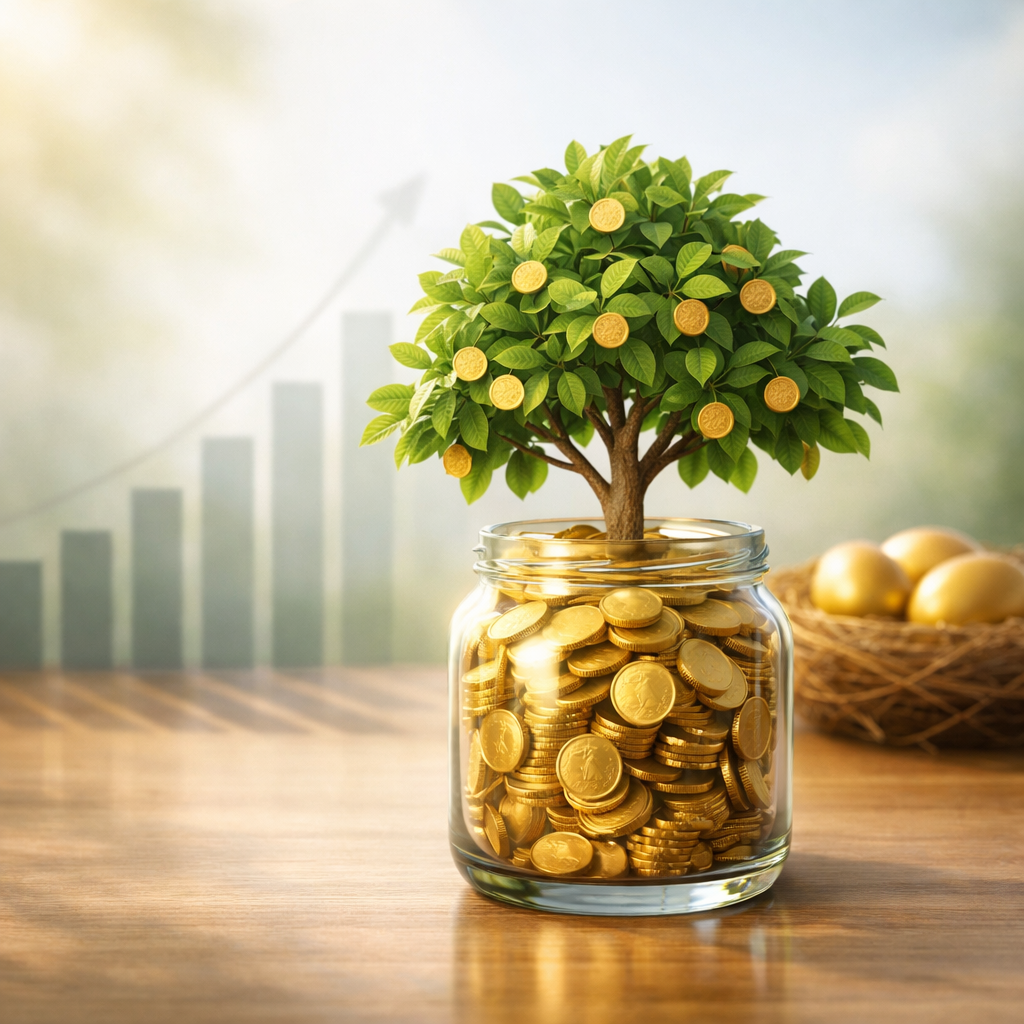
How to Build $5,000 a Month in Dividend Income
Reaching $5,000 a month in dividend income — $60,000 a year — comes down to three levers you control: how much you invest, the average yield you earn, and how long you let dividends compound. There is no shortcut around the portfolio size required, but disciplined investors reach it by reinvesting every payout for two decades and choosing companies that raise their dividends year after year. Treat it as a system, not a stock-picking contest.
Start with the right account and the right yield
Where you hold your dividend stocks matters as much as which ones you buy. Qualified dividends in a taxable account get preferential tax rates, while REITs and higher-yield holdings are usually better off inside a 401(k) or IRA. Pair a dividend core with broad, low-cost funds — see our picks for the best index funds for retirement and the best Vanguard dividend ETFs to anchor the portfolio.
Reinvest first, then switch to income
In the accumulation years, reinvest every dividend so each payout buys more shares that pay still more dividends. This is the same snowball behind the best compound interest investments for retirement. As you approach your income target, shift toward higher-yield holdings and turn off reinvestment. For a famously simple allocation, many investors lean on Warren Buffett’s 90/10 rule.
Key Takeaways
- At a 3–5% average yield, $5,000 a month requires roughly a $1.2M–$2M portfolio — reachable over 20–25 years of steady investing.
- Dividend growth beats raw yield: rising payouts lift your yield on cost and hedge inflation over time.
- Reinvest dividends during accumulation, then switch to taking income as you near your goal.
- Hold tax-inefficient, high-yield assets in tax-advantaged accounts; keep qualified-dividend payers in taxable accounts.
- Diversify across 25–30 holdings or broad dividend funds to survive the occasional dividend cut. Compare other high-return investments for retirement too.
Frequently Asked Questions
How much do you need invested to make $5,000 a month in dividends?
It depends on your average yield. At a 3% yield you would need about $2 million; at 4%, roughly $1.5 million; at 5%, around $1.2 million. Because dividend growth raises your yield on original cost over time, investors who start early often hit $5,000 a month with less than the headline number suggests.
Is dividend income taxed?
Usually, yes. Qualified dividends are taxed at the long-term capital gains rates (0%, 15%, or 20% depending on income), while non-qualified dividends are taxed as ordinary income. The IRS explains the distinction in its overview of dividends and how they are taxed. Holding the right assets in the right accounts can meaningfully cut your tax bill.
What are the safest stocks for reliable dividend income?
The Dividend Aristocrats — S&P 500 companies that have raised dividends for 25+ consecutive years — are widely viewed as the most dependable. You can read more about how they work on Investopedia’s Dividend Aristocrats overview. For the full framework, see our guide to dividend investing for retirees.
Related Reading: Add to your dividends with these 17 steady income streams for retirement.
Related Reading: Passive income is money working for you — exactly what the Robert Kiyosaki money quote champions.