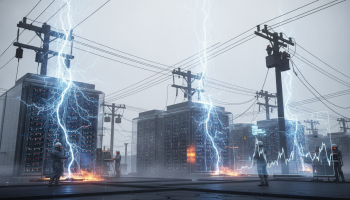
Regulators issued a rare level-three alert after a wave of equipment failures linked to erratic artificial intelligence training loads disrupted projects and stressed power grids in key hubs. The warning, delivered this week, cites volatile electricity demand from large compute clusters as a direct risk to grid stability and construction timelines across data center regions.
The alert signals rising strain as data centers race to stand up training capacity for new models. It also highlights a growing clash between fast-moving AI ambitions and the slower physics of power delivery and infrastructure upgrades.
Equipment failures tied to erratic AI training loads are delaying projects and straining power grids, prompting a rare regulatory level-three alert.
Table of Contents
ToggleWhy AI Training Is Stressing the Grid
AI training runs draw enormous power in short, spiky bursts. Loads can swing quickly as jobs scale up or pause. That pattern hits transformers, switchgear, and backup systems with repeated peaks. It also complicates grid planning, which expects steadier demand from industrial users.
Utilities have warned that multi-hundred-megawatt data campuses are connecting faster than substations and transmission lines can be built. Some projects now require multi-year lead times for new feeders or transformer banks. When training schedules shift on short notice, feeders can see sudden surges that trip protection or overheat components.
What a Level-Three Alert Means
Level-three is an uncommon step that typically flags an elevated risk of service disruptions or enforced curtailments. It tells operators to prepare for emergency procedures and to coordinate closely with large customers. It also pushes major sites to reduce discretionary loads during peak periods.
While the alert does not confirm rolling outages, it signals that contingency margins are tight. Grid managers can ask high-load customers to stagger jobs or cap draw during stress windows.
Equipment Failures and Project Delays
Data center builders report failures in components that were sized for steady compute, not pulsed loads. Common weak points include medium-voltage transformers, power distribution units, and uninterruptible power supplies. Rapid cycling of high-power liquid cooling adds mechanical stress to pumps and valves.
When a component fails, delivery slots for replacements can stretch timelines by months. Global backlogs for high-capacity transformers remain long. That adds cost and idle time for crews, and it pushes back model training roadmaps that depend on new clusters.
- Transformer overheating linked to load spikes
- Protection trips during synchronized training start-ups
- UPS wear from frequent ramping and harmonics
- Cooling system strain during clustered peak runs
How Operators Are Responding
Grid operators are asking large campuses to submit tighter load forecasts and to avoid synchronized job launches. Some are piloting tariffs that reward flatter demand or penalize sharp peaks. Interconnection studies now probe fast-ramping scenarios, not just average draw.
Developers are testing on-site measures too. These include battery systems that buffer spikes, smarter job schedulers that spread training starts, and power electronics that smooth harmonics. Liquid cooling is shifting to designs that handle rapid thermal swings with more headroom.
Industry groups urge clearer standards. They want guidance on acceptable ramp rates, harmonic limits, and minimum on-site reserve power for large AI clusters. Insurance carriers are also reassessing risk models for high-density compute rooms.
The Stakes for AI Timelines and Costs
The alert adds uncertainty to training plans that already face chip supply constraints. Delays raise capital costs and can force teams to rent capacity in distant regions. That introduces latency and extra network charges for data movement.
If grid curtailments spread, operators may shift more training to off-peak hours. That would lengthen project schedules but reduce failure risk. Over time, campuses may co-locate with new generation, such as wind, solar, and gas peakers, paired with large batteries for stability. Siting will favor regions with available transmission and clearer interconnection queues.
What to Watch Next
Several signals will show whether the alert eases or escalates. First, interconnection queues for high-load zones. Second, lead times for large transformers and switchgear. Third, adoption of demand-smoothing software across training pipelines. Fourth, any new rules on ramp rates and peak charges.
Short term, the path is practical: smooth the peaks, harden the gear, and buy time for wires and substations. Longer term, AI growth will hinge on matching compute ambition with power discipline. The alert makes one point clear. Training at scale must respect the grid, or the grid will set the schedule.