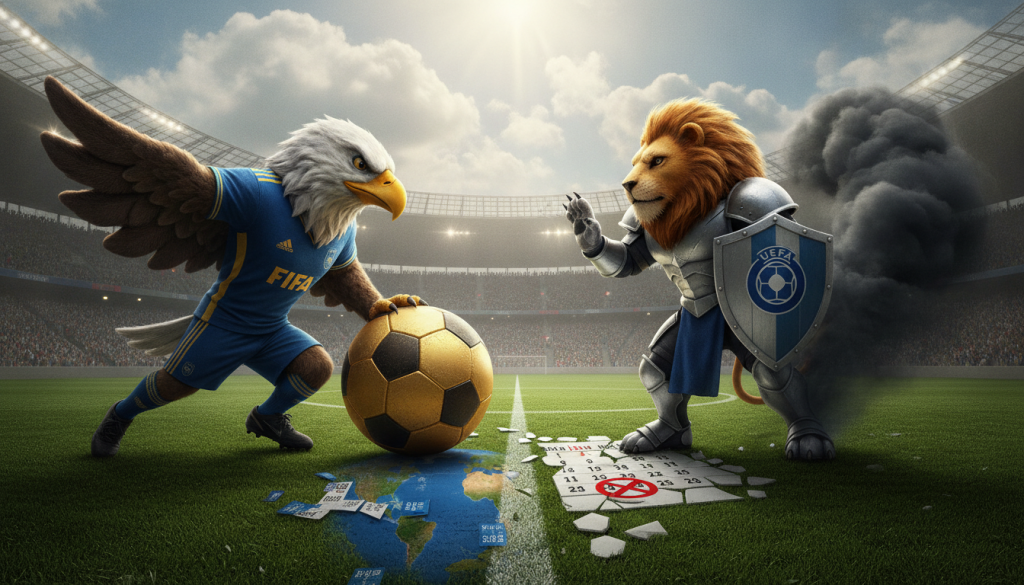
FIFA is pushing ahead with consultations on the future of international football after UEFA warned it could boycott upcoming World Cups. The stand-off sets up a rare public rift between the sport’s two most powerful organizations, with consequences that could reshape global tournaments and calendars.
The dispute centers on how often major competitions should be held and who gets a say in the calendar that affects clubs, leagues, and national teams. The timing is sensitive. Player unions are pressing for fewer matches, broadcasters are hunting for steady scheduling, and national associations are guarding their revenues.
FIFA plans to continue the consultation process after Uefa threatens to boycott World Cups.
Table of Contents
ToggleWhat Sparked The Clash
Tensions have simmered since FIFA explored a revamped international match calendar, including past discussions on a more frequent World Cup. Uefa fired back, arguing that congestion is already harming players and crowding out continental events like the European Championship and the Nations League.
European clubs also worry about releasing players more often and for longer travel windows. Many fear higher injury risks and less training time with their squads. Broadcasters and sponsors, meanwhile, are weighing uncertain rights cycles and diluted marquee moments.
The Stakes For Fans, Players, And Federations
The World Cup delivers much of the financial fuel for many national associations. Any boycott by Europe, which supplies many of the world’s top teams and players, would hit revenues, viewership, and competitive balance.
Players remain caught in the middle. Global stars already navigate overloaded schedules that stretch from late summer to early summer again. Calls for mandatory rest periods and match limits have grown louder over the past few seasons.
- Fans risk fewer top-tier matchups if elite teams split across rival calendars.
- Clubs could see more injuries and fatigue without a clearer match cap.
- National federations face financial uncertainty if formats fragment.
FIFA’s Next Moves
By recommitting to consultations, FIFA signals it intends to keep all parties at the table. That includes confederations outside Europe, many of which support expanded global events to increase exposure and revenue. The governing body has argued that a unified calendar can balance club and country demands if designed with player welfare at its core.
The organization also points to studies on global fan interest and the need to reduce long-haul travel through clustered international windows. Those ideas gained traction in previous reviews of the match calendar, even as format changes met resistance in Europe and South America.
Uefa’s Red Lines
Uefa leaders have warned that any move that weakens European competitions or overtaxes players is unacceptable. The confederation argues that the sport needs breathable space between major events to protect quality and maintain excitement.
It has also emphasized the role of club football in developing young talent and sustaining local economies. Any international plan, they say, must respect the domestic rhythm that anchors fan culture and revenue across leagues.
What A Compromise Could Look Like
A workable deal would likely narrow to three core areas: player workload, event rotation, and revenue sharing. That could mean tighter caps on international dates, protected rest windows, and a predictable rotation that avoids collisions between global and continental events.
The European Club Association and player unions will be key in shaping the outcome. Their buy-in on rest rules, insurance protections, and travel logistics can determine whether any agreement sticks once tournament pressure ramps up.
Industry Signals And The Road Ahead
Recent seasons show the limits of cramming more matches into the year. Injury lists have grown longer, while managers rotate heavily to survive dense fixture runs. Broadcasters still value global tentpoles, but they also prize clarity and scarcity, which drive appointment viewing.
If Europe follows through on boycott threats, World Cups could fracture, splitting audiences and sponsorships. If talks land on common ground, the sport could stabilize around a clearer cycle with defined rest and fewer clashes.
For now, FIFA’s decision to keep talks going keeps the door open. Uefa’s warning raises the cost of inaction. The sport’s leaders have little room for posturing, and even less time. Fans, clubs, and players need certainty well before the next cycle is locked.
The takeaway is simple. A balanced calendar that protects players and preserves marquee events is the only sustainable path. Watch for concrete proposals on rest windows, international dates, and event rotation in the coming months. The outcome will set the shape of top-tier football for years to come.