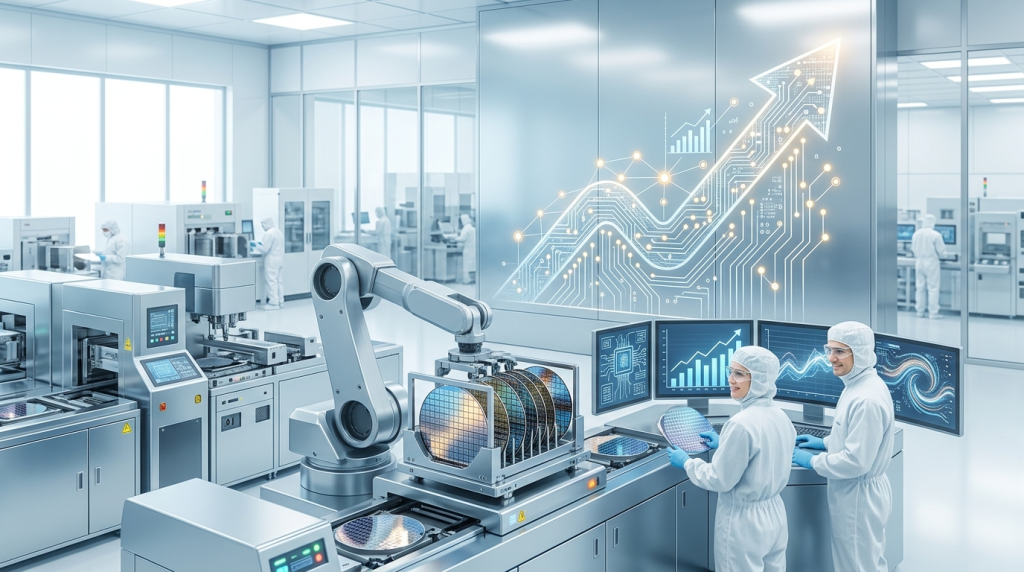
TSMC extended its record revenue streak in September as demand for AI chips kept sales rising. The result signals that spending on AI computing remains a major force in the semiconductor industry.
The Taiwan-based chip manufacturer sits near the center of the AI supply chain. It produces advanced processors designed by other companies, making its monthly revenue a closely watched measure of technology demand.
The latest increase also suggests customers kept placing large orders despite uncertainty in parts of the global economy. AI investment, for now, appears to be giving the chip sector a powerful growth engine.
Table of Contents
ToggleAI Orders Keep Factories Busy
AI systems require processors that can handle huge amounts of data at high speed. Those chips power data centers that train and run generative AI services.
TSMC manufactures many of the advanced chips needed for that work. Its position lets the company benefit even as competing chip designers fight for market share.
September’s record continued a run of strong revenue results rather than marking a single monthly jump. That pattern matters because sustained growth can indicate lasting customer demand, not merely rushed orders or seasonal buying.
Still, the available result does not show how much of the increase came directly from AI products. TSMC also makes chips for smartphones, computers, vehicles, and industrial equipment. Changes in those markets can affect monthly sales.
A Key Link in the Chip Chain
TSMC operates as a contract manufacturer, often called a foundry. Customers design chips, while TSMC provides the factories and production expertise to build them.
This model has made the company important to many technology businesses. Advanced chip plants are costly, complex, and take years to build. Few companies can produce leading processors at a large scale.
The September performance points to several industry trends:
- Cloud providers are spending heavily on AI-optimized computing systems.
- Chip designers need more advanced manufacturing capacity.
- TSMC remains exposed to both AI growth and shifts in consumer electronics.
That exposure can work both ways. Strong AI orders can lift revenue, but weaker phone or computer sales may limit growth. Customers may also adjust orders if data-center spending slows or chip inventories rise.
Capacity and Costs Move Into Focus
Record revenue creates a welcome problem: TSMC must decide how much capacity to add without building too far ahead of demand. New factories require major spending and years of planning.
If capacity remains tight, customers could face longer waits or higher manufacturing costs. If TSMC expands too quickly, unused equipment could pressure profits later. The company must balance urgency with the semiconductor industry’s familiar boom-and-bust cycle.
AI demand also raises questions about where advanced chips are produced. Governments and technology companies increasingly view semiconductor supply as an economic and security concern. Any disruption at a major manufacturer could affect data centers, devices, and corporate AI plans.
What Investors Will Watch Next
Future monthly reports will help show whether September’s momentum can continue. Investors will look for signs that AI-related orders are offsetting weaker demand elsewhere.
Attention will also turn to production capacity, customer forecasts and capital spending. Those measures can indicate whether TSMC expects the current growth cycle to last.
September’s record adds evidence that AI investment is translating into real manufacturing revenue. Yet one month cannot settle questions about the cycle’s length or profitability. The next test is whether demand stays firm as capacity expands and customers scrutinize the cost of their AI ambitions.