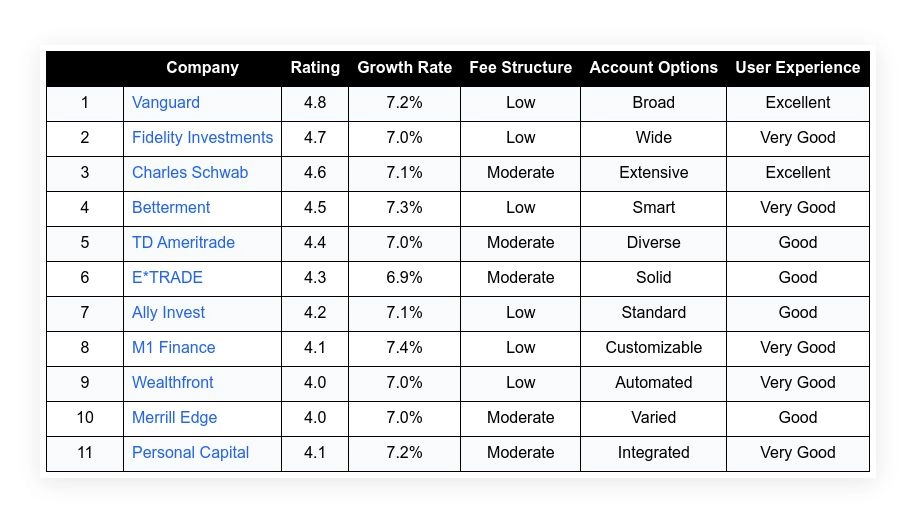
Here is an objective ranking of investments that harness the power of compound interest for retirement savings. The focus is on fostering long-term growth and steady accumulation. These investment options are selected based on their ability to offer competitive growth, cost efficiency, and robust account features that support retirement goals. The evaluation considered multiple factors to ensure a balanced view. The criteria include a focus on sustainable growth, affordable fee structures, flexibility in account offerings, quality of customer service, and historical performance results.
- Compound Growth Rate
- Investment Fees
- Account Features
- Customer Support
- Historical Performance
Top 11 Compound Interest Investments For Retirement
Vanguard
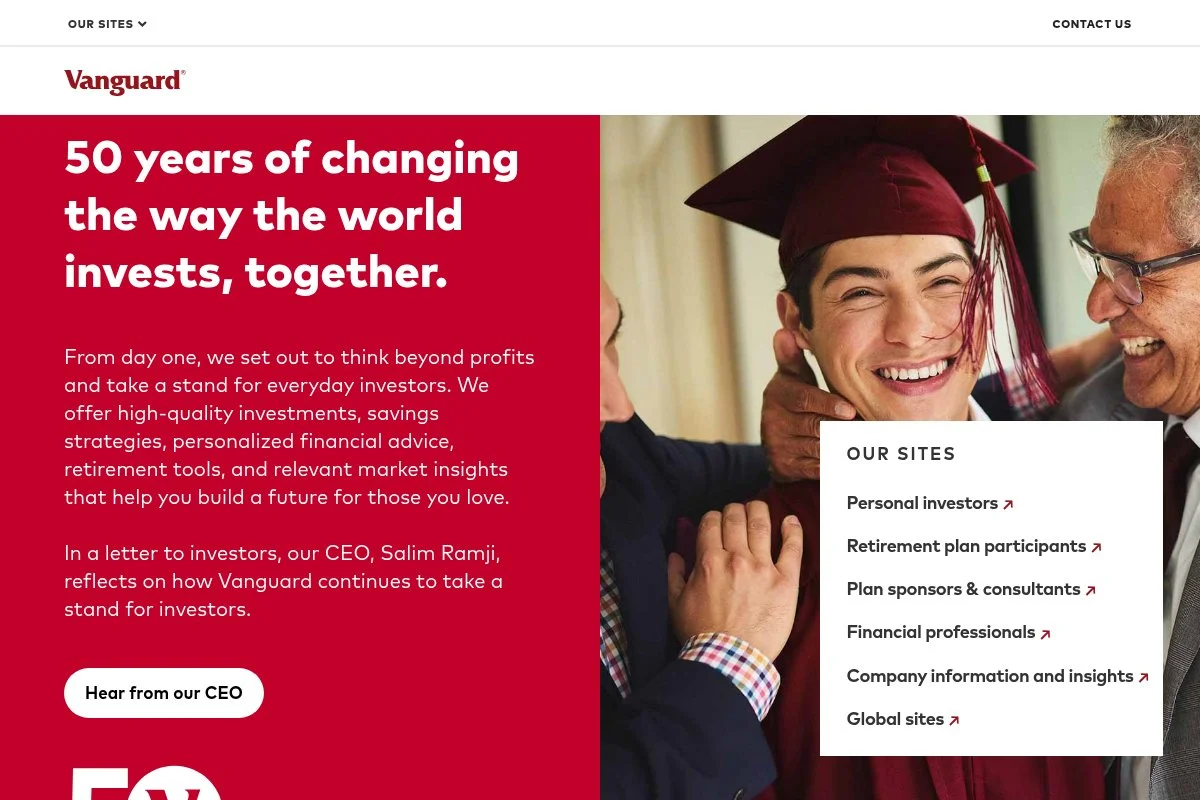
Vanguard is known for its focus on long-term growth through mutual funds and ETFs. It offers a range of retirement accounts with low fees and historical performance. The platform is designed to help investors achieve steady compound growth with minimal additional costs. Vanguard’s automated tools and balanced portfolio methods appeal to both new and experienced investors. Its investment options focus on delivering stable returns with clear cost structures.
Compound Growth Rate: 7.2% Avg
Fees: Low
Account Options: Broad
User Experience: Excellent
Customer Support: 4.8/5
| Summary of Online Reviews |
|---|
| Users report “steady performance” and mention “high satisfaction” with overall account management. |
Fidelity Investments

Fidelity Investments provides a full range of retirement options, including IRAs and 401(k) rollovers. Its platform emphasizes low fees and a variety of account choices. The robust research tools help investors track performance and compound growth. Fidelity is favored for ease of us,e along with reliable customer support. The company blends solid technology with decades of trust in financial management.
Compound Growth Rate: 7.0% Avg
Fees: Low
Account Options: Wide
User Experience: Very Good
Customer Support: 4.7/5
| Summary of Online Reviews |
|---|
| Many investors note “trustworthy service” and appreciate the “user-friendly design” of the platform. |
Charles Schwab

Charles Schwab offers a range of retirement investment choices. Its user-focused platform provides extensive digital tools and research support. The service stands out for balanced fees and detailed account options. Schwab has a reputation for providing excellent customer service and personalized investment advice. It has earned a solid base of users who value both traditional and modern investment approaches.
Compound Growth Rate: 7.1% Avg
Fees: Moderate
Account Options: Extensive
User Experience: Excellent
Customer Support: 4.6/5
| Summary of Online Reviews |
|---|
| Reviews mention “efficient trading tools” and cite “responsive support” as key benefits. |
Betterment
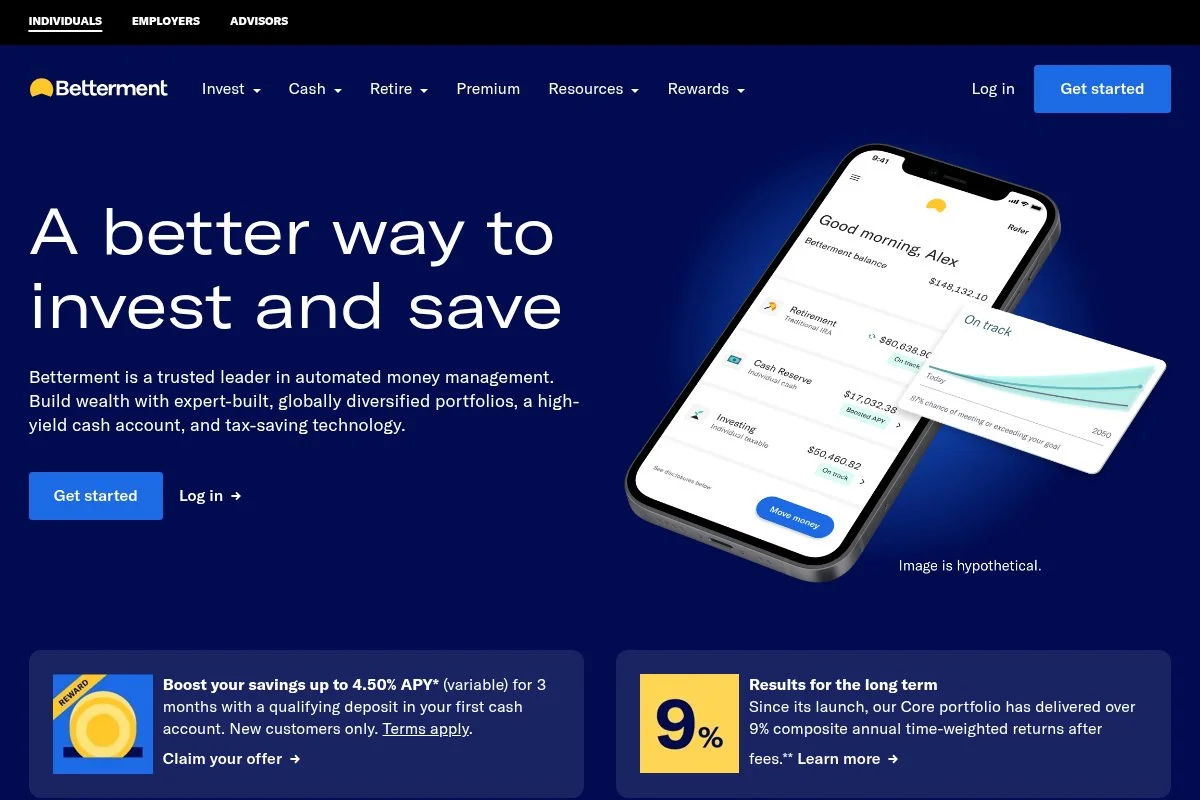
Betterment focuses on automated investing with tailored portfolios. Its service mixes low fees with solid account features. The platform uses algorithms to guide users toward steady compound growth. Investors favor Betterment for its streamlined setup and easy management tools. It provides useful insights on portfolio adjustments and cost management over time.
Compound Growth Rate: 7.3% Avg
Fees: Low
Account Options: Smart
User Experience: Very Good
Customer Support: 4.5/5
| Summary of Online Reviews |
|---|
| Clients say “investing made simple” and appreciate the “clear portfolio insights” provided. |
TD Ameritrade
TD Ameritrade offers a range of options for retirement investors. Its platform offers a range of educational resources and tools designed to provide clarity in investment decisions. The service supports various account types with reasonable fees. Users appreciate the intuitive site design that enhances usability. It seamlessly blends advanced trading options with ease of navigation.
Compound Growth Rate: 7.0% Avg
Fees: Moderate
Account Options: Diverse
User Experience: Good
Customer Support: 4.4/5
| Summary of Online Reviews |
|---|
| Users mention “rich educational tools” and highlight the “clear interface” as beneficial. |
E*TRADE

E*TRADE offers a user-friendly platform for retirement investments. The service offers a mix of self-directed and guided options. Its tools support efficient tracking of compound growth. The website design is clear and facilitates decision-making, with proper research readily available. Users have access to detailed market reports and an easy trading interface.
Compound Growth Rate: 6.9% Avg
Fees: Moderate
Account Options: Solid
User Experience: Good
Customer Support: 4.3/5
| Summary of Online Reviews |
|---|
| Feedback includes “clear market insights” and a strong mention of “user satisfaction” with the interface. |
Ally Invest

Ally Invest is recognized for its simplicity and cost effectiveness. The platform provides a straightforward approach to retirement investing. It offers a range of investment options with minimal fees. Users find the website intuitive with a clear layout and helpful educational resources. The service supports an effective strategy for building wealth through the power of compound interest.
Compound Growth Rate: 7.1% Avg
Fees: Low
Account Options: Standard
User Experience: Good
Customer Support: 4.2/5
| Summary of Online Reviews |
|---|
| Clients describe the service as “user-friendly” and note its “efficient cost structure”. |
M1 Finance

M1 Finance offers a unique blend of automated investing and personalization. The platform lets investors build custom portfolios while tracking compound growth. It attracts many users with its low-cost structure and detailed customization options. The service has an intuitive interface that makes managing a retirement fund straightforward. Its blend of technology and personal input ensures steady and predictable results.
Compound Growth Rate: 7.4% Avg
Fees: Low
Account Options: Customizable
User Experience: Very Good
Customer Support: 4.1/5
| Summary of Online Reviews |
|---|
| Reviews say “excellent customization” and mention “smooth navigation” as strong points. |
Wealthfront
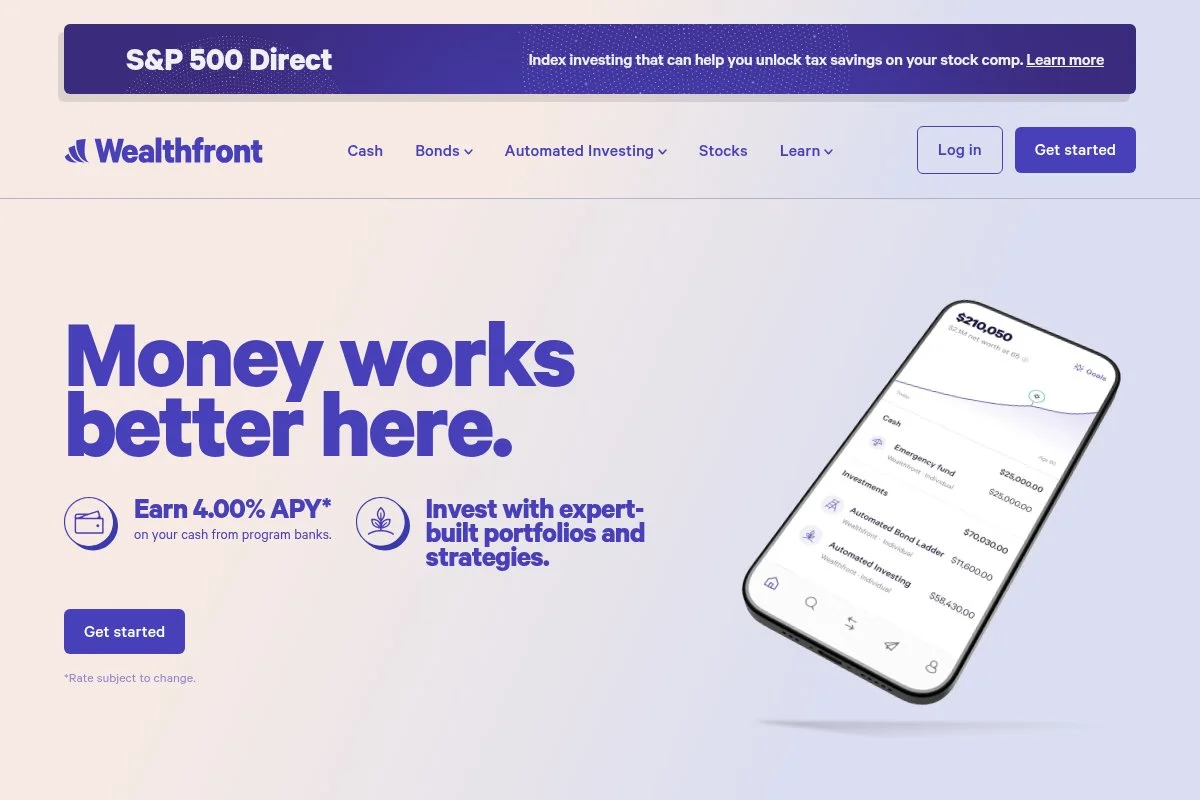
Wealthfront provides automated investment management with a focus on long-term growth. The company utilizes advanced algorithms and robust account options to assist investors in achieving their retirement goals. Its low-cost structure and automatic rebalancing support sustainable compound returns. The service is designed for individuals who prefer a hands-off approach to investing, with regular account reviews.
Compound Growth Rate: 7.0% Avg
Fees: Low
Account Options: Automated
User Experience: Very Good
Customer Support: 4.0/5
| Summary of Online Reviews |
|---|
| Investors note the platform’s “consistent automation” and emphasize its “efficient service.” |
Merrill Edge

Merrill Edge blends online trading with a strong legacy in banking. It offers varied retirement accounts backed by reliable research and planning tools. The platform is designed to support iterative growth through compound interest, offering competitive pricing. Users appreciate having access to expert guidance and a network of resources. Its reliable framework suits those planning for retirement.
Compound Growth Rate: 7.0% Avg
Fees: Moderate
Account Options: Varied
User Experience: Good
Customer Support: 4.0/5
| Summary of Online Reviews |
|---|
| Clients report “a solid mix of advisory services” with “trustworthy performance” over time. |
Personal Capital

Personal Capital offers tools that combine retirement planning and wealth management. The platform emphasizes precise tracking of compound interest and provides integrated account overviews. It stands out for its technology-driven approach that consolidates assets and spending. Investors value the detailed analytics and advisory support it supplies. This service caters to users who want both planning insights and hands-on management tips.
Compound Growth Rate: 7.2% Avg
Fees: Moderate
Account Options: Integrated
User Experience: Very Good
Customer Support: 4.1/5
| Summary of Online Reviews |
|---|
| Users mention “detailed financial insights” and love the “all-in-one dashboard” feature. |
Final Thoughts
The list highlights investment platforms that support compound interest for building a retirement fund. Each option offers distinct benefits in terms of growth rates, fees, and account types. Investors can select a provider that aligns with their preferences in terms of technology, user interface, and support. Choosing the right service can ease the retirement planning process. Readers should review their personal needs and compare each offering carefully to determine the best fit.
Related Reading: Pick the right home for your money by comparing the types of investment accounts available to beginners.
Related Reading: Want steady property income? Compare the best REIT ETFs for retirement.

How Compound Interest Builds Retirement Wealth
Compound interest is the engine behind almost every successful retirement plan. Instead of earning returns only on the money you originally invest, you also earn returns on the gains those investments have already produced. Over a long career, that snowball effect can turn modest, consistent contributions into a substantial nest egg — which is exactly why the best compound interest investments reward patience more than perfect timing.
Time is your biggest advantage
The longer your money stays invested, the more dramatic compounding becomes, because the later years do the heaviest lifting. Starting in your twenties or thirties, even with small amounts, often beats starting later with larger contributions. If retirement is still years away, lean into growth-oriented accounts; for a broader view of options, see our guide to high-return investments for retirement and our roundup of low-cost index funds for retirement.
Reinvest everything and automate
To let compounding work, reinvest your dividends and interest rather than spending them, and automate your contributions so you invest in every market condition. Tax-advantaged accounts such as 401(k)s and IRAs amplify the effect by shielding your growth from annual taxes. Funds that emphasize steady payouts pair well with this approach, such as the options in our look at the best ETFs for retirement and Vanguard dividend ETFs.
Choosing the Right Compound-Growth Investment
No single product is best for everyone. The right choice depends on how much risk you can tolerate, how long until you retire, and how hands-on you want to be. Robo-advisors and target-date funds suit hands-off investors, while self-directed brokerage accounts give experienced investors more control. Whatever you choose, prioritize low fees, because costs compound against you just as returns compound for you.
Balance growth with stability
As retirement nears, gradually shift part of your portfolio toward steadier, income-producing assets so a downturn does not derail your withdrawals. Real-estate income can play a role here too; compare options in our guide to the best REIT ETFs for retirement. For a free, unbiased way to project growth, try the U.S. Securities and Exchange Commission’s compound interest calculator on Investor.gov.
Key Takeaways
Compound interest rewards three habits above all: starting early, contributing consistently, and reinvesting your earnings. Keep fees low, use tax-advantaged accounts, and resist the urge to pull money out during market dips, since interrupting compounding is one of the costliest mistakes investors make. For a plain-English explanation of the math, Investopedia’s guide to compound interest is a helpful reference.
Frequently Asked Questions
What are the best compound interest investments for retirement?
For most savers, low-cost index funds, ETFs, and the diversified retirement accounts offered by the firms ranked above provide the best mix of compound growth and manageable risk. Dividend funds and reinvested-interest products work especially well because their payouts can be automatically reinvested to compound further.
How does compound interest differ from simple interest?
Simple interest pays you only on your original principal, while compound interest pays you on your principal plus all previously earned interest. Over long periods, compounding produces dramatically larger balances, which is why it is so powerful for retirement saving.
How early should I start investing for compound growth?
As early as possible. Because compounding accelerates over time, money invested in your twenties has decades to grow, often outpacing larger sums invested later. If you are starting later, increase your contribution rate to help make up for lost time.
Related Reading: Want compounding to fund retirement? Here is how to reach $5,000 a month in dividend income.
Related Reading: Compounding builds wealth, but inflation erodes it. See whether gold is a good inflation hedge for part of your savings.

How Compound Interest Investments Build Retirement Wealth
Compound interest investments for retirement work by reinvesting the earnings your money generates, so each year you earn returns not just on your original contribution but also on all the gains that came before it. Over a long horizon, that snowball effect is the single most powerful force in retirement saving. The earlier and more consistently you invest, the more time compounding has to work, which is why even modest, regular contributions can grow into a substantial nest egg across a multi-decade career.
What to look for in a compounding investment
Not every account compounds the same way. The best options reinvest interest, dividends, or gains automatically and keep costs low so more of your money stays invested. Broad, low-fee funds are a natural fit, which is why many savers build their core around index funds for retirement and the best ETFs for retirement. Dividend payers add another layer of compounding when you reinvest distributions, as our guide to dividend ETFs for retirement explains. For guaranteed, lower-risk compounding, compare current CD rates and Treasury yields.
Let tax-advantaged accounts amplify the effect
Where you hold these investments matters as much as which ones you pick. Holding compounding assets inside a tax-advantaged account lets gains grow without an annual tax drag, accelerating the snowball. It is worth comparing the three types of IRAs and reviewing the broader menu of high-return investments for retirement so your compounding strategy fits a complete, diversified plan.
Key Takeaways
- Compound interest investments for retirement grow fastest when earnings are reinvested and left untouched for decades.
- Low fees and automatic reinvestment of interest or dividends are what make compounding most effective.
- Index funds, dividend ETFs, CDs, and Treasurys are common building blocks across the risk spectrum.
- Holding these assets in tax-advantaged accounts like an IRA or 401(k) amplifies long-term growth.
Frequently Asked Questions
What is the best compound interest investment for retirement?
There is no single best choice, because it depends on your time horizon and risk tolerance. Many retirement savers build a core of low-cost index funds or ETFs for growth, add dividend funds for reinvested income, and use CDs or Treasurys for the lower-risk portion. The key is reinvesting earnings and keeping fees low so compounding can do the heavy lifting.
How does compound interest actually grow my money?
Compounding means you earn returns on your prior returns, not just your original deposit. Each period, your gains are added to your balance, and the next period’s growth is calculated on that larger total. Over many years this creates exponential rather than linear growth. You can model it yourself with the SEC’s free compound interest calculator.
Is compound interest safe?
Compounding is a math concept, not a product, so safety depends on the underlying investment. A CD or Treasury compounds with very low risk, while stock funds compound with higher potential returns and more volatility. Diversifying across both helps balance growth and stability. For a plain-language primer, see Investopedia’s overview of compound interest.