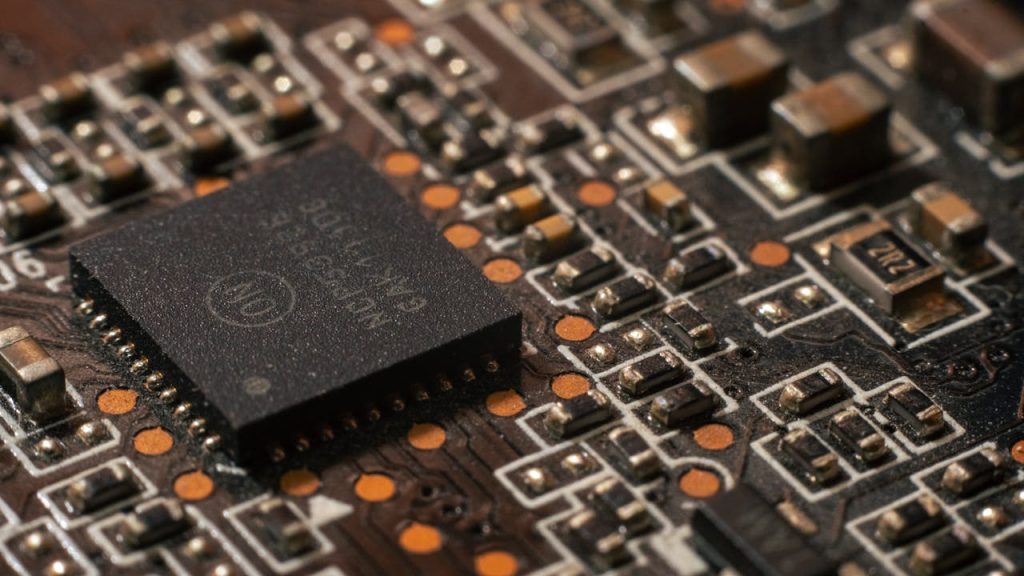
The world’s biggest semiconductor and chipmaker companies recorded over $400 billion in combined sales in 2025 due to the rapid growth of artificial intelligence, making it the largest chip year ever. Analysts and industry executives anticipate that even that milestone will be exceeded next year.
This quick growth, driven by what analysts and CEOs refer to as the “insatiable demand” for processing power, has also led to growing difficulties. In addition to shortages of essential components, chipmakers and their clients are increasingly unsure of how soon AI firms will be able to make profits consistent enough to maintain their rate of chip purchases.
AI chipmakers ramping up for a bigger year in 2026
Hardware designers like Nvidia supply a large portion of the vital infrastructure supporting the AI boom, and Nvidia more than doubled its revenue from the previous year. Although competition has increased, Nvidia has dominated this stage of the market. As the competitive landscape moves from training AI models to effectively running them, Alphabet’s Google and Amazon.com are now posing a more direct threat to Nvidia.
Nvidia and Groq, a startup that creates chips and software to speed up AI inference—the process by which trained models produce responses—signed a $20 billion licensing agreement last week. Tech companies are now competing to provide quicker and more affordable inference as training gains traction. Following the transaction, Bernstein analysts wrote, “Inference workloads are more diversified and may open up new areas for competition.”
Nvidia’s cutting-edge H200 and B200 graphics processing units are still in high demand from customers ranging from data center operators to AI labs. Amazon gains popularity with its Trainium and Inferentia chips, while Google draws users with its custom TPUs. In order to create custom chips, software firms like OpenAI have collaborated with designers like Broadcom. With a new GPU targeted directly at Nvidia’s AI processors, Advanced Micro Devices intends to join the competition in 2026. When Microsoft announced in October that it would double its data-center footprint over the next two years, indicating increased chip demand in 2026, it added to the momentum.
A year of records
Every indication points to yet another year of records. According to Goldman Sachs, Nvidia alone will sell $383 billion worth of GPUs and other hardware in 2026, a 78% increase from the previous year. FactSet analysts expect Nvidia, Intel, Broadcom, AMD, and Qualcomm to generate more than $538 billion in combined sales.
However, 2026 also brings with it previously unheard-of challenges. Data center construction has been slowed by shortages of server components, gas turbines, and electrical transformers. As inference workloads become more “memory-bound” than training, memory chips and specialized silicon substrates continue to be hard to come by. “We’re significantly short of our customers’ needs and it’s going to persist for a while,” Micron Technology’s Sumit Sadana stated.
Although it takes years to build new fabrication plants, Micron, Samsung, and SK Hynix have profited from the crunch through increased investment and higher prices. Investors are also skeptical about AI leaders’ ability to fund the enormous expansion of data centers. Those worries triggered a widespread selloff in AI stocks this fall, highlighting how quickly optimism can turn when growth shows any indication of slowing.
Related Reading
- AI Data Centers Are Straining the US Power Grid
- Meta Stock Dips After AI Product Launch Delayed
- Elon Musk’s Grok-3 Takes on ChatGPT
- EU Fines Apple and Meta Combined $760 Million
- Alphabet Surges on Strong Q1 Results
- Tesla Stock Surges 75%: EV Tax Credit Questions Emerge
- Microsoft Set to Release Third-Quarter Financial Results
- AI Is Reshaping Sales and Marketing
- Amazon and Walmart Stablecoins Challenge Traditional Banking
- Amazon Releases Gen AI Product Alexa
- Bezos Sells Amazon Stock Amid Tariff Concerns
- Blockchain Governance
- Boeing Found to Have Violated $2.5bn Settlement
- Berkshire Resumes Buybacks as Abel Buys
- Microsoft and Meta AI Spending Sparks Market Surge
- Five Big Questions About a SpaceX IPO
Featured Image Credit: Ivan Chumak; Pexels: Thank you!
Investing in AI Chipmakers in 2026: What to Know
The AI chipmakers driving the current boom — Nvidia, AMD, Broadcom, Intel, Qualcomm, and memory specialists like Micron, Samsung, and SK Hynix — have become some of the most closely watched names in the market. Heading into 2026, the story is no longer just about who can train the largest models, but who can supply the hardware to run them affordably at scale. For investors trying to make sense of the AI semiconductor trend, the key is understanding what actually fuels demand and where the cracks could appear.
Why AI chip demand keeps growing
Every new wave of AI applications needs processing power, and that demand has spread from a handful of labs to data-center operators, cloud providers, and enterprises building their own tools. As workloads shift from training to inference, competition is widening beyond a single dominant supplier, which can create openings for challengers and custom silicon. If you are new to evaluating fast-moving sectors like this, our primer on how to get good investment returns as a beginner is a useful starting point, and the broader wave of tech listings covered in the biggest IPO boom arriving shows how much capital is chasing this theme.
The risks behind the AI chip boom
Concentrated bets carry concentrated risk. Component shortages, power and data-center constraints, and doubts about whether AI customers can turn a profit fast enough have already triggered sharp selloffs in chip stocks. Geopolitical shocks can hit supply chains too, as we noted in our look at how markets ignore geopolitical risk at their peril, and even high-flying private names face scrutiny, as explored in Anthropic’s surge and what it means for investors. Spreading exposure across a diversified mix — rather than a single stock — is a core principle the SEC explains at Investor.gov, and you can review broader options in our guide to high-return investments for retirement. For background on the sector itself, see Investopedia’s overview of the semiconductor industry.
Key Takeaways
- AI chipmakers are entering 2026 with record demand as AI workloads shift from training to inference.
- Competition is broadening beyond one leader, with custom chips and inference-focused designs gaining ground.
- Shortages, power limits, and questions about AI profitability are the biggest risks to AI chip stocks.
- Diversification matters: concentrated exposure to a single semiconductor name amplifies volatility.
Frequently Asked Questions
Which companies are the biggest AI chipmakers in 2026?
Nvidia remains the most prominent supplier of AI accelerators, but AMD, Broadcom, Intel, and Qualcomm are all competing for share, while cloud giants design custom chips of their own. Memory makers such as Micron, Samsung, and SK Hynix are also critical because modern AI workloads are increasingly memory-bound.
Are AI chip stocks a good investment in 2026?
That depends entirely on your goals, time horizon, and risk tolerance, and this article is general information rather than personalized financial advice. AI chip stocks have delivered strong growth but can be highly volatile, so many investors prefer to gain exposure through diversified funds rather than betting on one company.
What are the main risks facing AI chipmakers next year?
The biggest risks include shortages of components and memory, limits on power and data-center capacity, geopolitical disruption to supply chains, and uncertainty over how quickly AI customers can become consistently profitable. Any sign of slowing demand can trigger fast, sharp pullbacks in the sector.
Related Reading
Chip demand is being driven by enormous AI budgets. See how OpenAI’s record $120 billion fundraise translates into sustained orders for advanced accelerators.