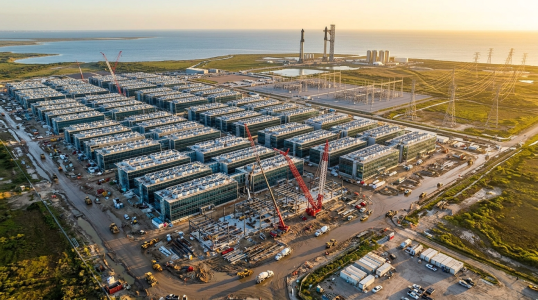
Elon Musk may be preparing to outline one of the largest engineering projects ever proposed. The reported plan calls for SpaceX to support 20 gigawatts of data center capacity. That scale could reshape demand for electricity, computing equipment, debt, and artificial intelligence infrastructure.
I am Taylor Sohns, CEO of LifeGoal Wealth Advisors, a Certified Investment Management Analyst and a Certified Financial Planner. My focus is the investment question behind the headline: Can SpaceX finance such an expensive build without straining its balance sheet?
The answer could affect more than SpaceX. A pullback may reach power producers, chipmakers, data center suppliers, lenders, and other companies tied to AI spending.
Table of Contents
ToggleThe Scale of a 20-Gigawatt Project
A gigawatt measures power capacity. Twenty gigawatts equals 20 billion watts. That is an immense amount of potential electricity demand for any single project.
For context, a large conventional power plant may produce about one gigawatt. Actual output varies by plant type, operating conditions, and maintenance schedules. Even so, the proposed data center capacity would be comparable to the output of many major power plants.
Comparing it to household electricity use can help put the scale in perspective. However, those comparisons require care. Household demand changes by location, climate, season, and time of day.
Data centers also use electricity differently than homes. They can operate around the clock and require cooling systems, backup power, networking equipment, and energy storage. Total infrastructure needs could extend far beyond the computing facilities.
A 20-gigawatt buildout could require spending across several areas:
- Power generation and long-term electricity contracts
- Transmission lines, substations, and grid connections
- Advanced chips, servers, and networking equipment
- Cooling systems and access to water or other cooling resources
- Land, construction, security, and backup generation
- Launch, satellite, and communications infrastructure
The project may also take years to complete. A public target does not mean all 20 gigawatts would appear at once. Funding needs could be spread across phases, partners, and separate business units.
View this post on Instagram
The Estimated Cost Raises the Main Question
The proposal has been associated with an estimated cost near $500 billion. Treat that figure as an estimate, not a confirmed final budget.
Costs depend on what the estimate includes. A narrow calculation may cover servers and buildings. A broader estimate may include power plants, grid upgrades, launch systems, land, and financing expenses.
SpaceX does not have $500 billion in cash available to pay for such a project outright. Few companies do. A development at this scale would likely need several funding sources.
Possible sources include operating cash flow, private equity, debt, customer contracts, strategic partnerships, and project financing. SpaceX could also divide the work among subsidiaries or outside infrastructure providers.
“Can they actually afford to finance this buildout, or will they be forced to pull back?”
That is the central issue for investors. The engineering target may attract attention, but financing terms can decide whether the project advances on schedule.
What the Bond Market May Be Signaling
SpaceX reportedly issued bonds in June with an interest rate of 6.6%. Those bonds later traded near 85 cents on the dollar, with a yield around 8%.
A bond’s price and yield generally move in opposite directions. If investors become less willing to own a bond, its market price can fall. The lower purchase price increases the potential return for a new buyer, assuming the issuer makes the promised payments.
For example, a bond with $1,000 in face value might trade for about $850. If its annual coupon were based on the full face value, the buyer would receive the same stated interest payment despite paying less for the bond.
The simple current yield on a 6.6% coupon purchased at 85 cents would be about 7.8%. The exact yield to maturity depends on the maturity date, payment schedule, redemption terms, and other bond provisions. That means the quoted 8% figure is a plausible approximation, but investors should review the security’s details.
A discounted bond price can reflect several concerns — I explain all of these.
- Higher market interest rates
- Greater perceived credit risk
- Limited trading activity
- Uncertainty about future borrowing
- Concerns about cash demands from new projects
The price decline does not prove that SpaceX cannot meet its obligations. Bond markets can move for many reasons. Still, borrowing costs offer a useful signal about how investors view risk.
Why Higher Financing Costs Matter
An 8% yield may appear manageable on a small loan. It becomes more important when borrowing reaches tens of billions of dollars.
At an illustrative 8% rate, $10 billion in debt would create roughly $800 million in annual interest expense before principal repayments. Borrowing $50 billion at the same rate would imply about $4 billion in yearly interest.
SpaceX is unlikely to finance an entire $500 billion project with conventional bonds. The example still shows why the cost of capital matters. Higher rates can reduce returns, delay construction, or force a company to seek partners.
Long construction periods add another risk. Interest expenses may begin before a facility generates revenue. Cost overruns, permitting delays, chip shortages, or power constraints can increase the funding gap.
Investors should also separate project value from project affordability. A facility may have strong long-term potential but still face short-term financing pressure.
The Possible Impact on the AI Trade
SpaceX is only one participant in the surge of AI infrastructure spending. Yet a project of this size could influence expectations across the sector.
If the expansion moves forward, suppliers may receive large orders for chips, servers, networking gear, power equipment, and cooling systems. Utilities and energy developers could also benefit from new demand.
If SpaceX reduces or delays the plan, investors may question the spending assumptions built into AI-related valuations. Companies priced for rapid demand growth could face greater scrutiny.
The effects would not be equal across the market. A diversified utility with regulated revenue has different risks from a chipmaker tied to a few major customers. A profitable cloud provider also has a different funding profile from a private company relying on fresh capital.
Key areas to monitor include:
- Confirmed capital spending rather than broad targets
- Binding contracts with chip and energy suppliers
- New debt terms and changes in borrowing costs
- Equity investments from outside partners
- Construction schedules and power availability
- Expected revenue tied to the new capacity
Opportunity and Risk Can Exist Together
Elon Musk’s reported plan could create a large investment opportunity. It could also introduce serious financial risk. Those two conclusions are not mutually exclusive.
A successful buildout might create demand across several industries. It may support new AI services, satellite networks, communications systems, and computing platforms.
At the same time, scale does not guarantee attractive returns. The project must generate enough revenue to cover operating costs, capital spending, and financing expenses.
Investors should avoid treating a proposed capacity target as completed infrastructure. Announcements, funding commitments, construction starts, and operating facilities are separate stages.
I would also avoid making a decision from a single bond price. Debt performance is one useful measure, but it must be reviewed with cash flow, revenue, contractual commitments, and the timing of capital spending.
The larger lesson applies across the AI sector. Demand projections matter, but funding conditions matter too. As borrowing becomes more expensive, companies must prove that ambitious projects can produce durable cash flow.
SpaceX’s proposed 20-gigawatt expansion deserves attention because of its size and possible market effects. The key evidence will come from confirmed financing, construction commitments, and customer demand.
For investors, the prudent approach is to separate the vision from the funding plan. If execution succeeds, the project could reward suppliers and capital providers. It could also pressure the wider AI trade if financing costs force delays or cuts.
Frequently Asked Questions
Q: What does 20 gigawatts of data center capacity mean?
It refers to potential power demand of 20 billion watts. Actual electricity consumption depends on utilization, efficiency, cooling needs, and the pace of construction.
Q: Does a lower SpaceX bond price mean the company is in trouble?
Not by itself. Bond prices can fall because of interest rates, liquidity, or changing risk expectations. Investors should review the security’s terms and the company’s financial position before drawing conclusions.
Q: How could a SpaceX pullback affect AI investments?
A delay could reduce expected orders for chips, servers, energy equipment, and construction services. It may also lead investors to reassess growth forecasts for companies tied to large AI infrastructure budgets.
Image Credit: