A promised driving range can shape how someone plans an entire trip. Yet that estimate may feel meaningless when the battery runs low far sooner than expected. My recent trip in a 2023 Tesla Model 3 Performance showed why electric vehicle makers should focus on dependable range, clear expectations, and faster charging.
Table of Contents
ToggleA 315-Mile Estimate Meets a 186-Mile Trip
The 2023 Tesla Model 3 Performance carries an EPA-estimated range of 315 miles on a full charge. On paper, that should make a 186-mile journey easy.
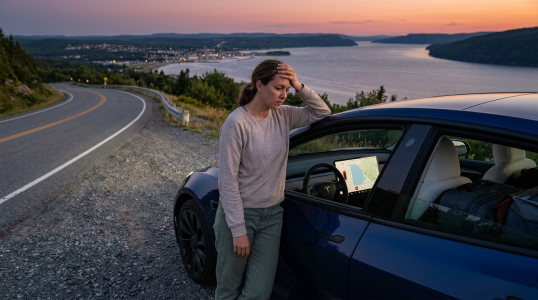
My experience was very different. After driving about 120 miles from home, the battery had fallen to 8%. I had to stop at a charging station before continuing.
The destination was only 186 miles from my starting point. That meant the planned trip covered about 59% of the vehicle’s advertised range. Still, the car couldn’t finish without charging.
That gap matters more than a product-page statistic. It changes when a driver arrives, where they must stop, and how much confidence they have in the vehicle.
“It’s not like I’m trying to get to Mars here.”
The line is humorous, but the frustration is real. A routine trip should not feel like an endurance test for a vehicle marketed with more than 300 miles of estimated range.
View this post on Instagram
What an EPA Range Estimate Actually Means
An EPA estimate is not a guarantee that every driver will travel that exact distance. It comes from standardized testing designed to help shoppers compare vehicles under consistent conditions.
Real driving does not happen under one fixed set of conditions. Battery use can change based on speed, temperature, road grade, wind, tires, cabin heating, air conditioning, cargo, and driving style.
Several conditions can reduce electric range:
- High highway speeds increase air resistance and energy use.
- Cold weather can lower battery efficiency and increase heating demand.
- Hot weather may require more energy for cabin and battery cooling.
- Steep climbs demand more power, even if some energy returns during descent.
- Hard acceleration uses energy faster than steady driving.
- Low tire pressure and heavy cargo can also reduce efficiency.
These variables help explain why actual range may differ from the estimate. They do not erase the driver’s problem.
A consumer sees “315 miles” and forms a practical expectation. Most people will allow for some variation. Far fewer will expect a trip of 186 miles to require a lengthy stop, especially after starting with a full charge.
Based on the dashboard readings, 92% of the battery had been used after roughly 120 miles. A simple projection would put the full-charge distance near 130 miles under those trip conditions. That is far below the published estimate.
This is not a controlled range test. One trip cannot prove how every Model 3 Performance will behave. The starting charge, weather, speed, elevation, battery condition, and other details would need review.
Still, drivers do not experience their cars inside a laboratory. They experience them on highways, during appointments, and while trying to reach family or work on time.
The Hidden Cost of a Charging Stop
Stopping for energy is normal during a long road trip. Gasoline vehicles also require fuel. The difference is usually the time involved.
My charging stop lasted about 40 minutes. The delay came after the battery dropped to 8%, leaving little room to continue safely.
Forty minutes may not sound severe in isolation. Yet it can disrupt a schedule, create stress, and turn a straightforward drive into a planning exercise.
The burden is not limited to time spent connected to the charger. A driver may also need to leave the planned route, find an available station, confirm that it works, and wait for a charging space.
Charging speed can vary as well. The vehicle may charge more slowly because of battery temperature, charger output, station demand, or the battery’s current charge level.
This uncertainty creates a practical tax on ownership. Drivers may leave earlier, stop sooner than needed, or keep a large battery reserve because they do not trust the range display.
That behavior weakens one of an electric vehicle’s key benefits: starting many trips with a charged car and avoiding routine fuel stops.
Trust Depends on Clear Expectations
As CEO of LifeGoal Wealth Advisors and a Certified Financial Planner, I often assess the difference between an attractive projection and a usable result. The same basic principle applies here.
A forecast should help someone make a reasonable decision. It should also explain uncertainty in terms that people can use.
EV range estimates are useful for comparing models. However, a single top-line number may not tell drivers enough about likely highway performance or poor-weather conditions.
Manufacturers could offer clearer planning figures, such as:
- Estimated range at common highway speeds.
- Expected performance in hot and cold conditions.
- Likely range with climate controls running.
- A practical range band instead of one ideal figure.
- Clear explanations of which conditions cause major losses.
Vehicle software can help too. A route planner should account for current weather, speed, elevation, battery temperature, and recent driving efficiency.
If a car predicts a charging stop will be necessary, it should warn early. A driver should not discover the problem only after the battery reaches a stressful level.
Accuracy builds confidence. A lower estimate that proves dependable may be more useful than a higher estimate that repeatedly misses actual performance.
Innovation Should Solve Ordinary Problems
Tesla has built its image around ambitious engineering and dramatic demonstrations. A car performing a backflip, whether literal, staged, or used as an exaggerated example, grabs attention.
That kind of spectacle does little for an owner waiting beside a charger. Drivers need vehicles that handle ordinary trips with fewer surprises.
“Please stop doing backflips, and instead, build a car that can drive anywhere near as far as you advertised.”
The request is blunt because the need is simple. Owners want reliable transportation first. Showmanship comes second.
That does not mean every electric car must match its EPA estimate in every condition. Such a standard would ignore real differences in roads, weather, and driver behavior.
It does mean the gap should be understandable. Drivers should receive enough information to know whether a 186-mile trip is realistic before leaving home.
Better battery chemistry could improve range over time. Faster charging could reduce the impact of stops. Denser charging networks could make stations easier to find.
Yet software and communication can improve sooner. More conservative predictions and clearer trip planning would reduce frustration without waiting for a new generation of batteries.
A Broader Lesson for Electric Vehicle Buyers
Shoppers should treat an EPA figure as a comparison tool, not a promise. Before buying, they should consider their most frequent trips.
A commuter who charges at home may rarely face this issue. A driver who covers long highway distances may care more about winter range, charging speed, and access to stations.
Prospective owners can take several practical steps:
- Review independent highway range tests for the exact model and wheel size.
- Check charging stations along common routes before taking delivery.
- Ask how cold weather affects the vehicle’s expected distance.
- Plan a reserve rather than arriving with almost no charge.
- Compare charging time, not just total battery capacity.
Current owners should also watch recent efficiency data. If consumption changes sharply without an obvious reason, tire pressure, weather, speed, or a service issue may deserve attention.
One disappointing trip does not define every Tesla or every electric vehicle. It does show how quickly confidence can fall when a real result misses the number used to sell the product.
Electric vehicles do not need theatrical feats to prove their value. They need honest estimates, dependable route planning, and charging stops that fit normal life.
My trip took me to a destination just 186 miles from home, yet it required a 40-minute stop after only about 120 miles. That experience led to one clear conclusion: practical performance deserves as much attention as promotion. Consumers can plan around limitations, but only when those limitations are stated clearly.
Frequently Asked Questions
Q: Does a 315-mile EPA estimate guarantee 315 miles of driving?
No. EPA range is a standardized estimate used mainly for vehicle comparisons. Speed, temperature, elevation, climate controls, tires, and driving habits can change the actual distance.
Q: Why might highway driving reduce an electric car’s range?
Higher speeds create more air resistance. That requires additional energy, especially during sustained highway travel. Wind, cold weather, and cabin heating can further increase consumption.
Q: How should drivers plan an electric vehicle road trip?
Drivers should use the vehicle’s route planner, check charger availability, and keep a reasonable battery reserve. Independent range tests can also provide useful context for specific speeds and weather conditions.
Image Credit: Pexels