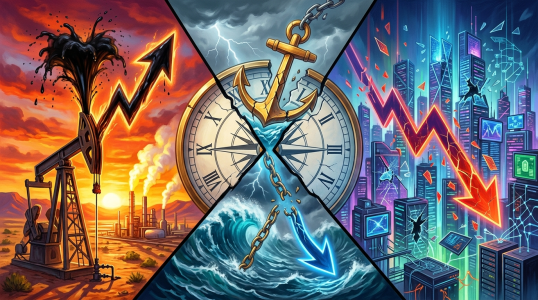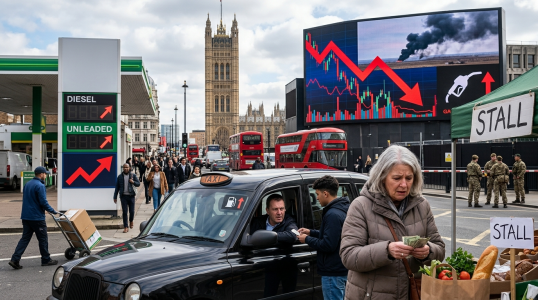
A military conflict can alter daily life far from the fighting. Oil prices may rise, inflation can return, and governments may face higher borrowing costs. I see the events linked to February 28 as a warning about these connections. The central lesson is simple: one geopolitical shock can trigger economic and political consequences across several countries.
The sequence begins with reported U.S. missile attacks in Iran and Iran’s response at the Strait of Hormuz. From there, the effects move through energy markets, oil-dependent economies, government finances, public spending, and civil unrest. Some details and causal links may change as more information emerges. Still, the framework helps explain how markets can transmit risk.
Table of Contents
ToggleWhy the Strait of Hormuz Matters
The Strait of Hormuz is a narrow shipping route between Iran and Oman. It connects the Persian Gulf with the Gulf of Oman and the Arabian Sea.
A large share of globally traded oil passes through this route. Liquefied natural gas shipments also depend on access to the waterway. Any closure, blockade, or military disruption can threaten energy supplies.
Markets do not always wait for exports to stop before reacting. Traders may increase prices as soon as they see a higher risk of delayed shipments. Shipping firms may reroute vessels, while insurers can raise premiums for travel through a conflict zone.
Those added costs can appear in oil prices even when physical supplies remain available. A lasting disruption would create greater pressure because producers might struggle to move exports to customers.
“It is hard to quantify the full impact of the events that began on February 28.”
That uncertainty is part of the problem. Investors must estimate how long the conflict may last, whether other countries will become involved, and how quickly trade routes could reopen.
View this post on Instagram
How an Oil Shock Spreads Through Economies
Higher crude oil prices affect much more than gasoline. Oil supports transportation, manufacturing, agriculture, chemicals, plastics, and air travel. Rising fuel costs can increase the price of moving food and goods.
Businesses must then decide whether to absorb those costs or charge customers more. Companies with limited pricing control may see their profits fall. Others may pass the increase to households.
The main transmission channels include:
- Higher gasoline, diesel, and aviation fuel prices
- More expensive shipping and business transportation
- Rising production costs for manufacturers and farmers
- Lower household spending after energy bills increase
- Weaker corporate earnings in fuel-sensitive industries
- Renewed inflation pressure across major economies
The result can resemble a tax on consumers. Families spend more on essential energy needs, leaving less money for restaurants, travel, clothing, and other purchases.
Oil-exporting countries may benefit from higher prices if they can continue selling their production. Importing countries usually face a harder trade-off. They must pay more for energy while managing the effect on inflation and growth.
Why India Is Sensitive to Oil Prices
India is a major oil importer. That dependence makes its economy and financial markets sensitive to sharp changes in global crude prices.
A more expensive oil import bill can place pressure on the country’s trade balance. It may also weaken the rupee if importers need more foreign currency to pay suppliers.
A weaker currency can make imported oil even more expensive in local terms. That creates a difficult cycle. Fuel costs rise, inflation increases, and expectations for interest rates may change.
Indian stocks can react quickly to these pressures. Airlines, transportation firms, manufacturers, and other heavy energy users may face lower expected profits. Consumer businesses can also suffer if households have less disposable income.
Describing a market as having “cratered” captures the speed of a sell-off, but it does not explain every cause. Stock markets respond to domestic policy, company earnings, investor positioning, currency moves, and global risk sentiment. Oil can be a major force without being the only one.
The Inflation and Interest Rate Domino
The largest economic risk may not be the first jump in oil. It may be the return of persistent inflation.
Central banks often separate temporary energy shocks from broader inflation. A short price increase may not lead to immediate policy action. The calculation changes if expensive energy begins affecting wages, services, transportation, and consumer expectations.
If inflation remains elevated, central banks may keep interest rates high for longer. They may also delay planned rate cuts. That raises financing costs for households, companies, and governments.
I view this as the central domino because government debt is already large across many economies. Higher rates matter more when countries must refinance substantial amounts of existing debt.
Governments rarely repay their entire debt balance at once. They issue new bonds as older obligations mature. If the new bonds carry higher interest rates, annual debt-service costs can rise over time.
This process may force difficult budget choices:
- Raise taxes to collect more revenue.
- Reduce public spending or slow its growth.
- Borrow more and accept a larger interest burden.
- Change retirement, education, or social programs.
Each option has economic and political costs. Spending cuts may weaken public services. Tax increases can reduce household demand. Additional borrowing may worry bond investors, which could push yields even higher.
France and the Political Cost of Austerity
France illustrates how a market shock can become a political conflict. If higher borrowing costs strain the national budget, leaders may seek savings through spending reductions.
Education cuts are especially sensitive because they affect students, families, teachers, and local communities. Young people may see reduced funding as a direct threat to their prospects.
Protests can then add another layer of uncertainty. Businesses may close temporarily, transportation may be interrupted, and public confidence may weaken.
It is important to separate sequence from proof of cause. A protest movement can have several drivers, including domestic policy, employment conditions, inequality, and long-standing political disputes. Higher debt costs may increase pressure without fully explaining unrest.
That distinction matters for sound financial analysis. A clean story about falling dominoes can be useful, but national economies are not machines with only one input. Several forces often act at the same time.
Regional Escalation Raises the Stakes
The reported attack on a civilian airport in Saudi Arabia by Iran-backed Houthis adds a security risk to the economic strain. Civilian aviation, tourism, trade, and insurance can all be affected by attacks on transport sites.
Saudi Arabia is also a major energy producer. Any threat to its airports, ports, pipelines, or oil facilities can influence expectations for global supply.
Markets may react to the chance of further escalation rather than confirmed damage alone. Investors often move money into assets viewed as safer during periods of conflict. At the same time, shares tied to travel or consumer spending may decline.
The term “Iran-backed” also requires care. It generally refers to financial, military, or political support. It does not prove that Iran ordered a specific attack. Responsibility and operational control should be confirmed through credible reporting and official investigations.
What Investors Should Watch
I do not think investors should make major decisions from a single headline. A better approach is to track the indicators that show whether the shock is becoming persistent.
- The duration and scope of disruption in the Strait of Hormuz
- Crude oil and refined fuel prices
- Shipping rates and marine insurance costs
- Inflation expectations and central bank statements
- Government bond yields in heavily indebted countries
- Currency movements in oil-importing economies
- Corporate earnings guidance from airlines and manufacturers
- Signs of wider military escalation
Portfolio concentration also deserves attention. Investors who hold too much in one country, industry, or asset type may be more exposed to an unexpected shock.
Diversification cannot prevent losses. It can reduce dependence on a single economic outcome. Cash reserves and an appropriate bond allocation may also help investors avoid selling long-term holdings during volatile periods.
As CEO of LifeGoal Wealth Advisors and a Certified Financial Planner, I focus on whether a client’s plan can withstand several possible outcomes. Forecasting the exact path of a conflict is much harder than preparing for uncertainty.
Why Verification Remains Essential
Rapid geopolitical developments produce incomplete and conflicting information. Dates, casualty reports, military responsibility, and market explanations may be revised.
Readers should verify major claims through several credible news organizations, government statements, shipping data, and market records. Social media can identify developments quickly, but speed does not guarantee accuracy.
The strongest analysis separates three categories: confirmed events, reasonable economic implications, and uncertain forecasts. Mixing them can make a possible outcome sound inevitable.
The reported February 28 events offer a useful model for studying financial transmission. Conflict can threaten energy routes. Higher oil prices can lift inflation. Inflation may keep interest rates elevated. Higher rates can strain government budgets, while spending cuts can create political resistance.
The full outcome cannot be known at the start of the chain. The practical response is not panic. It is disciplined monitoring, careful verification, and a financial plan built to handle shocks from several directions.
Frequently Asked Questions
Q: Why does a disruption in the Strait of Hormuz affect global prices?
A significant volume of oil and natural gas moves through the strait. A closure or security threat can delay supplies and raise shipping costs. Markets may increase prices before an actual shortage develops.
Q: Can higher oil prices force governments to cut spending?
They can contribute to that outcome. Expensive energy may increase inflation and keep interest rates high. Governments that refinance debt at higher rates may have less money for education, public services, and social programs.
Q: How should long-term investors respond to geopolitical shocks?
Investors should avoid reacting to one unverified report. They can review diversification, liquidity, time horizon, and risk tolerance. Major portfolio changes should support a long-term plan rather than a short-term prediction.