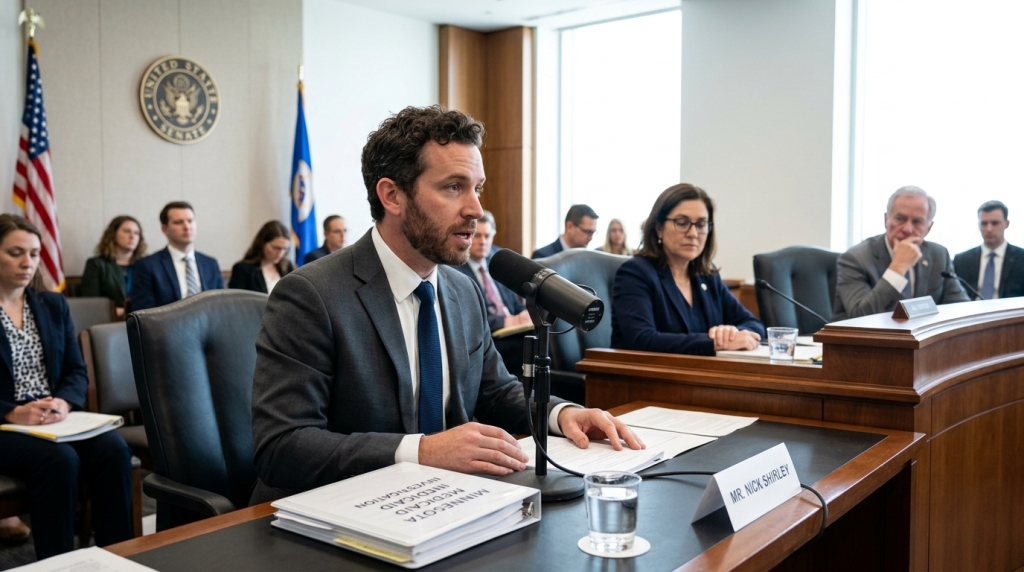
Independent investigative journalist Nick Shirley testified before the Senate Homeland Security and Governmental Affairs Committee about alleged Medicaid fraud in Minnesota. His appearance placed fresh congressional attention on how public health funds are monitored and protected.
Shirley presented findings from his investigation to the Senate panel, which oversees federal operations and government accountability. The claims concern Medicaid, a joint federal-state program serving people who meet income- or health-based eligibility rules.
The allegations have not been established as fact merely because they were presented at a hearing. Testimony can prompt further review, but investigators, auditors, and courts determine whether laws were broken.
Table of Contents
ToggleCongressional Scrutiny Raises the Stakes
The committee provides a public forum for lawmakers to examine possible waste, fraud, and weak oversight. Testimony from an independent journalist may identify warning signs or information that officials have not yet addressed publicly.
Shirley’s role also carries limits. Journalists can gather records, interview sources, and document suspicious conduct. They do not have the same authority as inspectors general or law enforcement agencies.
That distinction matters in a fraud inquiry. An unusual payment may reflect criminal conduct, an administrative mistake, poor documentation, or a disputed billing rule. A reliable finding requires records, context, and a fair response from those accused.
Why Medicaid Oversight Is Difficult
Federal and state governments finance Medicaid, while states manage daily operations within federal rules. That split can create oversight gaps. Providers may also work through complex billing and contracting systems.
Potential fraud can take several forms:
- Billing for care that was never provided
- Misrepresenting a service to receive higher payment
- Using false eligibility or provider information
- Paying or receiving improper referral fees
Not every incorrect claim is fraud. Fraud generally requires intentional deception. Errors and improper payments may still cost taxpayers money, but they can demand different remedies.
Minnesota Faces Questions About Controls
Shirley’s testimony puts pressure on Minnesota officials to explain how they review Medicaid providers, claims, and contractors. It may also lead senators to seek documents or testimony from state agencies and federal health officials.
The hearing could test whether existing controls detect suspicious billing quickly enough. Lawmakers may examine data-sharing rules, provider screening, payment suspensions, and the recovery of public funds.
Still, aggressive enforcement presents its own risks. Payment freezes or broad investigations can disrupt legitimate providers and delay patient care. Officials must protect public money without treating every irregularity as a crime.
Evidence Will Determine What Comes Next
The central question is whether Shirley’s reporting can be confirmed through payment records, contracts, witness accounts, or official audits. The committee may refer credible evidence to inspectors general, state investigators, or prosecutors.
Those named or implicated by any allegation should have an opportunity to answer it. That basic safeguard protects due process and improves the accuracy of congressional oversight.
Shirley’s appearance has moved the issue from independent reporting into a federal hearing room. The next phase will be less theatrical and more exacting: tracing claims, checking documents, and deciding whether the evidence shows fraud, poor management, or both.
For taxpayers and Medicaid patients, the stakes are shared. Funds lost through deception cannot pay for care, while rushed conclusions can damage lawful providers. What matters now is a transparent review, clear findings, and action tied to verified evidence.
Image: Pexels