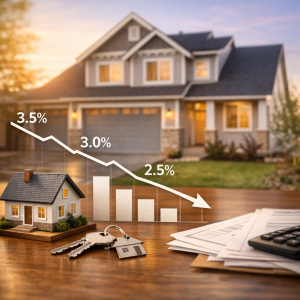
“Stop throwing money away on rent and buy a house.\” It is one of the most repeated pieces of financial advice in America, and it is far too simplistic. In 2026, with home prices and mortgage rates where they are, the rent-versus-buy decision is genuinely close for many people, and the right answer depends heavily on your situation. Here is an honest, numbers-based look at which one actually wins.
Table of Contents
ToggleThe Myth That Renting Is Wasted Money
The biggest misconception is that rent is money down the drain while a mortgage builds wealth. The reality is more nuanced. A large portion of an early mortgage payment goes to interest, not principal, and homeowners also pay property taxes, insurance, maintenance, and closing costs that build no equity at all. Renting, meanwhile, buys you flexibility, predictability, and freedom from maintenance, none of which are nothing. Renting is not throwing money away any more than buying groceries is; you are paying for a service you use. The honest question is not which is morally superior but which makes more financial sense for you right now.
“The less money you have, the more you need it.”
Suze Orman’s point, from an interview with TODAY, is a useful lens for this decision. Buying a home you cannot comfortably afford, or that leaves you with no cushion, is far riskier than renting within your means while you build savings.
The Real Costs of Owning
Buyers routinely underestimate the true cost of homeownership, which goes well beyond the mortgage payment. Before you buy, account for all of it:
- Mortgage interest, which dominates payments in the early years.
- Property taxes and homeowners insurance, which rise over time.
- Maintenance and repairs, often estimated at 1% to 2% of the home’s value per year.
- Closing costs to buy and substantial commissions to eventually sell.
These costs mean that buying rarely pays off unless you stay in the home for several years, long enough for appreciation and equity to outrun the transaction costs.
The Real Costs and Benefits of Renting
Renting has its own trade-offs. You avoid maintenance, property taxes, and the risk of a falling home value, and you keep the flexibility to move easily for a job or a life change. The downsides are that you build no equity, you are exposed to rent increases over time, and you have less control over your living space. For people who value flexibility, who are not sure where they want to settle, or who would be stretched thin by the full cost of owning, renting is often the smarter financial choice, not a failure.
When Buying Makes Sense
Buying tends to win when several conditions line up. Consider buying if:
- You plan to stay put for at least five to seven years, enough to absorb transaction costs.
- You have a stable income and a down payment that does not drain your emergency fund.
- The total monthly cost of owning is comparable to or only modestly above renting in your area.
- You value stability and control, and you are ready for the responsibilities of maintenance.
When Renting Makes Sense
Renting is often the better call when flexibility or affordability is the priority:
- You might move within a few years for work or personal reasons.
- Home prices in your area are very high relative to rents.
- Buying would leave you house-poor with little savings left over.
- You prefer to invest the difference between renting and owning costs in the market.
Run the Numbers: The Price-to-Rent Ratio
One simple tool cuts through the emotion: the price-to-rent ratio. Divide the price of a home you would buy by the annual rent of a comparable home. A low ratio suggests buying is relatively attractive, while a high ratio favors renting. Pair this with a break-even analysis, which estimates how many years you would need to own before buying beats renting once all costs are counted. In expensive markets, that break-even can stretch well beyond five years, which is a strong signal to keep renting if you might move sooner. Online rent-versus-buy calculators can run these numbers for your specific situation in a few minutes, and they are far more reliable than the old slogan about throwing money away.
The Invest-the-Difference Factor
One piece of the math people forget is what you do with the money you do not spend. If renting costs meaningfully less than owning in your area, and you actually invest the difference rather than spending it, renting can build just as much wealth as owning, sometimes more. The wealth-building power of homeownership comes largely from forced savings, the discipline of paying down a mortgage, but a disciplined renter who invests the gap can replicate that benefit with more flexibility. The key word is disciplined; if the savings from renting simply get spent, owning’s forced-savings effect wins by default.
Don’t Ignore the Lifestyle Side
Finally, remember that a home is not only an investment, but it is also where you live. Owning offers stability, the freedom to renovate, and a sense of permanence that matters enormously to many people, especially those raising families. Renting offers mobility, simplicity, and freedom from the unexpected costs and responsibilities of ownership. Neither is right or wrong as a lifestyle; the best choice aligns with the life you actually want, not just the spreadsheet. The mistake is letting social pressure or the throwing-money-away myth push you into a purchase that does not fit your finances or your plans.
Your Timeline Is the Single Biggest Factor
If you remember only one thing from this comparison, make it this: how long you plan to stay put matters more than almost anything else. Because buying carries high upfront and exit costs, the longer you own a home, the more those costs spread out and the more time appreciation and equity have to work in your favor. As a rough rule, if you are confident you will stay for at least five to seven years, buying often makes sense; if there is a real chance you will move sooner, renting is usually the safer financial choice.
Life circumstances feed directly into this. A stable job, a growing family, and roots in a community all point toward buying, while career uncertainty, a possible relocation, or simply not knowing where you want to settle point toward renting. Be honest with yourself about your timeline rather than assuming you will stay forever, because overestimating how long you will keep a home is one of the most common and expensive miscalculations buyers make.
Use a Rent-vs-Buy Calculator
Before making such a major decision, take advantage of the free rent-versus-buy calculators available online, which do the heavy math for you. These tools let you plug in the home price, your expected down payment, the mortgage rate, local rents, property taxes, maintenance estimates, and how long you plan to stay, then show you the break-even point where buying becomes the better deal. Running a few scenarios is eye-opening, because small changes in your timeline or local prices can flip the answer entirely.
A calculator removes the emotion and the slogans from the decision and replaces them with numbers specific to your situation. It will not capture the lifestyle factors, which only you can weigh, but it gives you a solid financial foundation to build on. Spending fifteen minutes with one of these tools is far wiser than making a six-figure decision based on a gut feeling or a piece of conventional wisdom that may not apply to your circumstances at all.
The Bottom Line
In 2026, renting versus buying is a genuinely close call that depends on your timeline, your local market, and your discipline as a saver. Buying tends to win if you will stay several years and can afford it comfortably; renting wins if you value flexibility, face very high local prices, or would be stretched thin by ownership. Run the price-to-rent and break-even numbers, account for every cost of owning, and remember that a disciplined renter who invests the difference can build real wealth too. The smart move is the one that fits your numbers and your life, not the slogan. For more, see our personal finance section.
Image Credit: Pexels