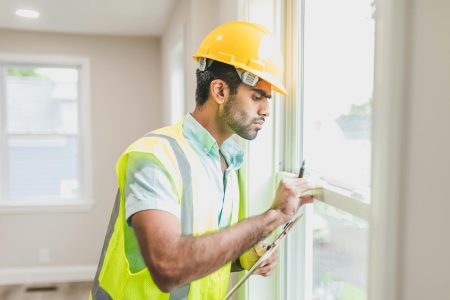
It’s no secret that buying a house is the most significant financial commitment most of us will ever make. During the excitement of a bidding war or when finding “the one,” it’s easy to view a home inspection as another hurdle to jump through, or at worst, as a $400-600 stumbling block to closing.
In contrast, viewing an inspection as an expense is a fundamental misunderstanding of the math involved. In reality, a professional inspection is a high-yield investment.
Consider the statistics:
- According to estimates, 1 in 4 homes has a critical defect.
- There are risks associated with new construction as well. As with older homes, brand-new homes are also susceptible to serious structural damage, including buckled floors, jammed doors, and significant cracks in walls.
- Foundation issues are financial deal-breakers. Compared to the average repair cost of $5,000 (normally between $2,200 and $8,100), a full foundation replacement can cost anywhere between $20,000 and $100,000.
The moment you sign those closing papers without an inspection, these defects transform from the seller’s problem into your personal financial liability.
Ultimately, a home inspection shouldn’t be viewed as a tedious checklist of problems. It’s a strategic safeguard that prevents future costly surprises from draining your bank account.
Table of Contents
Toggle1. The Power of Negotiation: Turning Defects into Credits
The main benefit of inspection? It provides empirical leverage. If you make an offer on a house, the price assumes the property is in good condition. If an inspection reveals that the “perfect” house actually needs foundation work or a new roof, the “assumed” value changes.
How to use the report for savings:
- Direct repair requests. Before the sale, you can ask the seller to fix critical issues, such as a cracked heat exchanger or a leaking pipe.
- Price reductions. Alternatively, if you prefer to oversee or handle the repairs yourself, you can negotiate a lower price.
- Closing cost credits. The seller may offer a “cash credit” at closing to cover the estimated repair costs.
Unless you have a copy of the inspection report, you cannot support a lower offer, and you’re stuck with paying top dollar for a “subpar” property.
2. Avoiding the “Money Pit” Surprise
House problems can be seen by the naked eye in some cases, but the most expensive ones tend to be hidden. Professionals check areas you don’t: the crawl space, attic, electrical panel, and behind the furnace.
Preventive maintenance is the most effective way to cover hidden dangers before they become a problem. Examples include outdated knob-and-tube wiring or significant water intrusions. It can cost between $1,388 – $5,323 to replace a main sewer line. If you discover this before you own the home, you can either have the seller fix it or walk away.
3. Strategic Budgeting: From Reactive to Proactive
Not all “findings” in an inspection report are significant. Often, inspectors will call attention to “aging components.” The HVAC system, for instance, might be working perfectly but will soon reach the end of its typical 20-year life cycle.
There’s no substitute for this information in the financial world. Rather than getting a surprise replacement bill of $7,000 six months after moving in, try these alternatives:
- Funds should be allocated specifically for the replacement.
- To cover the first year of the aging unit, negotiate a seller-paid home warranty.
- Make maintenance a priority to extend the unit’s life.
When you determine the “life expectancy” of the home’s systems, you switch from reactive spending (emergency repairs) to proactive spending.
4. Safety, Health, and Compliance
Financial losses aren’t just about structural repairs; they’re about health and legal compliance. Mold, radon gas, and lead paint require specialized remediation, which can cost thousands and endanger your family’s health.
By detecting these issues early, we can prevent “health-related fixes” that are often more expensive since they require specialists and temporary relocation. Furthermore, discovering unpermitted work, such as a DIY basement finish, protects you from fines and the costs of bringing the work up to code.
5. The Ultimate Exit Strategy: The Right to Walk Away
Contingency clauses are probably the most significant financial savings an inspection can provide. As long as your inspection revealed a “deal-breaker,” a structural issue so severe it compromises the home’s integrity, you can withdraw from the contract and recoup your earnest money.
If you buy a “money pit,” you may experience financial instability and even foreclosure over the years. Thankfully, a home inspection is the only way to get objective data that allows you to say “no” to a risky purchase.
Tips for Buyers: How to Prepare for Your Inspection
Be sure to follow these steps before the inspector arrives so you get the most value from your investment:
| Tip | Why it Matters |
| Attend the Inspection | Seeing the issues firsthand helps you better understand their severity than just reading the text. |
| Bring a List of Concerns | If you noticed a soft spot in the floor or a weird smell in the basement during your tour, tell the inspector. |
| Don’t Sweat the Small Stuff | Every house has minor flaws (loose doorknobs, chipped paint). Focus your energy and negotiation on the “Big Five”: Roof, Foundation, HVAC, Plumbing, and Electrical. |
| Ask About “Remaining Life” | Don’t just ask if it works; ask how much longer it will likely last. |
| Check the Perimeter | Clear away debris or storage boxes from the walls in the garage or basement so the inspector can actually see the foundation. |
Conclusion: Ensuring Value Matches Price
In the modern real estate market, a home inspection isn’t just a formality; it’s a proactive financial strategy. As a result, the price you pay aligns with the actual value of the structure you are buying.
No matter if it results in a $5,000 price reduction or simply gives you peace of mind that your roof won’t leak next winter, the ROI of an inspection is consistently positive. You don’t want to leave your financial future up to chance; let home inspection professionals take care of it for you.
FAQs
Does a “passed” inspection mean the house is perfect?
In reality, home inspections aren’t “pass/fail.” An inspection is a snapshot of the home’s condition at that particular moment in time. New construction or not, every house has a list of findings. Buying a house doesn’t have to be perfect, but understanding it completely before you move in is the key to preventing expensive surprises.
Can I perform the inspection myself to save money?
If you notice a leaky faucet or cracked window, a DIY check-up is not a substitute for professional assistance. A certified inspector uses specialized tools such as thermal imaging cameras and moisture meters to detect hidden moisture. In addition, a seller will rarely negotiate a price based on a buyer’s “hunch,” but rather listen to a licensed professional’s report.
If the report finds major issues, do I have to walk away?
Not at all. In fact, most major problems can be solved. The report is merely a tool for you to ask the seller to resolve the issue or to provide the funds for you to do so. You can use a “scary” report to prevent paying full price for a home that requires significant investment immediately.
How long does a typical inspection take, and should I be there?
Depending on the size and age of the home, a thorough inspection usually takes 2 to 4 hours. It’s strongly recommended that buyers attend at least the last hour of the inspection. When you walk through a property with the inspector, you get a better idea of the severity of concerns and can ask questions that may not be apparent in a written report.
What are the “Big Five” items I should worry about most?
Although a long list of minor repairs may seem daunting, you should concentrate on the “Big Five.”
- Foundational/structural integrity
- Roofing condition
- Electrical wiring and safety
- Plumbing and the main sewer lines
- HVAC systems
Typically, these systems cost thousands of dollars to repair. In general, cosmetic issues are not as effective as negotiation points because they are generally considered part of the “cost of homeownership.”
Image Credit: RDNE Stock project; Pexels