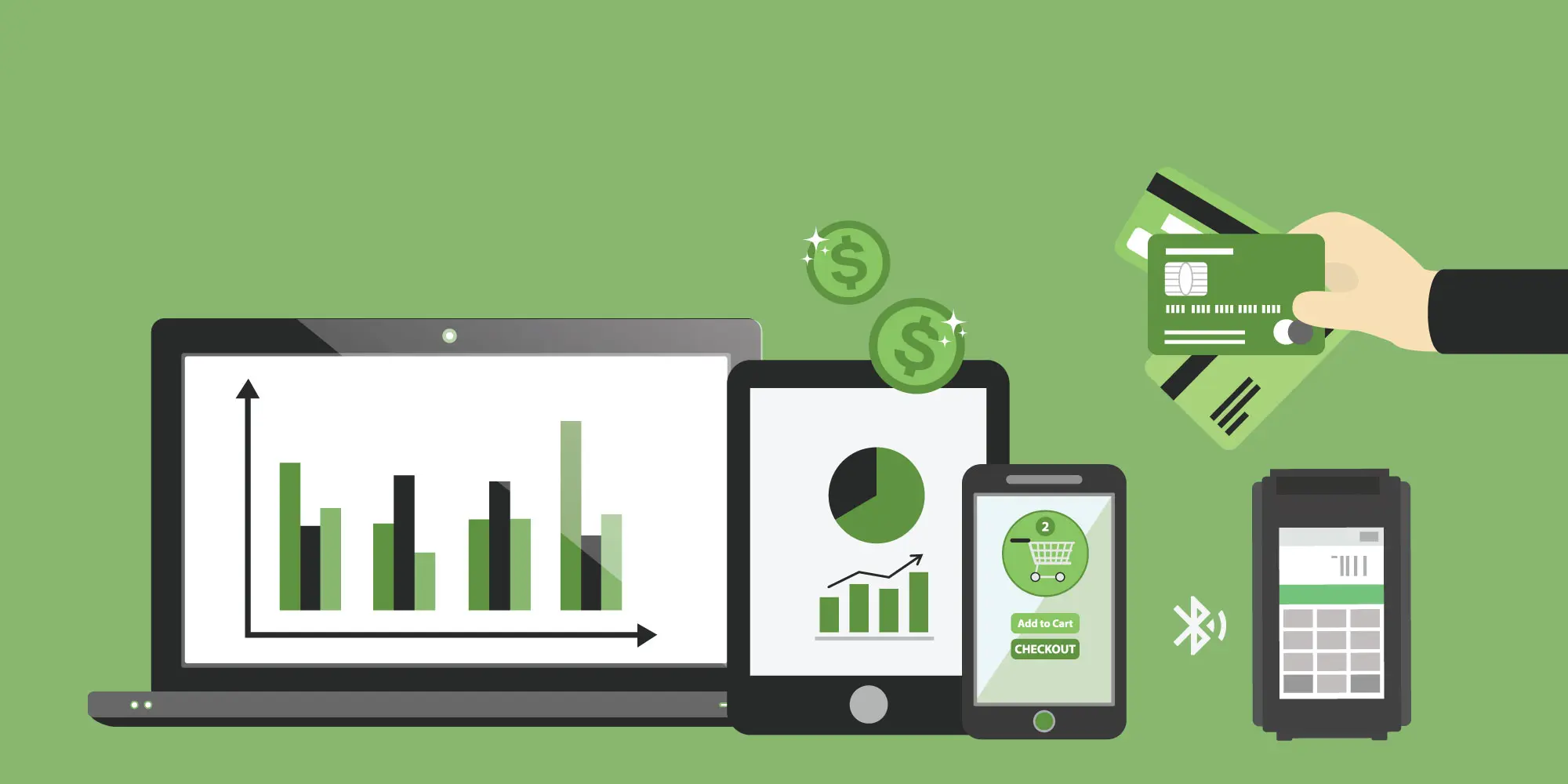
If you want to take your business to the next level, it’s time to take advantage of the fintech revolution.
There are so many great fintech tools for business. These business tech tools can help you manage your books, get paid faster, and interact with your employees and your customers.
Fintech provides you the opportunity to streamline your operations — and do it for less than you might think. Here are some of the best fintech tools for business:
1. Zenefits
If you are looking for a way to manage your payroll and benefits, this can be one way to go.
Zenefits automates your processes so that you spend less time trying to make heads or tales of the situation. Not only can Zenefits handle payroll and benefits, but it also manages compliance.
So, not only can this tool help you with the financial aspects of managing employees, but it can also help with the regulation piece. This is just one of the tools combining the growing field of regtech with fintech.
2. Gusto
This is another great tool that allows you to manage payroll and benefits. Gusto provides you with a way to organize all of your human resources functions without too much trouble. Get it set up and save time and money.
Not only can you make sure that you provide health benefits, but you can also help your employees with the 401(k). From automating taxes and workers’ compensation to making sure your employees are paid on time each month, Gusto is a great tool to help you keep on top of payment and benefits.
3. Guideline
Do you want to offer a 401(k) plan to your employees? Guideline is one of the fintech tools for business that helps you manage your plan for the benefit of your employees.
You can set up an automatic enrollment for your employees once they are eligible for the plan. On top of that, it’s fairly easy for employees to go in and manage their own accounts.
One of the great things about Guideline is the fact that it doesn’t have hidden costs. Employers pay a flat fee and employees pay the low-cost fund fee. The fees are easy to see, and it keeps costs down.
Guideline is part of a trend in fintech toward more transparency and fewer fees when it comes to money management, whether it’s at the business level or personal level.
4. Expensify
If you want to keep track of employee expenses, Expensify can be a good choice. This is one of the best fintech tools for business because it can allow your employees to submit expenses for reimbursement.
It’s easy to use, allowing you to categorize expenses. Plus, it’s easy to upload receipts for complete reports. Expensify also has an app that employees can use to snap pictures of receipts and keep track of their cases.
You can update when expenses have been cleared for reimbursement, and when they will be deposited in your employees’ accounts. It’s an easy way to help manage these types of transactions, without the need to take a lot of time.
5. Emburse
This is another employee expense tool. However, you instead of managing your reimbursement program, Emburse focuses on getting cards out to employees so they can pay ahead of time.
One of the cools things about Emburse is that it can create virtual credit cards for your teams. So, you can assign each business unit a card that everyone can use. You can have employees get approved for a set amount ahead of time to make sure that things don’t get out of control.
A virtual credit card can be a great help. Emburse provides a credit card number, expiration date, and security code so that the card can be used to make online purchases for everything from inventory to business travel.
It’s also possible to use Emburse to distribute and manage physical cards to members of your team.
6. Due
Of course, Due is one of the best fintech tools for business. If you are looking for an invoice and payments manager, Due is the way to go.
You can quickly and easily see who has paid, and send reminders to those who haven’t. Due also has the ability to accept a variety of different payments and a digital wallet that can help you manage your payment forms.
When you have money in your account, Due automatically deposits into your bank account, if that’s what you want. It’s also possible to set up recurring invoices so that all you need to do is just wait for the money to come in.
With the help of Due, you can reduce the amount of time you spend on invoicing, and focus more on building your business.
7. Xero
If you are looking for an accounting solution for your business, Xero can provide that. The company provides bookkeeping services for businesses. This can be a big help if you want to manage a lot of your information, but don’t want to take the time to do it yourself.
Xero is compatible with a lot of different software, including QuickBooks.
Accounting is one of the things that you should be outsourcing as a business owner.
8. Kabbage
One of the issues that many businesses run into is funding. Kabbage is one of the fintech tools for business that focuses on getting you the capital you need when you need it.
With Kabbage, you establish a working capital credit line of up to $100,000. You can use the money to buy equipment, shore up your payroll, or accomplish other business tasks. It’s fast and easy to apply.
There are so many new ways to stay on top of your business funding today, thanks to fintech. This is just one of those tools that can help you move forward and accomplish what you need to with your business.
9. Fundbox
Another of the fintech tools for business that focuses on funding is Fundbox. You connect Fundbox to your invoicing tool and then you can borrow against your invoices to get a little extra cash flow.
The idea behind Fundbox is to allow you to access capital even as you wait for payment from clients and customers. You get a credit line, and then borrow against what you are owed. You do have to make payments back to time, but if you are in a short-term cash crunch, it can be one fintech solution to your problem.
10. Nxt
If you want your business to be part of the blockchain revolution, you can use Nxt.
Not only is Nxt a cryptocurrency, but it is also a platform that can be used to grow your business. You can create your own applications to better manage transactions and take your business to the next level.
If you are interested in tapping into the power of blockchain and cryptocurrency, this is one of the most exciting fintech tools for business.
11. Square
Even though it feels “old,” the reality is that Square is still very much one of the relevant fintech tools for business.
Square works well if you have a physical location, and if you travel around with your business. Thanks to terminals that work with tablets and smartphones, it’s possible to accept credit card payment no matter where you are.
Square is always innovating to keep up with trends as well. Square now has equipment that is compatible with NFC payments so that people who store payment information in their phones can pay you, no matter where you are.
You can also use Square for online payments.
Plus, you can also use Square to get customer feedback after they have paid. It’s a way to learn about customers as well as make sure you can accept physical payment.
Bottom Line
If you aren’t using fintech tools for business, you’re missing out. There are tools for almost every aspect of your growing business. They can make your life easier and save you money, allowing you to maximize your efforts.
Related Reading
- 6 Benefits of Using Chatbots for Your Business
- 5 Biggest Challenges of Data Security in the Financial Service Industry
- How Blockchain Technology Is Transforming the Supply Chain
Related Reading: The right tools are only half the battle — see how to stay on top of your game as an entrepreneur.
Related Reading: Speed up your daily workflow with these 151 keyboard shortcuts to save time.

How to Choose the Right Fintech Tools for Your Small Business (2026)
The best fintech tools for small business are the ones that remove a specific, recurring headache—chasing invoices, reconciling expenses, running payroll, or accepting payments—without adding cost or complexity. Rather than signing up for everything at once, start by mapping your workflow and picking one tool per pain point, then expand only when a tool clearly pays for itself in saved time or faster cash flow.
Start with cash flow and getting paid
For most owners, the fastest win is invoicing and payments, because getting paid sooner solves more problems than almost anything else. Look for a tool that sends recurring invoices, accepts several payment types, and automates reminders. If budget is tight, compare options in our roundup of free invoicing software for small business owners, and make sure whatever you pick can accept multiple forms of payment so you never lose a sale over checkout friction.
Add bookkeeping, expenses, and funding as you grow
Once payments are handled, layer in accounting and expense tracking so your books stay clean year-round. Knowing which reports to watch matters as much as the software itself—see the most important accounting reports for your small business. As you scale, lending and cash-flow tools can bridge gaps while you wait on receivables; our guide to the key financial tools to help entrepreneurs scale walks through how the pieces fit together, and the future of digital payments hints at where to invest next.
Key Takeaways
- Choose fintech tools by pain point—payments, payroll, expenses, accounting, or funding—not by hype.
- Prioritize invoicing and payments first, since faster cash flow has the biggest impact.
- Favor tools with transparent, flat pricing and strong security over the cheapest option.
- Make sure each tool integrates with your accounting software to avoid double entry.
Frequently Asked Questions
What are the must-have fintech tools for small business owners?
At a minimum, most small businesses benefit from an invoicing and payments platform, accounting or bookkeeping software, and an expense-tracking tool. Payroll and benefits software and a funding or cash-flow tool become essential as you hire and scale.
Are fintech tools safe for small businesses?
Reputable fintech providers use bank-grade encryption and fraud monitoring, often matching or exceeding traditional banks. Choose established providers, enable two-factor authentication, and review each tool’s security and data practices. The SBA offers general guidance for evaluating business tools at SBA.gov.
How much do fintech tools cost?
Many offer free tiers or flat monthly plans, while payment processors typically charge a small percentage per transaction. Total cost depends on your volume and the features you need, so compare pricing against the time saved. For a plain-English overview of the category, see Investopedia’s fintech explainer.
Related Reading: Add automation to your stack and see how chatbots can help you get paid.