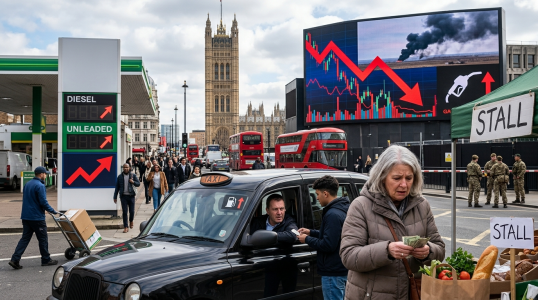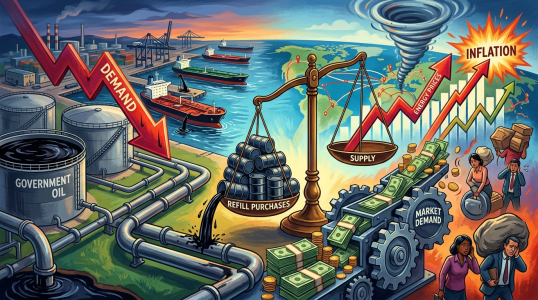
Emergency oil reserves can soften the economic shock of war or a major supply loss. Yet using those reserves creates another challenge. Governments must eventually replace the oil. If a conflict ended now, the refill effort could add major demand to an already sensitive market, placing upward pressure on energy prices and inflation.
Table of Contents
ToggleWhat Strategic Petroleum Reserves Actually Do
Strategic petroleum reserves, often called SPRs, are government-controlled emergency oil stockpiles. Countries maintain them to protect their economies from severe supply disruptions.
Governments can release these reserves during wars, embargoes, natural disasters, or damage to major energy infrastructure. They are not meant to provide an endless supply of cheap oil. They are temporary insurance against sudden shortages.
In the United States, much of the emergency crude oil is stored in underground salt caverns. These sites offer large storage capacity and can hold oil securely for extended periods.
Salt caverns are created by dissolving salt deposits deep underground. Operators then pump oil into the resulting underground spaces. The surrounding geology helps contain the crude without requiring vast networks of aboveground tanks.
Other countries use different storage systems. Some keep oil in tanks, while others require private companies to maintain minimum inventories. The ownership and release rules vary, but the economic purpose is similar.
- Emergency reserves provide oil during serious supply interruptions.
- Governments control when and how they release public stockpiles.
- Stored oil can calm markets, but it cannot replace normal production forever.
- Every barrel released may need to be purchased again later.
View this post on Instagram
The Refill Problem After a War
During a conflict, the immediate focus is often on the oil that may disappear from the market. Attention then shifts to whether other producers can replace it and whether governments will release emergency supplies.
That view misses the second phase. Once governments draw down their reserves, they become future buyers.
“If the war ended today, we would need 2,000,000 barrels of oil a day for eighteen months just to refill the strategic petroleum reserves around the world.”
That estimate illustrates the possible scale of replacement demand. At two million barrels per day for roughly 18 months, the total purchase would exceed one billion barrels.
This should be viewed as a scenario, not a guaranteed schedule. Global reserve levels, national targets, refill policies, and purchasing timelines can change. Governments may also spread purchases over a longer period to limit market disruption.
Still, the central issue remains. Emergency oil releases shift some demand from the present into the future. They can reduce immediate stress, but they also create a later need to rebuild national protection.
I see that delayed demand as an important part of the economic discussion. A war ending does not mean its energy effects disappear the same day.
Two Million Barrels a Day Would Matter
Oil is traded through a global market with enormous daily volume. Even so, a sustained increase of two million barrels per day could be meaningful.
Oil prices are often set at the margin. A relatively small gap between available supply and desired demand can cause a large price move. That is especially true when spare production capacity is limited.
A coordinated refill program would place governments in the market alongside refiners, manufacturers, transportation companies, and other commercial buyers. Competition for available barrels could push prices higher.
The effect would depend on several conditions:
- How much oil producers can add without major delays.
- Whether global consumption rises or falls during the refill period.
- How quickly governments attempt to restore their inventories.
- Whether sanctions or damaged infrastructure restrict exports.
- How traders assess the risk of another supply interruption.
If producers increase output enough, the market may absorb reserve purchases with less price pressure. If economic growth weakens, lower private demand could also make room for government buying.
The opposite outcome is possible if production remains tight. A fast refill could then compete directly with ordinary consumption. Prices would likely respond before every planned barrel was purchased because markets anticipate future demand.
Why Oil Prices Affect More Than Gasoline
Higher crude oil prices show up at the fuel pump, but the impact doesn’t stop there. Energy is used throughout the production and delivery of goods.
Diesel powers trucks and heavy equipment. Jet fuel affects airlines and air freight. Petroleum also fuels chemicals, plastics, packaging, and many industrial materials.
When fuel costs rise, companies face a choice. They can absorb the expense, reduce spending elsewhere, or charge customers more. In practice, businesses, workers, and consumers often share the burden.
This is why reserve replacement could influence global inflation. The effect might appear first in energy indexes, then move into transportation, food, travel, and manufactured products.
Food offers a clear example. Farms use fuel for machinery, while processors and distributors use energy to move products through the supply chain. A sustained rise in oil prices can raise costs at several stages before food reaches a household.
Higher inflation can also affect interest-rate policy. Central banks may look past a brief energy spike if other prices remain stable. A long period of expensive oil is harder to ignore because it can shape wages, business plans, and consumer expectations.
Refilling Reserves Requires Careful Timing
Governments do not have to refill every emergency stockpile at once. They can use price targets, fixed purchase schedules, or contracts for future delivery.
A slower approach may reduce upward pressure on oil prices. It also leaves countries with thinner emergency protection for longer.
A faster approach restores energy security sooner. However, concentrated buying may raise costs for governments and consumers.
This creates a difficult policy trade-off:
- Buy quickly and risk adding pressure to oil prices.
- Buy slowly and remain less prepared for another disruption.
- Adjust purchases as prices, production, and security risks change.
The third option may be the most practical. A flexible program can speed up purchases during periods of weak demand or strong production. It can pause when prices rise sharply.
Coordination among governments also matters. If many countries enter the market at the same time, their combined demand could amplify the price response. Staggered schedules may reduce that effect.
What Investors and Households Should Watch
I would not treat any single refill estimate as a precise oil-price forecast. Oil markets respond to many forces, including economic growth, production decisions, sanctions, currency values, and investor positioning.
The more useful approach is to watch how several conditions develop together. Public reserve announcements are one piece of that analysis.
- Track government purchase schedules and target inventory levels.
- Watch production plans from major oil-exporting countries.
- Review global consumption estimates and economic growth data.
- Monitor shipping routes, sanctions, and energy infrastructure.
- Look for energy costs spreading into broader inflation measures.
For investors, the lesson is not that oil must rise. The lesson is that rebuilding emergency inventories may create an easy-to-overlook source of demand.
For households, renewed energy inflation could affect fuel, utility, transportation, and grocery costs. Financial plans should allow room for essential expenses to fluctuate.
Portfolio decisions should still reflect personal goals, time horizon, and risk tolerance. A geopolitical scenario alone is rarely a sound reason for making a major investment change.
Wars Leave Economic Costs After Fighting Stops
The end of a war can reduce immediate fear and lower the chance of further supply damage. That would be welcome. Yet depleted oil reserves, damaged infrastructure, disrupted trade, and changed security policies may continue affecting markets.
“What does that do for oil prices? What does that do for global inflation? Wars have consequences.”
That is the central point. Emergency reserves can buy time during a crisis, but they do not erase the cost of lost supply. Replacing those barrels may become part of the postwar economic bill.
Consumers, policymakers, and investors should pay attention to both sides of the reserve cycle. The release receives most of the headlines. The refill may shape oil prices and inflation for many months afterward.
Frequently Asked Questions
Q: What is a strategic petroleum reserve?
An emergency supply of crude oil or petroleum products controlled or required by a government.
Governments can release it during severe shortages, wars, disasters, or other major disruptions.
Q: Would refilling oil reserves automatically increase prices?
No. The result depends on production, commercial demand, refill speed, and available spare capacity. Large purchases are more likely to lift prices if supply is already tight.
Q: How could reserve purchases contribute to inflation?
Higher oil prices can increase the cost of fuel, freight, farming, air travel, chemicals, and manufacturing. Businesses may pass part of those costs to consumers through higher prices.
Image Credit: