After a week of sharp market swings, investors may hope calmer trading will return quickly. That outcome is possible, but it should not be assumed. My central message is simple: volatility often arrives in clusters. Large price moves can activate trading systems, options hedges, margin calls, and emotional decisions that produce further instability.
I am Taylor Sohns, CEO of LifeGoal Wealth Advisors, a Certified Investment Management Analyst and Certified Financial Planner. In my work managing more than $500 million, I help investors understand the forces behind market movement. Four forces deserve close attention after a volatile week: systematic funds, options dealers, leverage, and investor behavior.
Table of Contents
ToggleWhat Volatility Clustering Means
Volatility measures the size and speed of market price changes. Calm periods tend to feature smaller daily moves. A volatile period may include steep losses, sudden rallies, and quick reversals.
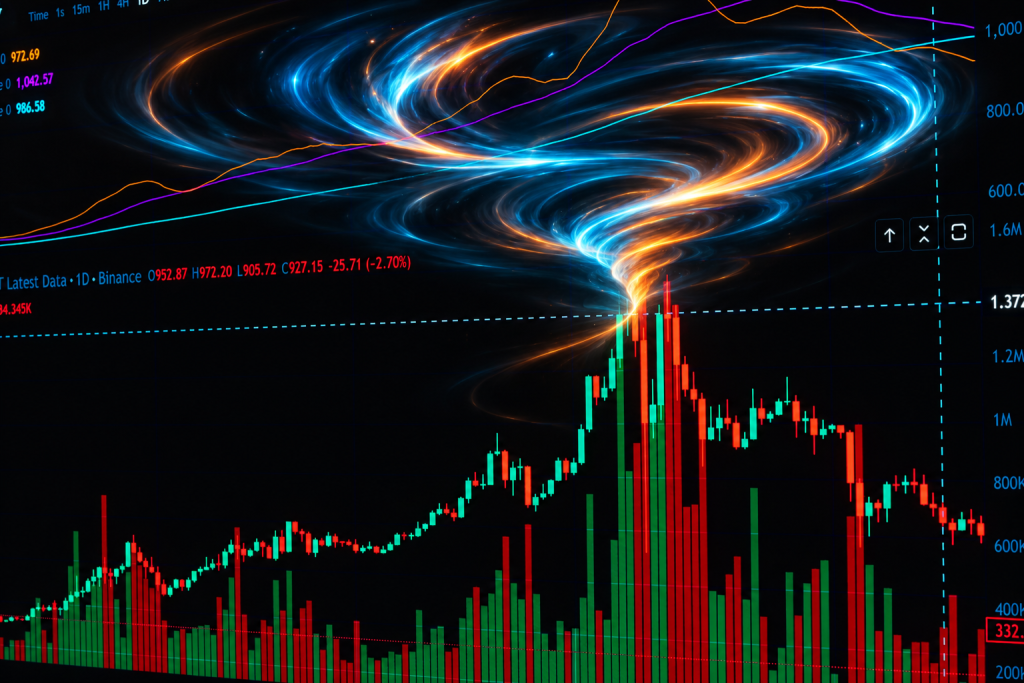
These moves are not evenly spread over time. Large swings often follow other large swings. That pattern is known as volatility clustering.
This does not mean the stock market must fall after a difficult week. Direction and volatility are different. Stocks could decline, rebound, or move sharply in both directions. The main concern is that unstable conditions may persist.
Last week’s volatility does not mean stocks are going lower, but volatility clustering tells us another active week may follow.
Markets contain many participants who react to the same price changes. Some responses follow preset rules. Others come from contractual requirements or fear. Once volatility rises, these reactions can reinforce one another.
View this post on Instagram
Four Forces That Can Extend Market Turbulence
- Systematic funds may reduce stock exposure as measured risk rises.
- Options dealers may need to trade in the same direction as the market.
- Leveraged investors can face margin calls and forced sales.
- Institutions and individual investors may reduce risk at different stages.
Each force matters on its own. The larger issue appears when several occur at the same time. Selling by one group can increase volatility, which can then trigger selling or hedging by another group.
Systematic Funds Can Add Selling Pressure
Many investment funds follow rules that link portfolio exposure to market risk. These funds may include volatility-control strategies, trend-following programs, and risk-managed hedge funds.
Their systems often reduce exposure when volatility rises. The goal is not necessarily to predict the next market move. It is to keep the portfolio’s expected risk within a set range.
Consider a strategy designed to maintain a stable level of risk. If daily market swings double, the same stock position may now carry much more risk. The fund may sell stocks or stock futures to bring its exposure back within its target.
This process can create a feedback loop. Falling prices increase measured volatility. Higher volatility leads systematic funds to cut positions. Those sales may push prices lower or make trading less stable.
The timing is also important. These strategies may not adjust all at once. Some respond during the trading day, while others rebalance near the close or over several sessions. That can allow selling pressure to continue after the first shock.
Systematic selling does not reflect a shared belief that companies have become less valuable. It can result from risk controls. Investors who understand that distinction are less likely to treat every large move as a new judgment about the economy.
Options Dealers May Amplify Price Changes
Options activity can also affect the underlying stock market. Dealers who facilitate options trades often hedge their exposure by buying or selling shares and futures.
One important idea is gamma. In simple terms, gamma helps describe how quickly an option’s sensitivity to a stock price changes. Dealer positioning can influence whether hedging slows a move or amplifies it.
When dealers hold positive gamma, they often sell after prices rise and buy after prices fall. That behavior can reduce short-term swings.
Negative gamma can do the opposite. Dealers may need to buy as prices rise and sell as prices fall. Their hedging then follows the market’s direction rather than resisting it.
Suppose a broad index begins falling quickly. A dealer with negative gamma may need to sell index futures to remain hedged. That sale can add pressure to an already weak market. If prices rebound, the dealer may need to buy, which can strengthen the recovery.
This helps explain why a volatile session can include both a sharp decline and a powerful rally. Options hedging may increase movement in either direction.
Dealer positioning shifts as options expire, new contracts open, and prices move. It should not be treated as a fixed forecast. Still, it is one reason investors should prepare for wide trading ranges after volatility has already increased.
Leverage Turns Losses Into Forced Decisions
Leverage allows an investor to control a larger position with borrowed money. It can increase gains, but it also increases losses and reduces flexibility.
A leveraged investor must maintain enough account value to support borrowed positions. If prices fall too far, the broker may issue a margin call. The investor must then add cash, provide more eligible assets, or sell holdings.
Forced liquidation can occur at an unfavorable time. The investor may believe a stock remains attractive, yet still have to sell because the account no longer meets margin rules.
This is one reason market declines can accelerate. Falling prices weaken leveraged accounts. Brokers demand more collateral. Investors sell positions to raise cash. Those sales may push prices lower, placing more accounts under pressure.
Leverage can also exist outside a basic margin account. Hedge funds may use borrowed capital, derivatives, or financing agreements. Even strategies that appear diversified can struggle if many positions lose value at once.
The practical lesson is straightforward: liquidity matters most when it is scarce. Investors who rely heavily on borrowed money may lose control over the timing of their decisions.
Investor Behavior Changes as Fear Builds
Not every market response comes from a formula or margin requirement. Human behavior remains a major source of volatility.
Large institutions often reduce risk before individual investors do. Professional managers may cut positions because of portfolio limits, client withdrawals, internal risk rules, or concern about further losses.
Individual investors may react differently early in a decline. Many have learned to “buy the dip,” since that approach worked during several past recoveries. Early weakness can therefore attract buyers who expect a quick rebound.
Sentiment may change if losses continue and the Cboe Volatility Index, known as the VIX, rises above 30. The VIX reflects prices in S&P 500 options and is often used as a measure of expected market volatility.
A reading above 30 is not a guaranteed sell signal. It does, however, suggest that options traders expect larger-than-usual moves. At that point, fear may become strong enough to overwhelm dip-buying behavior.
Some individual investors then abandon positions at once. That emotional capitulation can add another wave of selling after institutions and systematic strategies have already reduced exposure.
The sequence isn’t identical in every selloff. Still, it offers a useful model:
- Institutional investors begin reducing portfolio risk.
- Systematic strategies respond to higher volatility and falling trends.
- Individual investors initially buy discounted shares.
- Continued losses and a rising VIX weaken confidence.
- Fear-driven selling adds to unstable market conditions.
Volatility Is Not the Same as Market Direction
A common mistake is to assume that high volatility automatically predicts lower prices. It does not.
Volatility measures movement, not direction. Some of the strongest market rallies occur during periods of high stress. Investors who sell only because daily moves have grown larger can miss fast recoveries.
At the same time, buying every decline without reviewing risk can also be costly. A falling price does not prove an asset is undervalued. Economic conditions, earnings expectations, interest rates, and company-specific facts still matter.
The better response is to separate a financial plan from a market reaction. A long-term investor should review cash needs, portfolio balance, time horizon, and loss tolerance. Those factors are more useful than trying to guess the next trading session.
How Investors Can Prepare for Another Active Week
No one can know whether the next week will bring a decline, a rebound, or both. Focus preparation on decisions that make sense across several outcomes.
- Review leveraged positions and understand the terms of any borrowing.
- Keep near-term spending money outside volatile investments.
- Check whether recent moves have changed the portfolio’s asset mix.
- Avoid making major decisions based solely on one day’s price action.
- Use limit orders carefully because prices may move quickly.
- Judge risk in dollars, not only in percentages.
Investors should also be careful with headlines that assign one simple cause to every move. Market action often reflects several forces operating together. A decline may involve economic news, options hedging, fund rebalancing, and investor fear at the same time.
I view volatility as a condition to manage, not a prediction to fear. Large swings do not reliably signal where stocks will finish the week. It does indicate that position size, liquidity, and discipline deserve added attention.
The four forces described here can feed on one another. Systematic funds may sell as risk rises. Dealers may reinforce price movement through hedging. Leverage may turn losses into forced liquidation. Investor fear may then add a final wave of selling.
That cycle can also reverse quickly. Short covering, dealer hedging, bargain buying, and improved sentiment can fuel a sharp rally. Investors should prepare for movement in both directions rather than build a plan around a single forecast.
The broader lesson is that last week’s instability should not be read as proof of further losses. It is a reason to expect that calm may take time to return. A diversified plan, adequate liquidity, and controlled position sizes can help investors remain patient while markets adjust.
Frequently Asked Questions
Q: Does a volatile week mean stocks will keep falling?
No. High volatility signals larger expected price changes, not a certain direction. Stocks may fall, rally, or reverse several times while uncertainty remains elevated.
Q: Why can options trading affect stock prices?
Options dealers often buy or sell shares and futures to manage their exposure. Under negative gamma conditions, this hedging may reinforce market moves and increase short-term swings.
Q: What should a long-term investor do during sharp swings?
Review liquidity, leverage, diversification, and near-term cash needs. Avoid changing a sound long-term plan based on a few unstable trading sessions.
Image Credit: