A sharp technology selloff can expose risks that remain hidden during a rising market. As CEO of LifeGoal Wealth Advisors, a Certified Investment Management Analyst and Certified Financial Planner, I believe investors should examine what they own, not rely on an index label. A portfolio can hold hundreds of companies and still depend heavily on one market theme.
Table of Contents
ToggleA Painful Day for Technology Stocks
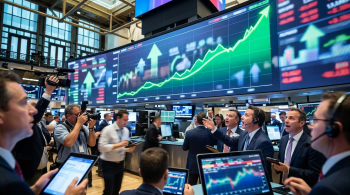
Technology shares fell sharply during the market session under discussion, with some measures of the sector dropping about 8%. The S&P 500 declined more than 3%.
Those losses felt like a broad market collapse for investors whose portfolios were tied closely to large technology companies. Yet several other asset classes and stock sectors rose during the same period.
Bonds gained ground. Gold, health care stocks, and energy stocks also moved higher. The contrast offered a direct lesson about portfolio construction.
“The S&P is down over 3% today, but it’s not everything. Bonds are up, gold, health care, energy stocks, all up today.”
The session showed why market headlines rarely describe every investor’s experience. A technology-heavy account may have suffered a steep loss. A balanced account could have received support from assets that responded differently.
One day does not prove that any investment strategy will work over a full market cycle. Still, sharp declines can reveal where risk has gathered.
View this post on Instagram
The S&P 500 Is Broad but Not Evenly Balanced
Many investors treat an S&P 500 fund as a complete diversification plan. The index does contain roughly 500 major U.S. companies across several industries.
However, it is weighted by market value. The largest companies receive the largest positions. Smaller members have far less influence on total performance.
This structure matters because the biggest companies have included several technology firms and businesses tied to artificial intelligence. As their market values increased, their weight in the index also grew.
An investor may own hundreds of stocks through one fund, yet a small group can drive much of the return. The number of holdings does not tell the full story.
Calling an index fund “only tech” is an intentionally blunt warning, not a literal description. The S&P 500 also holds financial, industrial, health care, energy, utility, consumer, and real estate companies.
The more precise concern is concentration. Large technology and technology-related companies can have an outsized effect on the index, especially when investors crowd into the same growth theme.
Investors should review several questions:
- How much of the portfolio is linked to the largest technology companies?
- Do multiple funds hold many of the same stocks?
- Would bonds or defensive sectors help during an equity decline?
- How much depends on continued spending related to artificial intelligence?
- Does the allocation match the investor’s time horizon and need for cash?
These questions are more useful than counting ticker symbols. Owning five funds does not create meaningful diversification if each fund holds the same dominant companies.
The AI Trade Created a Shared Risk
Artificial intelligence has encouraged major spending on chips, software, cloud services, power supplies, and data centers. Investors have rewarded companies expected to benefit from that spending.
This enthusiasm has helped lift large stocks and the indexes that give them heavy weight. It has also connected many businesses to one investment story.
The claim that half of an S&P 500 position is directly tied to AI should be viewed as a broad estimate, not a fixed index statistic. The result depends on which companies are classified as AI-related and how direct that connection must be.
Even so, the larger point deserves attention. Several leading index members may depend on continued AI investment, strong data center demand, or expectations of future productivity gains.
If those expectations weaken, losses may spread across firms that appear to operate in different industries. A chipmaker, cloud provider, power producer, and data center supplier may all respond to the same change in sentiment.
This is known as thematic concentration. Different company names can still represent similar economic exposure.
“Ignorance was bliss for investors pretending their S&P 500 position was diversified despite 50% of it tied directly to the AI trade.”
The language is forceful because concentration often receives little attention while prices rise. Investors tend to notice overlapping risks only after the market reverses.
Political Expectations Can Move Markets Quickly
The selloff was linked in the discussion to expectations of a Democratic “blue wave” and possible restrictions on data center construction. Such a shift could affect companies connected to AI infrastructure.
Data centers require land, electricity, water, chips, cooling systems, and network equipment. Limits on new projects could reduce expected demand across that supply chain.
However, investors should be careful about assigning an entire market move to one political development. Prices can change for many reasons, including valuations, interest rates, earnings expectations, positioning, and profit-taking.
Policy proposals also differ from enacted rules. Election expectations may change, legislation can be revised, and local authorities may take different approaches to data center approvals.
Political headlines can still act as a trigger. If a trade is crowded and valuations are high, even an uncertain policy threat may cause investors to reduce risk quickly.
The practical lesson is not to predict every election outcome. It is to know whether one policy decision could affect a large share of the portfolio.
What Real Diversification Looks Like
Diversification means holding investments with different drivers of returns. The goal is not to ensure that every asset rises each day. That is unrealistic.
Instead, a diversified plan tries to avoid having every holding decline for the same reason. Some assets may provide stability or gains when another part of the portfolio struggles.
Possible sources of diversification include:
- U.S. stocks from different sectors and company sizes
- International developed and emerging-market stocks
- Government, municipal, and high-quality corporate bonds
- Short-term reserves for planned spending
- Inflation-sensitive assets, including selected commodities or gold
- Strategies that are not dominated by the largest index companies
No single mix suits every investor. Gold can be volatile. Bonds carry interest-rate and credit risks. International markets can lag U.S. stocks for long periods.
Diversification also means accepting that part of the portfolio will often look disappointing. If every holding leads at once, those holdings may share more risk than expected.
A balanced portfolio can trail a technology-led market during strong rallies. That can test an investor’s patience. Its value may become clearer when leadership changes, or growth stocks decline.
Review the Exposure Hidden Across Multiple Funds
Fund names can create a false sense of variety. A broad-market fund, growth fund, technology fund, and AI fund may all own the same handful of large companies.
Investors should look through each fund to its underlying holdings. The combined weight of repeated positions matters more than the number of funds in the account.
Sector labels also require care. A company classified under communication services or consumer discretionary may still depend heavily on technology, digital advertising, cloud computing, or AI spending.
Measure risk by economic exposure as well as formal sector classification.
A useful review can follow four steps:
- List each account, fund, stock, bond, and cash position.
- Identify repeated holdings and major sector weights.
- Estimate exposure to shared themes, including AI and data centers.
- Compare the results with long-term goals and loss tolerance.
Rebalancing may then return the portfolio to its intended targets. It does not require abandoning technology or forecasting the next market winner.
The purpose is risk control. An investment that has performed well may grow into a position larger than the investor originally planned.
Volatility Is a Test of Portfolio Design
A steep decline can produce an emotional response, especially when market coverage uses terms such as “bloodbath.” Decisions made under stress often create additional harm.
Investors may sell after losses, move entirely into cash, or chase whichever asset rose that day. Each response can replace one concentrated bet with another.
A written allocation plan can help. It should define target weights, rebalancing rules, near-term cash needs, and the level of decline an investor can reasonably accept.
As Taylor Sohns, I have seen how quickly confidence can change when a popular trade falls. My central concern is not whether technology rebounds tomorrow. It is whether investors understand how much of their future depends on that rebound.
The key takeaway is simple: an index is not automatically a complete portfolio. The S&P 500 remains a useful source of U.S. equity exposure, but its weighting can leave investors dependent on a small group of large companies.
Bonds, gold, health care, and energy gaining during a technology selloff do not guarantee future protection. They do show that markets contain different sources of return.
Investors should review concentration before the next sharp decline, not during it. A suitable plan should reflect personal goals, time horizon, cash needs, taxes, and volatility tolerance.
Frequently Asked Questions
Q: Is an S&P 500 fund diversified?
It is diversified across many U.S. companies, but it is not evenly weighted. Its largest members can drive a large share of performance. Investors may need other assets to reduce dependence on those companies.
Q: Does diversification prevent portfolio losses?
No. Diversification cannot eliminate losses or guarantee returns. It spreads risk so one company, sector, theme, or policy change does not drive the entire result.
Q: Should investors sell technology stocks after a steep decline?
A one-day move is not enough to support a universal decision. Investors should compare their current technology exposure with their planned allocation, goals, time horizon, and risk capacity before making changes.
Image Credit: Pexels