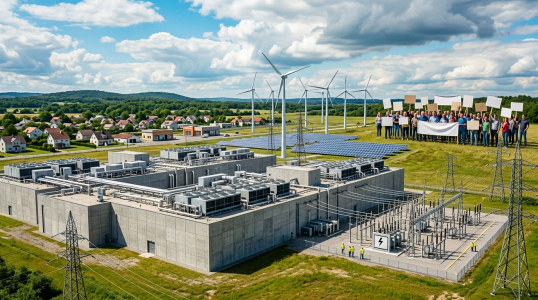
Electricity costs, artificial intelligence, and local development are colliding in the data center debate. These facilities support economic growth, yet they can strain power systems while creating relatively few permanent jobs. I believe voters should examine both the national benefits and the local costs before approving new projects.
Table of Contents
ToggleElectricity Bills Are Changing the Conversation
Two wealthy friends recently asked me whether I had seen my electricity bill. No one had ever asked me that question before. Then it happened twice in one week.
That small moment signals a broader concern. Electricity costs are no longer a quiet household expense. They are becoming a financial and political issue across income groups.
Data centers are not the only influence on electric bills. Fuel prices, grid repairs, weather, regulations, and utility investments also matter. Still, large data centers can add major demand to a regional power system.
Artificial intelligence requires immense computing capacity. Those computers run inside data centers, which need electricity around the clock. They also require cooling systems, backup equipment, and network infrastructure.
As more facilities connect to the grid, utilities may need new power plants, transmission lines, substations, and other upgrades. Someone must pay for those projects.
The core policy question is simple: Who should pay to serve a large new electricity user? If households fund upgrades through higher rates, opposition may rise quickly.
Public concern will be even greater if residents believe private technology companies receive most of the financial benefit. People may accept development more easily when the costs and rewards appear fairly shared.
View this post on Instagram
Artificial Intelligence Is Supporting Economic Activity
The debate cannot focus only on higher electricity demand. Spending on artificial intelligence infrastructure has become a major source of investment.
Technology companies are buying land, chips, servers, electrical equipment, and construction services. That spending supports contractors, equipment makers, utilities, and related businesses.
The AI build-out is often described as a major driver of recent economic growth. Calling it the sole driver would go too far. Consumer spending, health care, government activity, manufacturing, and other sectors also shape the economy.
Even so, the scale of AI investment makes data centers economically important. Restricting development could slow construction and reduce demand for specialized equipment. It could also influence the country’s position in global technology competition.
This creates a difficult trade-off. National leaders may view data centers as strategic assets. Local residents may see higher utility bills, construction traffic, noise, land use, and limited long-term employment.
The benefits of a data center may spread across the economy, while many of its direct costs remain concentrated in one community.
That difference helps explain why national enthusiasm can coexist with local resistance. Both views may reflect valid interests.
The Permanent Job Numbers Matter
Job creation often stands at the center of development proposals. Yet a data center has a different labor profile from a factory or office complex.
A large project can employ many people during construction. Workers are needed to prepare the site, build the facility, install electrical systems, and connect computing equipment.
Employment drops after construction ends. A roughly 1 million-square-foot data center may support about 200 permanent employees, based on the comparison raised in this debate.
Facilities of similar size may support far more workers under other uses:
- A data center may employ roughly 200 permanent workers.
- A manufacturing facility may employ around 1,500 workers.
- An office building may accommodate close to 5,000 workers.
These figures can differ by operator, design, and location. However, the contrast remains important. Data centers use large properties and significant electricity without creating the job density many residents expect.
This does not mean the jobs lack value. Data centers need technicians, security staff, engineers, maintenance workers, and managers. Many positions require valuable skills and may offer competitive pay.
The issue is scale. A community may provide land, tax incentives, water access, and power capacity for a facility that employs only a few hundred people after it is completed.
Local officials should separate temporary construction work from permanent employment. Combining both figures can create an inflated impression of a project’s lasting effect.
Communities Are Asking Harder Questions
Public resistance has grown as residents learn more about data centers’ physical footprint. Videos and public meetings often focus on noise, power lines, generators, water use, and the appearance of large windowless buildings.
President Donald Trump has argued that communities should welcome data centers or risk falling behind economically. That position reflects the national case for rapid AI development.
Yet dismissing local objections as resistance to progress would miss the substance of the dispute. Residents want to know how a project will affect their property, public services, utility rates, and quality of life.
Communities also need clear answers about tax incentives. A project may generate property tax revenue, but abatements can reduce that income for years. Officials should disclose the full value of any public support.
Several questions deserve direct answers before approval:
- Will the company pay for the grid upgrades required by its facility?
- Could residential customers face higher electricity rates?
- How many permanent local jobs will the project create?
- What tax revenue will remain after incentives and abatements?
- How will the operator address noise, water, backup generators, and land use?
- Can the grid meet peak demand without reducing reliability?
Clear answers will not eliminate disagreement. They can, however, make the public process more credible.
A Fair Approval Process Can Reduce Conflict
I would not support or oppose every data center under one fixed rule. The location, energy source, rate structure, and community agreement all matter.
A project is easier to support when its operator pays for dedicated infrastructure. Residential and small-business customers should not carry costs created mainly by a single large user.
Long-term power planning also matters. A utility should explain whether it has enough generation and transmission capacity. It should identify required upgrades and how those expenses will be assigned.
Developers can improve local support through firm commitments. These may include noise limits, responsible water use, local hiring programs, and payments tied to community needs.
Officials should also compare the proposal with other possible uses for the site. A data center might produce fewer jobs than manufacturing, but it may also create less traffic or fewer emissions at the property itself. Each option carries different costs.
Approval should depend on measurable terms rather than broad promises. Public agreements should include employment estimates, tax payments, electricity needs, and construction schedules.
Data Centers Could Shape the Midterm Elections
The issue may become a major force in the 2026 midterm elections. Electricity bills reach nearly every household, making them more politically sensitive than many technology policies.
A voter may support artificial intelligence and still oppose a nearby data center. Another may accept local disruption because the project brings tax revenue or strengthens the regional economy.
Political candidates will need more than a simple pro-growth or anti-development message. Voters are likely to ask who pays, who benefits, and who controls the approval process.
The strongest policy position will recognize two facts at once. The country needs computing infrastructure, and communities should not receive an unfair share of its costs.
My view is pragmatic. Data centers should be considered case by case, with public disclosure and firm financial protections. Support should depend on whether a project can serve national technology goals without shifting high costs to local families.
This debate is not only about a building filled with computers. It concerns electricity affordability, economic strategy, land use, and public trust. Communities deserve facts before they make a lasting decision.
Before supporting a project, residents should review its permanent jobs, tax terms, energy demand, and effect on utility rates. A data center can offer real value, but approval should follow evidence, not pressure.
Frequently Asked Questions
Q: Why do data centers require so much electricity?
Data centers run servers, cooling systems, storage equipment, and network hardware around the clock. Artificial intelligence workloads can require especially large amounts of computing power and electricity.
Q: Do data centers create many local jobs?
They can support substantial construction work during development. Permanent staffing is usually much lower. A large facility may employ hundreds rather than the thousands found in a similar-sized office or factory.
Q: What should residents examine before supporting a project?
Residents should examine electricity costs, grid upgrades, permanent employment, tax incentives, water needs, noise controls, and land use. They should also ask whether the operator will pay its fair share of infrastructure expenses.
Image Credit: Pexels