
In my opinion, real estate is still one of the best paths to creating serious wealth.
For most of you reading this, however, the fear of investing in real estate is REAL.
You’re probably thinking something along the lines of “I’m not a contractor,” “I don’t have a million dollars to invest,” or “I definitely don’t want tenants calling me at 3 AM about a backed-up toilet.”
And, that’s fair. After all, there are so many options to choose from. Do you want to be a full-time landlord? Do you want to risk a massive renovation budget on a flip?
Or… is there a simpler, lower-risk path to tapping into this massive wealth engine?
I’m here to tell you, there is. To explore one of the easiest and least-risky strategies for breaking into the world of wholesaling real estate, I picked the brain of Ryan Wright, aka The Income Hacker.
Wholesaling has been around forever. Yet, it’s booming again because it is a great way to get started with very little money, little risk, and no construction headaches. Having once attempted (and failed) to break into real estate before finding my groove with blogging, I understand the hesitation. Nevertheless, Ryan’s strategy is both simple and repeatable.
Wholesaling Explained: It’s Costco for Real Estate
When I first heard the word wholesaling, my mind immediately went to Costco. Ryan loved the analogy because it nailed the fundamental concept: profit from timing and opportunity.
Let’s put it this way: You buy 50 bottles of water for $5. At a busy basketball game, you can sell them for $4 each for a huge profit margin. You didn’t manufacture the water; you just made it more valuable by moving it from a low-value to a high-value opportunity.
Real estate wholesaling works the same way:
- If you find a distressed property that a bank won’t lend on because it needs major repairs, such as a caved-in roof or a missing kitchen, you have a golden opportunity.
- Lack of access to the traditional market drives the owner to sell quickly for cash.
- When you get the house under contract, you have the right to buy it.
- For a fee, you sell that contract to another investor (a flipper or a landlord).
Here’s the magical part:
- You never fix the property.
- Loans are never taken out.
- You never take ownership.
All you have to do is control the paper, which is the contract. In the case of a $100,000 house, you lock up and sell for $110,000 to a savvy investor, and that $10,000 assignment fee is pure profit for you. As a result, the investor gets a profitable deal, and you earn five figures without ever having to swing a hammer.
What makes this so low-risk? By adding a contingency, you can only move forward if an end buyer is found. That’s the Wealth Hacker edge.
The 7-Step Blueprint for Wholesaling
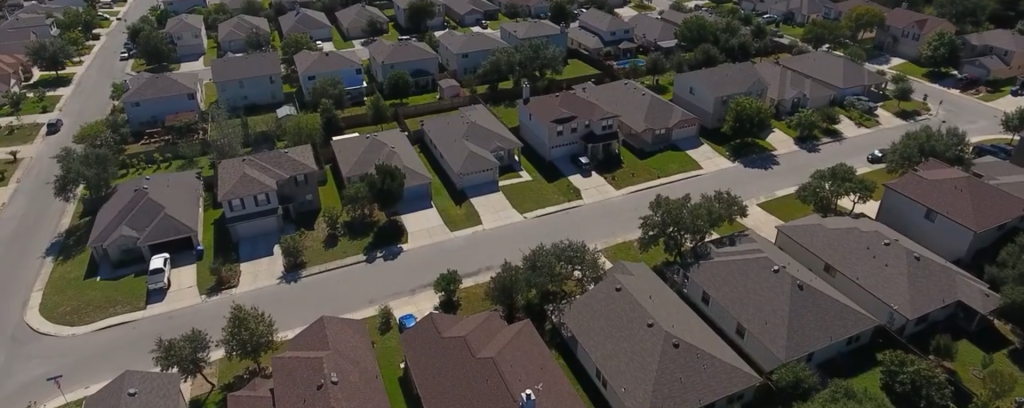
Ryan came up with a clear, repeatable, seven-step blueprint to guide the entire, sometimes intimidating, process. By doing this, guesswork becomes math. So, let’s break it down.
Step 1: Build Your Blueprint (Reverse Engineer Your Success)
In wholesale, it isn’t about hoping for a miracle, but about following a formula. The first question Ryan asks is: “How many deals do you want to close? ”
From there, you reverse engineer the success: Deals -> Appointments -> Conversations -> Calls -> Properties Found -> Conversions
In the end, this blueprint keeps you focused.
To get started, give the Zip Code Hack a shot. The first step is to identify the money zones. Are there any cash buyers already active in your area? According to Ryan, he uses data to determine which zip codes have the most fix-and-flip buyers and sellers.
In other words, if you want to catch fish, you need to go where they are. When you identify your hunting ground, the blueprint will tell you exactly how many properties you need to add each week to your list.
Step 2: Drive for Dollars (The Grind)
Since this step requires work, most wholesalers skip it.
Rather than waiting for mailers to work, you drive to the money zone zip codes. It’s called “driving for dollars.” Here, you’re looking for clear signs indicating the owner is unable to sell the property as it stands:
- Overgrown yards.
- Windows boarded up or covered with blue tarps.
- Major structural damage or caved-in roofs.
- An abandoned vehicle or a neglected environment.
It’s clear from these visual clues that the seller is motivated and needs a cash solution. By doing this grunt work, you find deals that the big investors never see, even though they spend $100K a month on generic mailers. In exchange for a massive, exclusive opportunity, you are trading your time directly. Depending on the area, you can find 20–30 distressed properties in an hour.
Step 3: Skip Trace (The Legal Stalking)
You have an address. It’s time to talk to the owner.
Nowadays, skip tracing is just a button click away, not a PI job. After you enter the address, the software returns the owner’s best-known contact information, including a cell phone number, an email address, and a landline.
The cost is around $0.20 per property, but it’s necessary. For the next step, you need those phone numbers.
Step 4: Start Dialing (Conquer the Cold Call Fear)
You may recall my stories about cold calling as a young financial advisor — the sweaty palms, the nausea.
However, Ryan’s perspective is that you aren’t selling anything; you’re just asking a question.
In fact, it’s a simple and direct script: “Hey, I drove by your property at [123 Main Street]. Are you the owner? I’m just wondering if you’d have any interest in selling.”
You will likely receive a “no” 99% of the time. Some people will be polite, while others will swear. But this is the business. For one wholesale deal, Ryan estimates you must make 3,000 to 4,000 calls on a database of 1,200 to 1,500 properties.
In most cases, people quit after rejection because they believe it means they failed. Wealth Hackers, though, understand that rejection means one step closer to success.
Step 5: Use the Right Software (Smart Money, Not Just Spent Money)
It’s common for new wholesalers to panic about the cost of tools. Ryan’s advice is spot on: Start lean, not cheap.
- Skip tracing tool. Non-negotiable. You can’t do this manually.
- Phone dialer (single- or triple-line). This is highly recommended. You can save hundreds of hours of manual dialing by spending $100–$200 per month.
- Deal tracking. You can use a fancy CRM or 3×5 index cards, as Ryan did for years.
If you have $3,000 saved up, you’re in a great starting position. If not, use manual methods and be prepared for a longer process. Remember: You get paid well despite the hard work, and most people stop working after a while.
Step 6: Qualify the Seller (The Integrity Check)
To avoid wasting his time (or the seller’s), Ryan asks the following question before making an appointment:
“Why would you want to sell to me instead of listing with an agent and potentially getting more money?”
As long as the seller cannot provide a compelling, painful reason why a cash, as-is offer from you is their best option, such as “We need cash in 10 days,” “I can’t handle repairs,” or “I’m facing foreclosure,” Ryan walks away. You want a win-win, not a pressure point. If you cannot solve their problem, move on to the next lead.
Step 7: Solve Problems (This Is Your Value)
A wholesaler isn’t paid just for finding “cheap houses.” They are paid for solving financial and logistical problems.
As Ryan recalls, a family had to move their ailing grandfather into an assisted living facility. The house was a disaster, and their equity had to be accessed immediately. It was impossible to list the home. Buying the house as-is with cash provided the family with the financial lifeline they needed without adding any more debt. For years, they sent him Christmas cards.
That’s how you build wealth with integrity.
Final Wealth Hacker Thoughts
On paper, wholesaling is straightforward: Get a contract, sell the contract, and profit.
However, landing that first deal requires commitment, dialing, consistency, patience, and the ability to accept rejection.
Most people won’t stick with the blueprint long enough to build momentum. By mastering Ryan Wright’s 7-Step Blueprint, you’re building a repeatable, low-risk acquisition machine that will change your financial future for the better.
FAQs
Do I need a real estate license?
Usually no. You’re selling your contractual rights, not the property. In some states, however, regulations are tightening, so consult a real estate attorney.
How much money do I need to start?
If you’re willing to grind, it’s very little. Skip tracing, a phone dialer, and gas are the main costs. It helps to start with a budget of $1,000–$3,000, but you can start with less.
How long until I get paid?
The average closing time for an assignment is 2–4 weeks after a property is under contract. The longest part of the process is finding the first deal, which can take 20 to 40 weeks, depending on your budget and timeline.
What’s the biggest risk?
Without a contingency, you could lose your earnest money if you can’t find a buyer. Burnout is another risk when you don’t have a process. You can minimize both by following the blueprint.
Can I wholesale MLS-listed properties?
It’s much harder. In general, MLS homes are in better shape and are targeted at traditional buyers who use financing. A wholesaler focuses on off-market distressed homes for which cash offers are a good solution.
Image Credit: Photo by Alena Darmel: Pexels