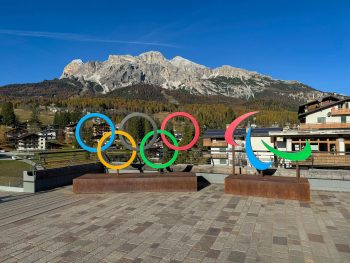
As the world prepares for the 2026 Winter Olympics in Milano–Cortina, our attention will once again shift to the outer limits of human performance. We’ll watch athletes who have engineered their entire lives around a single moment — one often decided by a mere fraction of a second.
For aspiring and seasoned entrepreneurs alike, the Games offer more than entertainment; they provide a clear, practical blueprint for success in any competitive field. While we use sports metaphors casually in business, there is a massive difference between a weekend athlete and an Olympian.
An Olympic athlete does not dabble. They design their existence around long-term performance, ensuring every training block, recovery day, and mental rehearsal serves a singular purpose: to peak at exactly the right time. The world of entrepreneurship is no different. Whether your “podium” is a profitable company, a sustainable lifestyle enterprise, or a successful exit, the mechanics of winning remain the same.
As such, to build something truly meaningful, you must stop thinking like a manager and start thinking like an elite athlete.
Table of Contents
Toggle1. The Power of Micro-Periodization
Olympic athletes don’t train at maximum intensity every day. Rather than repeating the same cycle over and over, they use periodization — planned cycles of effort, skill refinement, and recovery.
Sven Kramer, a Dutch speed skater, relied heavily on intense cycling off-season to dominate the 5,000-meter long-track event. As a result of this cross-training approach, he developed a massive aerobic base, which enabled him to win gold in the 5,000 meters at three consecutive Winter Olympics (2010, 2014, 2018).
The lesson for entrepreneurs? You should structure your year in cycles. Spend six weeks on deep, focused building followed by one or two weeks on lighter maintenance activities. It’s one of the best ways to beat chronic exhaustion is to maintain sustained intensity.
2. Adopt the “Video Review” Mentality
Often, winning an Olympic medal comes down to the smallest of technical details. That’s why athletes obsess over feedback.
Skier Mikaela Shiffrin, for example, analyzes her runs frame by frame, identifying where her edges lose contact with the snow. Because of this, she has won numerous World Cup races and Olympic medals.
The lesson for entrepreneurs? Conduct a weekly “film review.” Analyze failed sales calls, marketing experiments, or customer churn without emotion. Rather than looking at mistakes as personal failures, treat them as mechanical flaws.
3. Specialization Beats Generalization
It is rare for an Olympic athlete to dominate every event; medals are usually won by athletes who excel in a particular discipline. Often, being successful at everything is the quickest way to ensure you won’t be the winner in the Games’ high-stakes environment.
Even though Shaun White was incredibly versatile early in his career, he specialized in the halfpipe to establish his legacy. Initially, he planned to compete in slopestyle at the 2014 Sochi Olympics. However, he backed out at the last minute, realizing that the risk of injury and dilution of his focus was too high. Focusing solely on his strongest event allowed him to build precision rather than range, and thus he was able to win the competition.
The lesson for entrepreneurs? Choose an event and identify a niche problem you can handle exceptionally well. Remember, generalists survive; specialists stand on the podium.
4. Master the Inner Game
At the elite level, physical differences are negligible. When everyone has world-class talent, mental resilience becomes the primary separator between a gold medalist and a runner-up.
As a result of a devastating fall in 2018, figure skater Nathan Chen rebuilt his mental approach. He shifted his focus from the podium to the process. “Whether I won, whether I lost, I [wanted] to gain as much as I could [from the experience] that didn’t revolve around what sort of placement I got,” he told CNBC Make It. Despite extreme pressure, he delivered a flawless performance to win gold in 2022 by focusing on growth rather than the medal.
The lesson for entrepreneurs? Entrepreneurship is a psychological endurance test. If you can’t control your mind, you lose control of your venture. To remain calm during high-stress moments, use visualization and controlled breathing. When the stakes are high, a calm mind is your most valuable asset.
5. Optimize for the Long Game, Not Quick Wins
No athlete starts training for the Olympics six months out. Instead, they plan for multi-year cycles.
A perfect example of this is the Jamaican Bobsled Team, which made its debut at the 1988 Games. Even before they raced on ice, they built a long-term program that emphasized sprinting mechanics and teamwork.
The lesson for entrepreneurs? Ask yourself regularly: Does this decision help me peak at the right time, or just make today seem productive? Having a long-term perspective will always give you an edge.
6. Train Fundamentals Relentlessly
Athletes never outgrow the basics. By obsessing over fundamentals like puck control and clean passing, Canadian hockey icon Hayley Wickenheiser won seven gold and six silver medals at the IIHF Women’s World Hockey Championship with Team Canada, and four gold medals and one silver medal at the Olympic Winter Games.
The lesson for entrepreneurs? Get a handle on the boring stuff: lead generation, customer service, and cash flow. When simple actions are repeated consistently, excellence is achieved.
7. Separate Training From Competition
Athletes don’t compete every day; they train, recover, and then perform. In many cases, entrepreneurs blur these lines, treating every Slack message, email, and minor metric as a high-stakes competition.
Before heading out on the slopes, slalom skiers spend weeks in “training mode” drilling turns on practice hills where a fall has no consequence. It’s only during the actual race that they enter “competition mode,” where they take maximum risks.
The lesson for entrepreneurs? A gold medal performance cannot be achieved without structured recovery. To protect your output, set up clear operational modes:
- Training: Developing skills, building systems, and testing low-risk ideas.
- Competition: Product launches, investor pitches, and critical negotiations.
- Recovery: Rest, reflection, and recalibration.
8. Embrace Coaching—Even at the Top
A successful Olympian does not succeed alone.
After undergoing a knee replacement in 2024, Lindsey Vonn worked with former racer Aksel Lund Svindal to improve her technique to become “ready and relaxed.” By prioritizing mental resilience and viewing pain as an opportunity, Vonn was able to return to competition at the age of 41.
The lesson for entrepreneurs? Seek out advisors, coaches, or mentors who will challenge you. It sometimes takes an outside perspective to see the blind spots you can’t see yourself.
9. Measure Progress Objectively
Athletes don’t guess whether they are improving — they measure it. During curling, for example, the “split time” of every stone is tracked so that teams can make objective decisions depending on the ice conditions.
The lesson for entrepreneurs? Keep an eye on conversion rates, retention rates, margins, and time-to-value. As the saying goes, if you can’t measure it, you can’t improve it.
10. Respect Recovery as Part of Performance
In elite sports, rest is often viewed as a performance insurance policy. Biathletes, for instance, must lower their heart rate rapidly before shooting. They know recovery isn’t optional — it’s technical.
The lesson for entrepreneurs? Recovering isn’t taking a break from your business. In other words, it’s time invested in your ability to think clearly under pressure.
11. Train for Pressure Before It Arrives
In order to make competition feel familiar, Olympians simulate pressure. Short-track speed skaters like Apolo Ohno, for example, practiced in chaotic, high-contact drills to prepare for racing’s physical demands.
The lesson for entrepreneurs? It is important to practice under constraints. For instance, practice pitches under time constraints. And don’t be forced into making decisions with incomplete information.
12. Compete With Yourself First
Olympians study their opponents, but they primarily focus on their own performance. In luge and skeleton, athletes chase personal bests at every corner of the track. Those are the only variables they can control.
The lesson for entrepreneurs? Do not compare your progress with someone else’s highlight reel, but with your own.
13. Fail Publicly—and Keep Going
Failure is baked into elite performance. Dan Jansen, for example, suffered repeated Olympic heartbreak, including falls and personal tragedy, before winning gold in 1994.
The lesson for entrepreneurs? Although it can be devastating, use failure as feedback. Your venture will become stronger the faster you extract the lesson.
14. Learn to Make Split-Second Decisions
Olympic athletes cannot afford to hesitate. Races are won and lost in moments when there is no time to debate — only to act. In sports such as alpine skiing, short-track speed skating, and hockey, athletes must constantly anticipate what’s coming next while executing in real time. They don’t wait for the perfect information. They commit, adjust, and keep moving forward.
The lesson for entrepreneurs? Strategic entrepreneurs act with the future in mind, but they don’t freeze when the time comes to act. Even the wrong decision can produce the feedback needed to adjust. Don’t hesitate. Move fast.
15. Know When to Peak—and When to Pivot
The best athletes understand when the next chapter is necessary and how important it is.
Tara Lipinski is a good example. In 1998, she became the youngest Olympic figure skating champion. After reaching her peak, she transitioned to NBC’s broadcast team and branched into acting and writing.
The lesson for entrepreneurs? It’s not always about growth. In some cases, it’s better to sustain, to stabilize, or to step back into a whole new arena.
Putting it Altogether: Are You Training or Just Working?
Getting through the day requires work. In order to win a race, though, you must train. During Milano-Cortina 2026, change your mindset from “running a business” to “training a venture.” Teams will begin to perform according to cold, hard math.
FAQs
What’s the biggest mindset shift entrepreneurs can learn from Olympic athletes?
Olympic athletes are more concerned with the process than with the outcome. Medals are not the result of each training session, but of disciplined daily habits. In the early stages of a business, entrepreneurs are often obsessed with revenue targets, exits, or valuations. We can learn from athletes that elite results are actually achieved when consistent execution is done well and repeatedly.
How do Olympic athletes approach failure differently from entrepreneurs?
Rather than treating failure as a verdict, athletes treat it as feedback. Instead of self-doubt or panic after a bad performance, analyze, adjust, and retrain. Entrepreneurs can use this approach to review failed launches, missed goals, or bad hires with the same objectivity. The faster you extract the lesson, the faster your performance improves.
How important is coaching—and who plays that role for entrepreneurs?
An Olympic athlete never competes alone. In addition to providing accountability, technical corrections, and perspective, coaches provide athletes with extra support. Whether it’s a mentor, advisor, mastermind group, or executive coach, entrepreneurs need the same support. Early on, self-reliance is useful, but elite performance requires external feedback.
Why do Olympic athletes obsess over fundamentals—and should entrepreneurs?
When you’re at the top of your game, small mistakes are costly. It’s for this reason that athletes constantly refine basics such as form, timing, and recovery. Over time, entrepreneurs who abandon fundamentals for “new tactics” outperform those who maintain strong cash flow, a clear positioning, and disciplined execution. Mastery beats novelty.
Do entrepreneurs really need rest cycles as Olympic athletes do?
Absolutely. Athletes use periodization to peak at the right time by planning cycles of intensity and recovery. When entrepreneurs push nonstop, their judgment and creativity decline. Recovery isn’t indulgent; it’s strategic. The key to long-term success is sustained high performance, not just short bursts.
Image Credit: David Dibert; Pexels