Business owners, benefit managers, and macroeconomic watchers know that healthcare is one of the most unpredictable overhead expenses. As insurance premiums fluctuate and prescription drug costs rise, maintaining competitive health benefits and keeping overhead manageable can be tricky.
Significant policy changes: Medicare is reshaping healthcare. In its second cycle, the Centers for Medicare & Medicaid Services (CMS) established maximum fair prices for 15 high-cost Part D prescription drugs under the Inflation Reduction Act. Effective January 1, 2027, these lower prices are expected to generate $12 billion in net federal savings and $685 million in out-of-pocket savings for beneficiaries. This is in addition to the 10 negotiated drugs introduced on January 1, 2026, as part of the program’s initial round.
Although Medicare policy may seem exclusive to retirees, smart entrepreneurs and executives know public healthcare policy is the leading indicator of commercial healthcare economics in the private sector.
This article outlines 5 major Medicare changes slated for 2027 — and why entrepreneurs, employers, and innovators should be aware of them.
Table of Contents
Toggle1. Massive Out-of-Pocket Savings on High-Cost Maintenance Drugs
The policy. Compared with recent spending baselines, Medicare’s historic drug price negotiations led to average net price drops of roughly 44% across 15 of the highest-spending Part D medications. As part of these negotiations, the Centers for Medicare & Medicaid Services (CMS) targets critical, high-cost maintenance therapies. Specifically, they address chronic illnesses such as type 2 diabetes, respiratory diseases, and cancer.
The entrepreneur’s take. As healthcare expenditures decrease by nearly $700 million, consumer purchasing power is increasing. As a result, founders of direct-to-consumer (D2C), fintech, or retail ventures will have significantly more income at their disposal, previously locked up in pharmacy copays.
Additionally, because Medicare sets benchmark prices for these essential maintenance drugs, private commercial insurers face immediate market pressure to negotiate similar terms with pharmaceutical manufacturers to lower costs across private group plans.
2. GLP-1 Weight Loss & Diabetes Meds Hit Unprecedented Price Drops
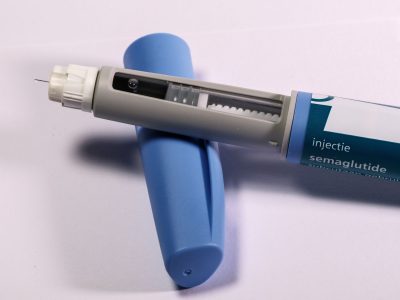
The policy. In one of this year’s most high-profile negotiations, Medicare secured a 71% discount on semaglutide drugs like Ozempic, cutting the list price from more than $900 to between $274 and $277 for a 30-day supply. These federally negotiated rates will take effect on January 1, 2027.
The entrepreneur’s take. Obesity and diabetes are two of the largest drivers of employee absenteeism, reduced productivity, and skyrocketing employer-sponsored health insurance claims. Until recently, small-to-midsize business owners couldn’t afford to offer GLP-1 coverage in company benefit packages because costs exceeded $1,000 per employee per month.
Although Medicare’s $274–$277 rate applies only to government plans and doesn’t directly match private commercial prices, it still sets a benchmark the public can’t ignore. As payers renegotiate drug formularies ahead of 2027, this federal price ceiling gives group plan sponsors tremendous leverage. By leveraging this high-visibility rate shift, employers and benefits brokers can turn a cost-prohibitive drug into an employee retention and recruitment tool.
3. Mandatory Formulary Coverage & Universal Access
The policy. When insurers refuse to cover lower-priced drugs, those drugs are worthless. By 2027, Medicare Part D insurance plans must include the 15 selected negotiated drugs on their standard formularies under federal guidelines.
The entrepreneur’s take. Because of this mandate, access to these 15 high-cost therapies will be guaranteed on Part D formularies. If your workforce includes elderly workers or contractors who are enrolled in Medicare Part D, you can expect stable access to these negotiated drugs throughout the plan year, since mid-year removals or sudden cancellations of standard coverage are heavily restricted for these 15 medications. However, employers must still account for standard annual premium adjustments, multi-tier cost-sharing changes, and prior authorization rules to achieve full operational predictability.
Blockbuster therapies (such as GLP-1 weight management or diabetes care) now have a clearer, mandated path to integration for startups and health-tech founders. Despite simplifying formulary forecasting for these 15 medications, tech platforms have to support standard workflow friction and separate state or commercial plan structures.
4. Enhanced Predictability for Financial Planning & Elder Care
The policy. Combined with earlier structural reforms, such as the out-of-pocket cap on Part D drug spending and the Prescription Drug Payment Plan, beneficiaries will be able to budget their healthcare costs with much greater accuracy. Suddenly, multi-thousand-dollar pharmacy bills will largely become a thing of the past.
The entrepreneur’s take. There is a hidden drain on startup productivity caused by the “sandwich generation” phenomenon, where founders and key executives raise children and care for their aging parents. As family elder care costs become unpredictable, key leaders lose focus and capital. Clear, capped, and predictable prescription costs simplify financial planning for elder care, letting entrepreneurs focus on scaling their businesses.
5. Ripple Effects Across Commercial Insurance & Health-Tech
The policy. With the second round of Medicare drug price negotiations, 25 high-cost drugs are now on the list (in addition to the initial 10 drugs that went live in 2026). Despite the permanent, yearly presence of federal negotiations, the traditional pharmaceutical pricing model is under permanent structural change.
The entrepreneur’s take. When a federal agency shifts $12 billion in market value, it creates massive business opportunities. In the health-tech sector, we’re witnessing a fertile environment for innovation. The following business opportunities are emerging:
- Benefits advisory and brokerage. Employer health plans restructured to take advantage of lower benchmark drug costs for small businesses.
- Adherence and wellness platforms. With these critical medications available, SaaS solutions can help patients manage regimens.
- Supply chain and pharmacy logistics. Lower prices make latent consumer demand more apparent, increasing prescription volume.
The Strategic Bottom Line for Business Owners
Medicare policy adjustments aren’t just policy changes; they’re macroeconomic signals. In the run-up to 2027, proactive business leaders should take the following three immediate steps:
- Audit your group’s health benefits. Contact your benefits broker today. As public benchmark prices drop, make sure your health plan administrator will pass along any commercial price reductions.
- Re-evaluate executive and senior hiring. For early-stage companies, better, cost-effective health insurance options make it easier to retain senior, experienced talent.
- Capitalize on the health-tech shift. Explore how you can serve a healthier, financially empowered older adult demographic if you work in software, logistics, or D2C.
The entrepreneurs who win in the coming decade will not only react to market shifts, but also anticipate where capital will flow. The $12 billion Medicare policy shift clearly signals smarter healthcare spending and new business opportunities.
Image Credit: Haberdoedas Photography; Pexels