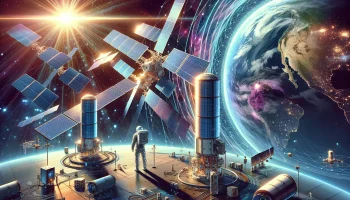
Elon Musk set tech circles buzzing with a surprise move: SpaceX’s acquisition of xAI. The goal, as presented, is bold—put data centers in space. As the CEO of LifeGoal Wealth Advisors and a CIMA and CFP professional, I look at ideas through the lens of feasibility, cost, risk, and payoff. This one sits at the intersection of engineering ambition and practical constraints. The pitch is simple: space offers free cooling, near-constant solar power, and no land limits. The question is whether those benefits hold up when you factor in physics, logistics, cost, and latency.
“SpaceX acquired XAI. This is a move for one reason, putting data centers in space. Sounds crazy, but there are three huge data center benefits.”
Table of Contents
ToggleWhy Space Is So Tempting for Compute
There are three core benefits touted for space-based data centers: cooling, energy efficiency, and land use. Each comes with an appealing headline and a longer fine print.
- Cooling: Servers run hot, and cooling is a top operating cost for data centers.
- Energy: AI compute is power-hungry, and space promises steady solar power.
- Land: Modern data centers sprawl across vast acreage; orbit has no real estate taxes.
Let’s unpack those claims and add the realities that will make or break the idea.
View this post on Instagram
The Cooling Myth—and the Real Physics
The headline claim is simple: no cooling cost in space. The idea suggests extreme cold—“negative 400 degrees”—as if servers could simply dump heat into a cold bath. That is not how space works. Space is a vacuum. There is no air or water to carry away heat. On Earth, data centers use air or liquid to remove heat from chips and transfer it to chillers. In space, heat leaves only one way—by radiation. That is slower and needs large radiators and careful thermal design.
Radiative cooling is effective but not free. Hardware must move heat to panels that radiate it away. The James Webb Space Telescope uses a tennis-court-sized sunshield and significant radiators to keep instruments cold. A data center in orbit would require an extensive radiator field, along with pumps and plumbing. That adds weight, complexity, and launch cost.
This does not mean space cooling is a deal-breaker. It means cooling moves from an operating cost (electric chillers and fans) to a capital cost (massive radiators, heat pipes, and passive systems). For the model to work, the savings in electricity and water on Earth must exceed the cost of launching and maintaining thermal systems in orbit.
Power from the Sun—Almost All Day
Energy is the second pillar. AI data centers draw huge amounts of power. Estimates place data centers at around 5% of U.S. electricity usage and rising. Space looks like a way out. Above the clouds, solar panels receive more consistent light at higher intensity, with no night for many orbits.
There is fine print. Low Earth orbit (LEO) crosses into Earth’s shadow every orbit. That means periodic eclipses unless placed in special orbits. Sun-synchronous orbits can reduce darkness for long periods, but not remove it. Geostationary orbit (GEO) avoids frequent eclipses for most of the year but entails higher latency and longer distances. Solar intensity at Earth’s orbit is about 1,361 watts per square meter. With high-end panels at roughly 30% efficiency, you can expect about 400 W/m² in ideal conditions. That’s good, but operating a multi-megawatt data center would require large-scale panel arrays and battery storage to cover shadow periods or provide redundant power.
The power case still has promise. You avoid grid interconnection, long transmission lines, and intermittent clouds. You pay for solar panels, batteries, and launch capacity. If Starship reaches steady operations with lower costs per kilogram, the math could tilt in favor of space-based power—especially if the data center is optimized for tasks that can tolerate short duty cycles during eclipses or if power beaming and intersatellite relays are added later.
Escaping Land Limits—And Creating New Ones
Meta’s planned Louisiana data center spans three and a half square miles. That is the size of a small city. Land is a real constraint. Local water, substation access, and community support are often the bottlenecks. Space lifts that ceiling. But orbit has its own limits.
Orbit is not endless. It has capacity, space traffic rules, debris fields, and regulatory slots. Large platforms require precise station-keeping, collision avoidance, and deorbit plans. The more hardware you deploy, the more liability you take on. Launch cadence and pricing matter, as do insurance and the cost of on-orbit assembly and service.
Another hidden land cost on Earth is the cost of gateways. To use a data center in space, you need high-capacity ground stations, fiber backhaul, and spectrum coordination. Starlink already operates a global ground station network. That is a head start, but moving petabytes of training data through those pipes is not trivial.
Latency, Bandwidth, and Where AI Workloads Live
AI workloads fall into two broad camps: training and inference. Training large models needs massive data movement and tight coupling across tens of thousands of GPUs. Inference ranges from real-time chat to batch scoring and internal analytics. Where the workload runs matters.
Putting training in orbit introduces bandwidth and latency challenges. Moving terabytes per second to orbit is not feasible with today’s radio links. Laser relays help, but every bit moved to space and back costs power and time. Inference is more flexible. If the user is on the ground, the round-trip delay from GEO could be 500–600 milliseconds. That is too slow for interactive chat at scale. LEO reduces latency to tens of milliseconds, comparable to cross-country traffic, but still requires dense links and many satellites to maintain session stability.
There are clever ways to match workloads to orbit:
- Train in space, fetch less: Send curated datasets and receive compressed model updates. Useful for periodic refreshes, not for continuous streaming.
- Infer near the user: Keep inference split between ground and space. Use space for batch or non-time-sensitive tasks.
- Inter-satellite compute: Run “sky-side” workflows that never touch Earth until results are ready.
The more you keep data moving in orbit, the less you pay in ground-to-space bandwidth. That suggests a long-term path: clusters in space that talk to each other, with ground links used for inputs, outputs, and control.
SpaceX + xAI: Why Integration Matters
SpaceX owns launch capability, satellite buses, and an operational Starlink network — and a potential SpaceX IPO could reshape how investors access this ecosystem. xAI owns the AI model stack and compute strategy. Combining them could remove friction at two chokepoints: getting mass to orbit and wiring up a network that can move and route data. SpaceX can design purpose-built platforms, optimized for heat rejection, solar collection, and laser networking. xAI can tailor models and pipelines to the network topology it controls.
That vertical integration could compress timelines. It might also let them fail fast and iterate. Launch, test a small compute node, learn, from the results and relaunch with changes. This is how Starlink matured. It is also how engineering risks are mitigated in practice rather than on paper.
Costs, Risks, and the Dirty Details
For all the promise, the costs and risks are real. They will decide whether space data centers scale or stall.
Launch and Mass: Even with a low cost per kilogram, radiators, panels, batteries, shielding, and structure add up. Starship may significantly reduce costs if it achieves routine, high-payload reuse. Until that proves out, every kilogram matters.
Radiation and Reliability: Electronics in orbit are exposed to radiation that can flip bits or degrade chips. Shielding helps but adds mass. Radiation-hardened parts trade performance for survival. Mission design must balance speed and durability, perhaps by using error correction and fast replacement cycles.
Maintenance: On Earth, a failed server gets swapped in minutes. In space, repair means robotics, on-orbit servicing, or accepting higher redundancy. Planned attrition—expecting parts to fail and replacing whole modules—may be the model. That means modular designs and frequent launches.
Debris and Safety: Orbit management is not optional. Large structures must avoid debris, comply with disposal rules, and prevent breakage. The public and regulators will scrutinize any move that adds risk to already crowded orbits.
Security and Sovereignty: Space assets face cyber and physical threats. Data residency laws vary by country. If computation happens in space, where does the data “live”? Companies will want clarity, and governments will have opinions.
Environmental Trade-offs: Earth’s data centers consume water and land. Rockets emit exhaust and produce noise. A fair comparison weighs both sides: less water and fewer local impacts on land, more launch emissions and orbital footprint. Transparency will matter here.
What Gets Built First
Practical steps often start small. Expect prototypes that tackle the hardest problems in isolation:
- Thermal Demo: A small compute payload with oversized radiators to test heat rejection and passive cooling.
- Power Demo: Panel-battery systems with load following and eclipse management, tuned for compute duty cycles.
- Network Demo: Laser links between satellites and to ground stations, tuned for high-throughput, low-loss file transfers.
- Serviceability Demo: Modular units designed for quick swap by a robotic arm or service craft.
Each success makes the next step less risky. The key is to marry the engineering path with a business case customers can trust. If the first customers are internal—xAI itself—adoption can start before the wider market signs on.
Could xAI Become the Largest AI?
Scale in AI comes from three inputs: data, compute, and talent. If space-based compute cuts ongoing power and land costs, and if launch costs drop, a space-first stack could scale fast. But “largest” is not only about GPU count. It is also about usable throughput, uptime, and user latency. If xAI can align workload types with space advantages—batch training, periodic model refresh, non-real-time inference—it could leap ahead on cost per token trained.
There are many “ifs” in that sentence. The path is there for a company that controls rockets, satellites, and an AI lab. Few others can attempt it end-to-end. That asymmetry is exactly why this move sparked so much interest.
What I’m Watching Next
I look for signals that separate hype from execution:
- Prototype launches: Flights that carry compute-specific payloads with thermal and power systems.
- Ground network upgrades: New high-capacity gateways tied to major fiber routes.
- Regulatory filings: Spectrum, debris mitigation plans, and orbital slot applications tied to compute platforms.
- Model roadmaps: xAI training and inference strategies that lean on orbital assets.
- Unit economics: Evidence that total cost per compute unit rivals top terrestrial cloud providers.
Love him or hate him, Elon Musk has a track record of turning ideas that sound like science fiction into reality through iteration. That does not guarantee success. It does mean the attempt will be serious, fast, and public.
“SpaceX launches the infrastructure. XAI runs the compute in space without cooling power and land constraints.”
The vision is clean. The execution will be messy, technical, and expensive. If the first generation proves that cooling by radiation at scale can work, that solar plus batteries can carry loads through shadow windows, and that network delays can be managed for the right workloads, a new class of data center could emerge—one that treats orbit as real estate and photons as fuel.
I approach moves like this with a mix of caution and respect. The physics are unforgiving, and the market will judge on reliability and cost. But the upside is large enough to deserve a real try. If a space-based data center reduces power bills, avoids land disputes, and integrates with a flexible AI stack, it could redraw the map of where and how we compute.
For now, the smart stance is simple: track the prototypes, watch the costs, and judge by outcomes. If even part of this plan works, AI infrastructure won’t look the same in five years.