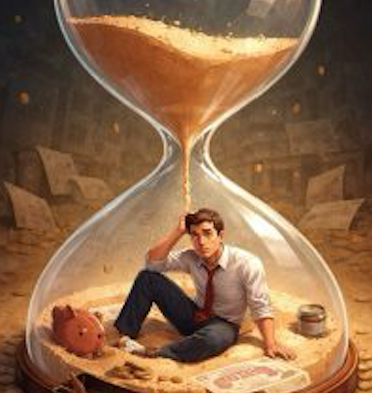
How often have you been told that your “latte-a-day” is the only thing standing between you and a massive bank account? We’ve all heard the same recycled advice: skip the avocado toast, cancel Netflix, and drive a fifteen-year-old sedan until the floorboards rust through. But did you do it? Well, I did. Yes, the simple savings system works well, and I follow it, but this piece is about what else occurs.
If you follow this restrictive path, you will eventually win the ultimate prize of freedom.
However, amid the current economic climate, a quieter and more insidious crisis is permeating the lives of high achievers and diligent savers. The problem for these individuals isn’t a lack of money; it is a lack of capacity to enjoy it. It is called the scarcity trap.
Table of Contents
ToggleWhat Exactly is the Scarcity Trap?
The scarcity trap is a concept from behavioral economics that describes a specific state of mind. It occurs when your brain is hijacked by a constant focus on unmet needs — whether those needs are related to money, time, or resources.
Researchers call this a “bandwidth tax.”
Coined by psychologist Sendhil Mullainathan in Scarcity: Why Having Too Little Means So Much, here’s how he defines the bandwith tax;
“If you have urgent current expenses to cover, then future priorities like college and retirement fall off your radar because they are simply less pressing. Scarcity of attention prevents us from seeing what’s really important. The psychology of scarcity engrosses us in only our present needs.”
Much like an income tax, this mental tax reduces your cognitive capacity. When you are under its influence, you suffer from “tunnel vision.” Your world shrinks to the immediate problem in front of you, making it nearly impossible to plan for the future, think creatively, or solve complex problems.
Simply put, the scarcity trap forces you to make shortsighted decisions to address an immediate “lack.” These quick fixes often exacerbate your long-term problems. While you’re busy trying to “survive” the week, that very effort prevents you from truly thriving.
The Mechanics of the Trap
To understand how scarcity reshapes your brain, we need to look at how it specifically damages your retirement and lifestyle goals:
- The cognitive load: Scarcity is not just a financial situation; it is a mental burden. Much like chronic high stress, it makes you less able to process complex information and causes you to lose self-control.
- The tunneling effect: By obsessing over an immediate deficit, such as how to save $20 on groceries, you might miss out on massive long-term opportunities or fail to see looming dangers in your portfolio.
- Short-term fixes, long-term pain: Decisions made under the tax are usually “band-aid” fixes. To save cash today, you might skip a $150 preventative dental cleaning, only to end up with a $3,000 root canal next year.
- Universal application: This doesn’t just apply to your bank account. If you have a scarcity of time, you may sacrifice sleep to meet deadlines. This can potentially lead to burnout, poorer performance, and eventually social isolation.
The Paradox of the “Saving Identity”
To build wealth, most successful savers have to adopt a specific identity: the underdog. You likely took pride in being the person who “didn’t need much.” Your thriftiness was your badge of honor. When you were twenty-five and trying to scrape together your first $10,000, this identity was a superpower.
However, as you approach your 40s and 50s, this identity often becomes a liability. Scarcity is not a switch you can simply flip off overnight; it’s a habit that has been reinforced over decades.
If “not spending” is part of who you are, then spending money feels like a threat to your ego. You start looking at every purchase as a “loss” rather than an investment in your quality of life. This leads to decision fatigue. Choosing which coffee to buy consumes as much mental energy as deciding how to invest your 401(k). By staying in “scarcity mode,” you miss the time-value of experiences. You might be rich at age 70, but you can never “buy back” a missed opportunity from your 30s.
The High Cost of “Cheap”
The scarcity trap sabotages your freedom by tricking you into valuing money over time. People with a scarcity mindset will gladly spend three hours researching a $40 toaster to save $12.
Today, the most precious commodity you own isn’t the dollar — it’s cognitive bandwidth. Every time you “scrimp” to save a few bucks, you are withdrawing mental energy. When you refuse to pay for a grocery delivery service, a home cleaner, or a professional repairman because you “can do it for free,” you are actually paying a massive opportunity cost.
When you spend two hours trying to save $50, you are not spending that time on:
- High-level strategy: Thinking about a career pivot or growing your business.
- Health: Getting enough sleep or exercising.
- Relationships: Being present with your family without a mental “to-do” list.
A pile of cash isn’t true freedom. Real freedom is having the ability to reclaim your time. If you cannot exchange money for time, you’re still serving your finances.
The “Someday” Delusion and the Decumulation Gap
The scarcity trap relies on a powerful lie: “I’ll start living when I hit [X] number.”
The problem is that the goalposts are always moving. Upon reaching $1 million, you think you need $2 million to be “safe.” At $2 million, you worry about inflation and decide you need $3 million.
This creates the decumulation gap. In fact, retirement data shows that a high percentage of retirees continue to save money after they retire. They are so terrified of the “what ifs” that they leave the bulk of their wealth to heirs who are often in their own peak earning years. Meanwhile, the retiree lived a cramped, anxious life.
If you don’t practice “purposeful spending” now, you’ll retire with a massive 401(k) but no capacity to enjoy it. By trading your best years for digits on a screen, you risk being the richest person in the graveyard.
The Health and Longevity Wildcard
We often view “freedom” as something that happens at 65. However, in 2026, we have a much better understanding of health span versus life span.
By skipping an “expensive” gym membership or high-quality groceries so you can work 80 hours a week, you’re performing a health arbitrage that you will eventually lose. You are effectively borrowing health from your future self.
When you finally feel “free” enough to spend that money, you may no longer have the mobility, energy, or cognitive capacity to use it. A scarcity mindset treats health as a cost to be minimized, rather than the fundamental component that makes wealth valuable in the first place.
How to Break the Trap
Escaping the trap doesn’t mean being reckless; it means adopting a holistic approach to building wealth — moving from defensive saving to offensive living. To reframe your habits, follow these steps:
- The “buy back your time” rule: Perform a “time audit.” Any task that you dislike and that costs less than your hourly worth to outsource should be delegated.
- Create “slack”: Don’t just rely on your 401(k). Maintain a liquid emergency fund and schedule “downtime.” This mental slack frees up space to think about the big picture.
- Automate and simplify: Use systems to handle routine financial decisions. If your savings and bills are automated, you don’t have to use your limited bandwidth to “decide” to be responsible every month.
- The 2x rule for “guilt-free” luxuries: For every “luxury” dollar you spend on a treat, put an equal dollar into a charitable cause or a legacy fund. This balances the perceived “selfishness” of spending with the virtue of giving.
- Focus on quality: Scarcity habits lead us to buy cheap things that break. Break the cycle by buying the best version of what you use every day. This reduces the mental clutter caused by constant repairs and replacements.
- Shift your mindset. Focus on abundance and long-term goals. Follow the example of people who prioritize their time over their bank balance.
Conclusion: The New Definition of Wealth
Nowadays, having a low-anxiety relationship with money is the ultimate flex. Unless you can spend a Tuesday afternoon without checking your portfolio, you aren’t truly free — you have simply replaced a corporate boss with a financial one.
True freedom is viewing your bank account as a tool for life rather than a scoreboard for safety. While money is a renewable resource, your time and your health are the only truly scarce assets you possess.
Don’t scrimp on a life that isn’t guaranteed “someday.” Take advantage of your wealth today to get the freedom you originally saved for.
FAQs
How do I know if I’m being frugal or if I’m in a scarcity trap?
Frugality is a choice that brings you peace. A scarcity trap is a reaction that causes anxiety. You likely suffer from “tunnel vision” if spending money on something you can easily afford makes you feel guilty or stressed.
I grew up with no money. How do I change my mindset?
Having a scarcity mindset was a survival skill that worked when you had less. With wealth, that “software” is no longer relevant. Make sure you have some slack in your budget, set aside money specifically to spend, to show your brain that spending does not ruin you.
Doesn’t spending more go against the goal of Financial Independence (FI)
FI is about owning your time. When you have the money to buy your time but refuse to do so, you are not truly independent. You’re still a servant to your “bandwidth tax.”
Where should I start if I want to “buy back my time”?
You should begin with the task you hate the most, such as cleaning or yard work. For one month, hire a professional. Take advantage of that reclaimed time by improving your health or relationships, and watch your mental “bandwidth” increase.
How can I justify spending when the economy is volatile?
With a liquidity buffer in place, spending surplus money on life-enhancing experiences is a “guaranteed return” that market fluctuations cannot alter.
Image Credit: ChatGPT Image/Albert Costill