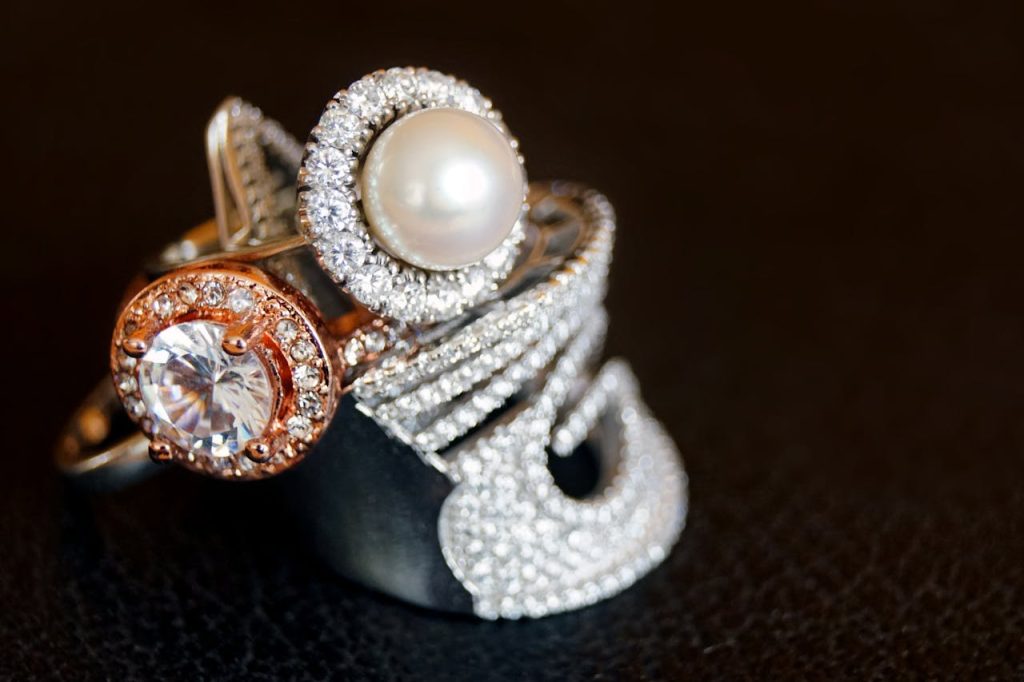
Even luxury brands are becoming divided into winners and losers due to the growing wealth disparity in the United States. Due to the strong demand for Cartier and Van Cleef & Arpels jewelry in the United States, Swiss luxury group Richemont has increased sales in the Americas region by more than 10% year over year for seven consecutive quarters. Global sales of Tiffany & Co.’s fine jewelry, the brand’s most costly category, reached a record in the third quarter, according to the LVMH-owned company. According to Bain & Co., jewelry is now more popular in the US luxury market than handbags and apparel.
At first, analysts who monitor luxury stocks believed that Americans were purchasing jewelry in anticipation of future import tariffs. They now wonder if the industry’s success is a reflection of more significant changes in the economy. The S&P 500 has increased 16% this year and generated $7.9 trillion in stock wealth despite recent market declines, primarily due to enthusiasm for artificial intelligence.
Jewelry is outperforming the rest of the luxury world
The already wealthy profit from this surge. According to NYU economist Edward Wolff, just 9% of American households—those making over $250,000 annually—own 68% of the stock market. Despite making up two-thirds of the population, households with incomes under $100,000 own only 10.3% of stocks. High-end jewelers are witnessing customers spend millions on individual pieces as stock wealth rises. According to Nicolas Bos, CEO of Richemont, extremely wealthy consumers are overspending because “their assets or their perceived wealth, and [the] stock exchange does play a role.”
Other places exhibit similar trends. For the first time in its history, Delta Air Lines predicts that revenue from first-class and premium seats will soon exceed revenue from coach. The top of the art market is also booming back; last week, a painting by Gustav Klimt sold for $236.4 million at Sotheby’s, the second-highest auction price ever.
Due to a 25% increase in the price of goods and services since 2020, many Americans are under financial strain. This divergence is referred to by economists as a K-shaped economy. Although interest in jewelry may be increasing due to rising gold prices, consumers are not viewing luxury items as commodities. For instance, a 16-cm Cartier Love bracelet only has roughly $3,000 worth of gold at current melt values, despite costing $8,655 including tax.
In today’s unbalanced market, investors believe that companies catering to the ultra-wealthy, such as Hermès, Cartier, and Van Cleef & Arpels, are the strongest. However, the risk is obvious: demand for jewelry could quickly decline if a stock market bubble bursts.
Featured Image Credit: Marta Branco; Pexels: Thank you!