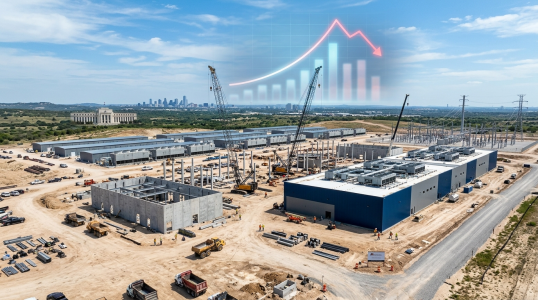
News about Anthropic and a possible initial public offering can influence far more than one private company. A higher expected valuation may signal greater funding for artificial intelligence infrastructure. That expectation can lift public technology stocks tied to chips, cloud services, data centers, networking, and power systems.
I am Taylor Sohns, CEO of LifeGoal Wealth Advisors, a Certified Investment Management Analyst and Certified Financial Planner. My firm manages more than $500 million. From an investor’s perspective, the key issue is not one day’s stock movement. It is the chain of spending that may follow a major AI fundraising event.
Table of Contents
ToggleWhy a Private Company Can Move Public Stocks
Anthropic is a private AI company known for developing the Claude family of AI models. Since its shares do not trade on a public exchange, most investors cannot buy the company directly.
Yet private companies can still affect public markets. Their fundraising plans offer clues about future demand for products sold by listed businesses.
An AI developer needs large amounts of computing capacity. That requires advanced semiconductors, servers, networking equipment, data-center space, electricity, cooling systems, and cloud services.
If investors expect Anthropic to gain access to more capital, they may also expect larger orders across that supply chain. Public companies that sell those goods and services can benefit from the change in expectations.
“A higher IPO valuation can mean more money available for the AI build-out, and that expectation can send related technology stocks higher.”
This reaction shows how markets often work. Stocks move based on expected future profits, not only current sales or recently reported earnings.
View this post on Instagram
What a Higher IPO Valuation Could Mean
An initial public offering allows a private company to sell shares to public investors. The company may issue new shares to raise capital. Existing shareholders may also sell some of their holdings.
A higher valuation does not automatically guarantee that the company will raise more cash. The amount depends on the number of new shares sold, their price, investor demand, and the final terms.
Still, a stronger expected valuation may give the company more flexibility. It can raise more while selling a smaller ownership stake. It may also use highly valued shares for employee pay or future acquisitions.
For an AI company, added capital may support several priorities:
- Buying or leasing advanced computing chips.
- Paying cloud providers for computing capacity.
- Training larger and more capable AI models.
- Hiring engineers, researchers, and safety specialists.
- Expanding data centers and related infrastructure.
- Supporting product development and business sales.
Each spending category can create revenue for other companies. That is why investors may buy public technology stocks before the spending appears in quarterly financial results.
The AI Spending Chain
AI models require intensive computing during both training and daily use. Training teaches a model to recognize patterns across large data sets. Daily use, often called inference, occurs whenever a customer asks the model to complete a task.
Both activities create costs. The largest expenses often involve chips, cloud access, electricity, and technical staff.
Chipmakers may benefit first because advanced processors are central to AI computing. Server manufacturers and networking companies can also gain as customers build clusters containing thousands of chips.
Cloud providers may see higher demand because many AI developers rent computing capacity instead of owning every machine. Data-center operators can benefit from the need for secure buildings, cooling equipment, and reliable connections.
Spending can also extend to utilities and power equipment suppliers. AI data centers consume large amounts of electricity, creating demand for generation, transmission, backup systems, and energy management.
This broader chain explains why one private company’s valuation can affect several groups of public stocks at once.
Why Markets React Before Details Are Final
Stock prices reflect probabilities. Investors do not wait for every contract to be signed before adjusting their forecasts.
If new information suggests that Anthropic could raise more capital, analysts may increase their estimates for AI infrastructure spending. Traders may then buy likely suppliers, pushing their share prices higher.
That reaction can happen even if Anthropic contributes only a small share of a supplier’s current revenue. Investors may view the news as evidence of strong demand across the whole AI sector.
Momentum can add to the move. Rising prices attract short-term traders, while investors who bet against technology stocks may buy shares to limit losses. Index funds and options activity can increase the effect.
However, a strong market reaction does not prove that every company involved will deliver higher profits. Revenue growth can come at a high cost. Competition may reduce prices, and large investments may take years to produce returns.
IPO Timing Deserves Caution
Treat reports of an IPO date as provisional until the company and regulators confirm the offering. Plans can change because of market conditions, regulatory review, financial disclosures, or weak investor demand.
An anticipated listing next Thursday, for example, would still depend on official filings and final pricing. Investors should separate confirmed information from market discussion.
The same caution applies to valuation estimates. A private funding valuation, an expected IPO valuation, and the market value after trading begins are not always the same.
A company can price its shares at one level and trade much higher or lower after listing. Early price swings may reflect limited share supply and speculation rather than a settled view of business value.
How Investors Should Read the Rally
I would not treat one headline as a reason to buy every AI-related stock. A rally can reveal market expectations, but it does not replace research.
Investors should examine whether a public company has a real economic link to AI spending. A direct supplier with signed orders differs from a business that only uses AI language in presentations.
Several questions can help test the investment case:
- How much revenue comes from AI customers?
- Are sales producing free cash flow or only higher expenses?
- Does the company have pricing strength?
- Can competitors offer a similar product at a lower price?
- Does the current stock price already assume rapid growth?
Valuation matters even for excellent businesses. A company can report strong growth while its stock falls because investors expected even better results.
Diversification also remains useful. AI spending may continue to rise, but individual suppliers can lose contracts, face product delays, or struggle with high costs. Spreading investments can reduce the damage from one company-specific setback.
The Larger Lesson From Anthropic
The Anthropic news illustrates a basic market principle: capital spending connects private innovators with public suppliers.
A higher expected IPO valuation can suggest that more funding is available. More funding can support larger AI investments. Those investments may create sales for chipmakers, cloud providers, networking firms, data centers, and power companies.
Yet each step is an expectation, not a certainty. The offering must proceed, capital must be raised, management must spend it, and suppliers must convert that demand into profitable growth.
My recommendation is to follow the spending trail while keeping valuation and risk in view. A headline may explain why technology stocks rise today. Long-term returns will depend on earnings, cash flow, competitive strength, and the price paid for each investment.
Frequently Asked Questions
Q: How can Anthropic affect stocks if it is privately owned?
Public companies may supply Anthropic with chips, cloud capacity, servers, networking tools, data-center services, and electricity. Expectations for higher Anthropic spending can raise forecasts for those suppliers.
Q: Does a higher IPO valuation guarantee more AI investment?
No. The company’s cash proceeds depend on how many new shares it sells and at what price. Management must also decide how much capital to spend and where to allocate it.
Q: Should investors buy technology stocks after IPO news?
A single announcement should not determine an investment decision. Review each company’s AI revenue, profit margins, cash flow, competition, valuation, and role in a diversified portfolio.
Image Credit: Markus Winkler; Pexels