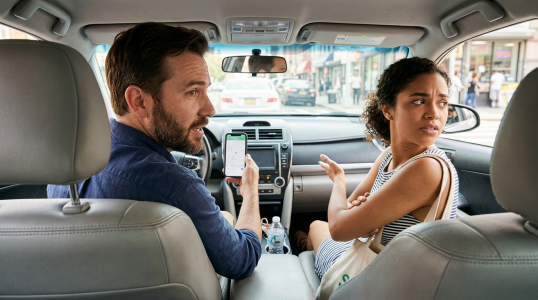
A tense encounter between a rideshare driver and a passenger shows how quickly a routine trip can turn into conflict. The driver asks the passenger to confirm her name, but she refuses and demands that he contact the person who requested the ride. The dispute soon centers on identity checks, payment, consent, and the driver’s right to control access to his vehicle. An observer uses the incident to reflect on patience, personal responsibility, and the value of treating service workers with respect.
Table of Contents
ToggleA Routine Safety Check Leads to Conflict
The encounter begins with a standard question. The driver asks the passenger for her name before starting the trip.
Such questions serve a clear purpose. A rideshare driver must confirm that the person entering the vehicle matches the requested trip. Passengers also have tools to check the driver and vehicle before getting in.
The passenger does not answer directly. Instead, she tells the driver to call the man who requested the ride. She appears to expect the driver to settle the matter with that person.
The driver explains that he did not request the ride and does not have the needed contact details. He then asks the passenger to leave the vehicle.
At that point, the disagreement becomes a refusal to exit. The passenger repeatedly says that she will not get out. She argues that the person who ordered the trip has already paid.
The driver keeps asking her to leave. His wording remains direct and brief. He does not respond to her anger in kind.
“Get out of the car, please.”
The repeated request matters because consent applies to private property. A passenger cannot assume an unlimited right to remain inside a driver’s vehicle. If the driver cancels or refuses a trip, the person must leave when asked.
The driver’s request also follows a practical safety concern. He cannot confirm the rider’s identity. Starting the trip under those conditions could place both people at risk.
View this post on Instagram
The Main Points of the Dispute
The argument involves several basic misunderstandings and behavioral concerns:
- The driver asks for a name to confirm that he has the correct passenger.
- The passenger refuses to provide the requested confirmation.
- She expects the driver to contact the person who arranged the ride.
- The driver asks her to leave after the verification process fails.
- She refuses because she believes she already paid for the trip.
- The driver stays calm while repeating his request.
- The disagreement escalates to the point where they discuss police involvement.
Each point increases the pressure in the encounter. However, the central issue remains simple. The driver does not feel able or willing to provide the trip, and the passenger refuses to leave his car.
Why Confirming a Rider’s Identity Matters
Identity checks are part of rideshare safety. Drivers often rely on the rider’s name, destination, or account details to confirm a pickup.
A driver may have limited information about the passenger. The app may display a first name or other basic trip details. That information helps the driver avoid picking up the wrong person.
The passenger can also check important details. These may include the driver’s name, photograph, vehicle model, and license plate. Both sides share responsibility for confirming the trip.
Third-party ride requests can create added confusion. One person may use an account to arrange transportation for someone else. The passenger may not know every detail shown in the app, while the driver may not know that another rider is expected.
Even so, refusing a simple identity check does not solve the problem. The safer response is to provide the requested information or contact the account holder for help.
The passenger could also step outside while the matter is reviewed. Remaining in the vehicle after being asked to leave increases tension and limits the driver’s choices.
The observer stresses that the driver did not begin with an insult or accusation. He asked one basic question. The strong reaction seemed out of proportion to that request.
“All he did was ask for her name.”
This observation frames the incident as a failure of ordinary cooperation. A short answer may have prevented the entire dispute.
Payment Does Not Create a Right to Remain
The passenger argues that she should stay because the person who ordered the ride has already paid. She also says the driver should reimburse that person if he refuses the trip.
The observer challenges this claim. Rideshare charges are generally completed after a trip ends, though temporary holds, cancellation fees, or platform rules may affect an account.
The exact payment process can differ by service and location. Still, the broader point holds. Requesting a trip does not remove a driver’s control of the vehicle.
Handle payment disputes through the rideshare platform. Don’t settle it by refusing to exit a private car.
If a trip is canceled, the account holder can review the charge and contact customer support. The driver and passenger do not need to resolve every billing question during a heated roadside argument.
The passenger’s reasoning also treats the ride as guaranteed once it is ordered. In practice, several conditions must still be met. The correct rider must show up, the driver must feel safe, and both must follow platform rules.
An order creates a service request. It does not grant ownership of the vehicle or remove the driver’s right to decline the trip.
The Driver’s Calm Response
The observer gives the driver credit for staying composed. The passenger raises her voice, rejects his requests, and insists on staying in the car. He continues to use short statements rather than escalating the argument.
His calm manner does not mean that he accepts the behavior. He clearly states what he wants the passenger to do. He repeats the boundary without adding personal attacks.
This distinction is important. Calm communication can still be firm. It does not require a person to surrender control or tolerate unsafe conduct.
The driver avoids several actions that could have worsened the dispute. He does not appear to threaten the passenger. He does not insult her. He does not try to win a long debate about payment.
Instead, he returns to the same request. She must leave the vehicle.
The observer suggests that drivers may develop this kind of restraint through experience. Rideshare work can expose drivers to intoxicated riders, mistaken pickups, arguments, and refusals to follow basic rules.
Experience may teach a driver that matching another person’s anger rarely helps. A steady voice can protect everyone while the driver documents the situation or requests outside help.
The driver’s behavior offers a useful model:
- State the problem in plain language.
- Give a clear instruction or boundary.
- Avoid insults and personal judgments.
- Do not argue endlessly about unrelated details.
- Seek appropriate help if the person refuses to comply.
This approach does not guarantee a quick solution. It can, however, reduce the risk of turning a verbal disagreement into physical harm.
When Police Involvement Enters the Discussion
The possibility of calling the police appears several times. The passenger says the driver can contact officers if he wants her removed.
She also speaks to the person who arranged the ride. That person appears to be listening through a phone speaker. When asked about the problem, she says there is no issue because she has not touched the driver.
That claim uses a narrow definition of misconduct. Physical contact is not required for a situation to become serious. Refusing to leave private property after a clear request can create a safety and legal concern.
The absence of violence is positive, but it does not erase the dispute. The driver remains responsible for the vehicle and must decide whether it is safe to proceed.
Police contact should not be treated lightly. Yet a driver may have few options if a passenger refuses repeated requests to exit.
The safest steps depend on local conditions. A driver may cancel the trip, contact platform support, move to a public location if safe, or request emergency help when there is an immediate threat.
Physical removal can create greater danger. Unless urgent self-protection is required, keeping distance and seeking trained assistance is often safer.
Respect for Workers and Their Property
The observer is troubled by the passenger’s treatment of the driver. The vehicle is his property and part of his workplace.
Rideshare passengers sometimes view a trip only as a service purchased through an app. That view can hide the human labor involved.
The driver must maintain the vehicle, pay operating costs, manage traffic, and respond to strangers throughout the day. He also carries personal risk each time someone enters the car.
Respecting a driver means more than paying for a trip. It includes answering reasonable questions, following safety instructions, and leaving the vehicle when service is refused.
The same principle applies to workers in restaurants, shops, delivery services, and public-facing jobs. A business transaction does not give a customer permission to mistreat another person.
People may feel stress, anger, fear, or embarrassment. Those feelings can explain behavior, but they do not excuse abuse.
A brief moment of patience can change an encounter’s direction. A rider could say that someone else booked the trip and ask what information the driver needs. The driver could then verify the details or cancel without a prolonged confrontation.
Compassion Without Excusing Harmful Conduct
The observer strongly criticizes the passenger’s actions, yet stops short of making broad claims about her character.
He notes that viewers do not know what she is going through in her life. She may be facing personal hardship, emotional distress, or another problem that is not visible.
This does not make her conduct acceptable. It does, however, limit what anyone can fairly conclude from one recorded encounter.
The observer hopes she finds peace and stability. He describes prayer as the only helpful response he can offer from a distance.
“Pray that she can find peace. Pray that she can find some sort of serenity to her life.”
This response joins accountability with compassion. The passenger should have respected the driver’s request, but she does not need to be reduced to her worst recorded moment.
Public videos often encourage immediate judgment. Viewers may label someone based on a few minutes, without knowing what happened before or after the recording.
A measured response can identify harmful conduct while avoiding unsupported claims. It can say that an action was wrong without declaring that a person has no value.
Self-Reflection Changes the Message
The observer does not present himself as morally superior. He admits that he has likely been impatient with workers in other settings.
He mentions fast-food employees, grocery store workers, and other drivers in traffic. These are common settings where stress can lead to sharp words or rude behavior.
That admission gives the lesson wider meaning. The incident is not only about one passenger’s refusal to leave a car. It is also about how ordinary people behave when delayed, confused, or frustrated.
It is easy to condemn a dramatic example. It is harder to examine smaller moments of disrespect in one’s own life.
A customer may speak harshly because an order is late. A shopper may blame a cashier for a store policy. A driver may shout at someone who makes a minor mistake.
These acts may seem less serious than refusing to exit a vehicle. They still affect workers and strangers who may already be under pressure.
Self-reflection prevents the lesson from becoming simple public shaming. The observer points out the passenger’s behavior, then holds himself to the same standard.
His conclusion is direct: kindness goes a long way.
Practical Lessons for Rideshare Passengers
Passengers can reduce confusion by preparing before the driver arrives. They should review the driver and vehicle details, then make sure the pickup location is accurate.
If another person booked the trip, the rider should know the account name and destination. If the platform allows it, the account holder should tell the driver that someone else will be riding.
Passengers should also answer verification questions calmly. A name check usually protects both sides, not to challenge or embarrass the rider.
If the driver cancels or asks the rider to leave, exit promptly in a safe place. You can address any concerns about charges through the app afterward.
Passengers should avoid touching the driver, blocking movement, damaging the vehicle, or making threats. Contact emergency services if you believe you face immediate danger.
Simple courtesy can prevent many disputes. A clear explanation, a calm voice, and a willingness to step outside can give everyone time to solve the problem.
Practical Lessons for Drivers
Drivers also benefit from a clear plan for difficult pickups. They can explain identity checks in simple terms and avoid sharing private information unnecessarily.
If a rider refuses to cooperate, the driver can state that the trip will not begin. A short explanation may work better than a long argument.
Drivers should follow platform guidance and local law. They should document serious incidents through approved reporting tools when it is safe to do so.
Remaining calm can support personal safety, but drivers should not ignore credible threats. If someone feels endangered, they should move to safety and seek immediate help.
In this case, the driver shows that restraint and firmness can coexist. He does not need to shout to make his position clear.
The Broader Lesson About Everyday Conduct
The dispute begins with a name and grows into a standoff. That change shows how resistance to a small request can produce a much larger problem.
It also shows the limits of customer entitlement. Paying for a service does not remove another person’s rights, safety concerns, or control over private property.
The observer’s final message is not limited to rideshare use. It applies anywhere people depend on workers for transportation, food, shopping, or support.
People rarely know the full burden another person carries. Courtesy costs little, yet it can lower stress and protect dignity on both sides.
At the same time, compassion should not erase boundaries. The driver had a right to ask for verification. He also had a right to end the interaction when the passenger refused.
The most useful response combines three ideas: respect reasonable safety checks, comply with clear property boundaries, and review one’s own conduct before judging others too harshly.
A routine ride should not require a police response. Better preparation and calmer communication could have prevented the dispute. The lasting recommendation is simple. Treat workers as people, respect a clear refusal, and choose patience when frustration begins to rise.
Frequently Asked Questions
Q: Why might a rideshare driver ask a passenger for a name?
The question helps confirm the correct rider is in the correct vehicle. It protects the driver, the expected passenger, and the account holder from mistaken pickups.
Q: Does ordering or paying for a trip allow someone to stay in the car?
No. A ride request does not give a passenger ownership or unrestricted access to the vehicle. If a driver ends the trip and asks the rider to leave, the platform should handle billing concerns.
Q: What is the safest response when a rideshare disagreement escalates?
Both people should avoid threats and physical contact. The passenger should leave when it is safe to do so. Either person can contact platform support or emergency services if there is a genuine safety risk.
Image Credit: Pexels