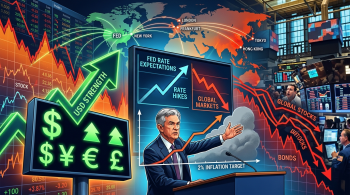
A sharp change in Federal Reserve expectations sent a clear signal across financial markets. The dollar rose, while stocks and bonds fell. The trigger was Fed Chair Kevin Warsh’s direct warning that interest rates may not be high enough to return inflation to the central bank’s 2% target.
As CEO of LifeGoal Wealth Advisors, a Certified Investment Management Analyst, and a Certified Financial Planner, I view this reaction as a lesson in expectations. Markets move on current economic data, but they also move on what investors believe policymakers will do next.
Table of Contents
ToggleA Clear Shift in the Market Narrative
Before Warsh’s Jackson Hole speech, investors had limited guidance about his approach to interest rates. That uncertainty allowed several policy paths to remain priced into markets.
Some investors expected the Fed to hold rates steady. Others thought weaker economic conditions might lead to future rate cuts. A smaller group believed another increase remained possible.
Warsh narrowed those possibilities with a blunt assessment. Inflation had remained above the Fed’s 2% target for 65 months. He also said financial conditions were not restrictive.
“Financial conditions are not restrictive.”
That short statement carried considerable weight. In plain language, it suggested borrowing conditions were not tight enough to reduce inflation at the desired pace.
If rates are not restrictive, the Fed may need to raise them or keep them elevated for longer. Either choice can affect businesses, households, and investors.
View this post on Instagram
Four Signals Investors Received
- Inflation remains a central concern after 65 months above the 2% target.
- The Fed chair does not view current financial conditions as sufficiently tight.
- A September rate increase may be more likely than markets previously assumed.
- Stocks, bonds, and currencies adjusted quickly to the change in policy expectations.
The speech did not guarantee a rate increase. It changed the range of outcomes that investors considered likely. That distinction matters because market prices reflect probabilities, not certainties.
Why the Dollar Rose
The dollar often gains when investors expect higher U.S. interest rates. Higher rates can make dollar-based assets more attractive relative to assets denominated in other currencies.
For example, a global investor may compare the expected return from a U.S. Treasury security with that of a government bond issued elsewhere. If expected U.S. yields rise, demand for dollars may increase.
Currency markets also react to differences between central bank policies. If the Fed appears more willing to raise rates than other major central banks, the dollar may receive added support.
That pattern appeared after Warsh’s remarks. The market heard a more forceful inflation message and quickly adjusted its expectations. The stronger dollar reflected those revised assumptions.
A rising dollar has mixed effects. It can lower the cost of imported goods for U.S. buyers, which may help inflation. However, it can also reduce the value of overseas revenue when U.S. companies convert foreign earnings back into dollars.
Why Stocks Fell
Stocks often struggle when interest-rate expectations rise. Higher rates increase financing costs and can reduce the present value investors assign to future company profits.
This effect may be greater for growth companies. Many of these businesses are valued partly on profits expected several years from now. When the discount rate rises, those distant earnings may be worth less in current terms.
Higher rates can also slow consumer and business spending. Mortgages, auto loans, credit cards, and corporate borrowing may become more expensive. That can place pressure on sales and earnings.
Investors may also compare stocks with safer investments. If Treasury yields become more attractive, some investors may decide they need less exposure to risky assets.
The decline in stocks did not necessarily show that investors expect an immediate recession. It showed that the price of money may stay high, or rise further, as the Fed works to control inflation.
Why Bond Prices Also Declined
Stocks and bonds can fall at the same time. That may seem unusual because bonds are often treated as a defensive investment. Yet it makes sense when expected interest rates rise.
Bond prices and yields generally move in opposite directions. If newly issued bonds begin offering higher yields, older bonds with lower payments become less attractive. Their market prices may fall to compensate.
Consider an existing bond that pays less interest than a similar new bond. An investor would usually pay less for the older security. That price adjustment raises its effective yield.
The size of the move can depend on a bond’s maturity and sensitivity to rate changes. Longer-term bonds often experience larger price swings because their fixed payments extend further into the future.
The broad decline in bonds therefore reflected expectations for tighter policy. Investors were adjusting to the chance that the Fed could raise rates again or maintain high rates longer than previously expected.
September Hike Odds Changed Quickly
Before the speech, markets priced about a 35% probability of a September rate increase. Afterward, that estimate rose to about 60%.
That was a 25-percentage-point change in a short period. It showed how strongly investors interpreted Warsh’s comments.
These market probabilities are often derived from prices in interest-rate futures. They are not official Fed forecasts, and they can move as economic reports and policy statements arrive.
A 60% probability does not mean a hike is assured. It means the market viewed an increase as more likely than not at that moment.
Several developments could still alter the outlook:
- Inflation reports could show renewed price pressure or faster improvement.
- Employment data could reveal strength or weakness in the labor market.
- Consumer spending and business activity could change the growth outlook.
- Other Fed officials could provide different views before the meeting.
What “Restrictive” Policy Means
A restrictive interest-rate policy is intended to slow demand. Borrowing becomes more expensive, saving may become more attractive, and economic activity may cool.
The Fed uses this approach to reduce inflation. Yet officials must judge how much restraint is enough. Monetary policy affects the economy with delays, so the full impact of past rate changes may not appear immediately.
Warsh’s statement suggested current conditions were not applying enough pressure. That view has direct implications for the expected path of rates.
The Fed does not control every borrowing cost. Mortgage rates, corporate yields, stock prices, and the dollar all help determine financial conditions. Markets can sometimes loosen those conditions even while the central bank keeps its policy rate high.
For instance, rising stock prices can increase household wealth. Falling bond yields can reduce financing costs. Easier credit standards can encourage borrowing. Together, those developments may support demand and make inflation harder to reduce.
What Investors Should Take From the Move
I would not treat one speech or one trading session as a reason to abandon a long-term investment plan. Markets can adjust rapidly, and the first reaction may not become a lasting trend.
Still, the move offers several practical lessons. Interest-rate uncertainty remains important, inflation is not yet a settled issue, and diversification does not prevent every asset from declining together.
Investors should review how their portfolios might respond if rates rise or remain high. That includes examining bond maturities, stock valuations, cash needs, and exposure to interest-sensitive sectors.
Time horizon also matters. A retiree funding near-term expenses may need a different approach from a younger investor with decades before withdrawals begin.
Short-term market forecasts should not replace disciplined planning. A sound process accounts for several possible outcomes rather than relying on one policy prediction.
The central lesson is simple: communication from the Fed can reset expectations within minutes. Warsh’s Jackson Hole remarks shifted the market from uncertainty to a clearer concern about tighter policy. The dollar strengthened, stocks weakened, and bond prices fell as investors raised the estimated chance of a September hike from 35% to 60%.
Future data will decide whether that probability holds. Investors can respond best by staying informed, maintaining suitable diversification, and keeping decisions tied to personal goals rather than daily price swings.
Frequently Asked Questions
Q: Why can stocks and bonds decline on the same day?
Both can fall when markets expect higher interest rates. Stocks may face lower valuations and slower growth, while existing bonds lose appeal compared with newer bonds offering higher yields.
Q: Does a 60% market probability mean the Fed will raise rates?
No. It reflects investor expectations at a specific moment. Inflation, employment, spending, and comments from Fed officials can change that estimate before the policy meeting.
Q: How should long-term investors react to a policy speech?
They should review risk, liquidity, and time horizon without making impulsive changes. A single speech may affect short-term prices, but personal goals should guide long-term investment decisions.