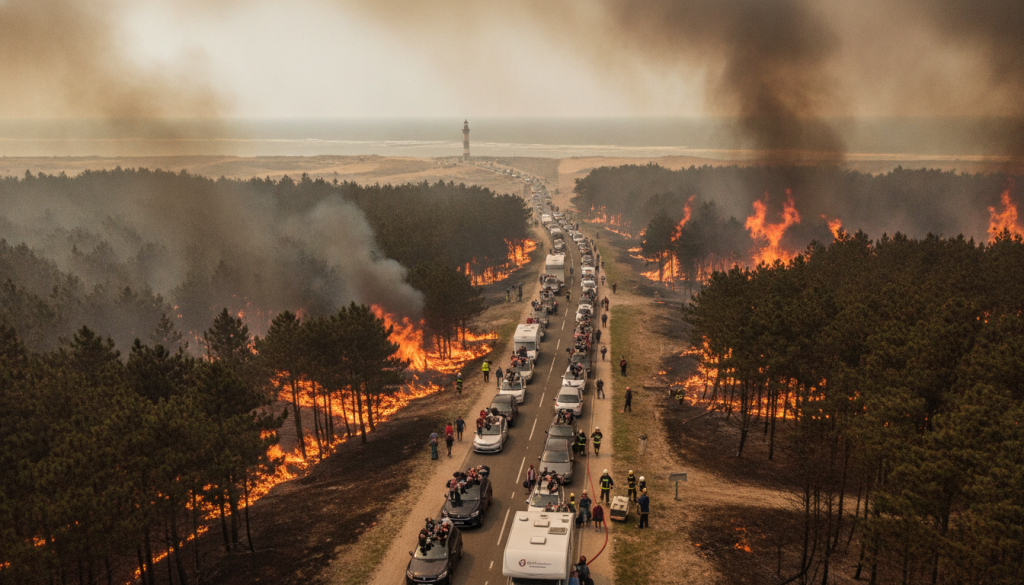
French authorities ordered mass evacuations on the Cap Ferret peninsula west of Bordeaux after a wildfire breached a key defensive line meant to hold the flames. Residents and tourists were told to leave as firefighters shifted to protect lives and reroute traffic off the narrow spit of land. The order comes at the height of the summer season in one of France’s most visited coastal areas, raising safety concerns and economic worries.
The decision followed hours of changing winds and dry conditions that pushed fire through pine forest and dunes. Officials said crews would keep fighting on multiple fronts while evacuation teams moved people to safer areas around Arcachon Bay.
Table of Contents
ToggleWhat Happened In Cap Ferret
Fire crews had set a defensive line to stop the advance through the forest. As the fire surged, they could not hold it. Authorities then issued a sweeping evacuation for residents and visitors across the peninsula.
“French authorities have ordered the evacuation of residents and tourists on the peninsula of Cap Ferret, a popular tourist area west of Bordeaux, after wildfires crossed a defensive line set up by firefighters to try to contain the blaze.”
Emergency services asked people to leave early, keep roads clear for fire engines, and avoid returning for belongings. Local officials urged calm and said the priority was safe passage off the peninsula and access for response teams.
A Peninsula At Risk
Cap Ferret sits between the Atlantic and Arcachon Bay, lined with dense maritime pines. It has one primary road, which can clog quickly during an evacuation. That geography often complicates firefighting, since crews must protect homes, campsites, and dunes while keeping evacuation corridors open.
The area is no stranger to wildfire stress. In 2022, nearby Gironde department faced some of France’s worst fires in decades, with more than 70,000 hectares burned nationwide, according to European fire monitoring data. Thousands fled communities around La Teste-de-Buch and Landiras as smoke blanketed the coast and forced road closures.
Lessons From 2022 Fires
Firefighters in southwest France have since widened firebreaks, improved access tracks, and refined coordination with air support. They also stressed early evacuations and clear messaging. Those tactics appear to be shaping the current response, with a rapid shift from containment to evacuation once the line failed.
Experts point to longer dry spells, higher temperatures, and strong coastal winds as key drivers that raise fire risk. Météo-France has flagged the southwest as vulnerable during heat spikes, which can dry pine resin and ground cover in a matter of days.
What Authorities Are Doing Now
Officials said the goal is to keep the fire away from towns and campsites and to protect the single exit route. Crews are likely using ground teams to cut fresh lines and, when conditions allow, calling in water-dropping aircraft to slow the head of the fire. Local shelters and reception points are often set up around the basin for evacuees.
- Leave promptly when directed. Do not wait for a second notice.
- Keep phone and radio on for updates. Follow official channels.
- Avoid blocked roads. Let emergency vehicles pass.
- Bring identification, medicines, and water. Travel light.
Authorities will monitor wind shifts overnight. Any change in direction can turn embers into new fronts and test fresh containment lines.
Tourism And Economic Strain
The evacuation hits during peak travel weeks. Hotels, restaurants, surf schools, and campsites rely on steady summer bookings. Business owners in the basin have dealt with fire-related disruptions before, including road closures and smoke that keeps visitors away.
Insurers track fire claims closely in Gironde, where exposure to forested zones is high. Restoring access and air quality will be key if authorities want to salvage the late-season calendar once the danger passes.
What Comes Next
Fire behavior in the next 24 to 48 hours will set the course. Cooler evening temperatures can slow spread, but gusts along the Atlantic can reignite hot spots. The strength of new containment lines, air support availability, and traffic flow off the peninsula will shape the outlook.
For now, the focus is on safety. The fast decision to evacuate suggests officials learned from recent seasons, when fires moved faster than expected. If weather cooperates, crews could box in the blaze and reopen parts of the peninsula. If winds rise, more closures and extended displacement are likely.
Residents across southwest France will watch Cap Ferret closely. The episode highlights the strain on coastal forests and the need for year-round thinning, clear signage, and rapid alerts. The next few days will show whether those measures can hold the line during peak summer heat.