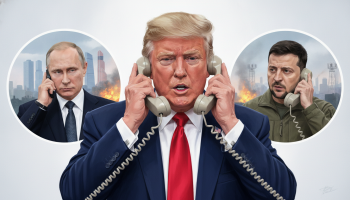
Donald Trump reportedly spoke with Russian President Vladimir Putin and Ukrainian President Volodymyr Zelenskyy as Ukrainian forces hit targets inside Russia and Moscow launched another deadly strike on Kyiv. The conversations, described by people familiar with the matter, came as the war again spilled into urban centers, with air raid sirens and fresh damage in the Ukrainian capital.
The timing raised questions about private diplomacy during an active war. It also revived debate over how outside conversations might affect official channels already under strain.
Table of Contents
ToggleWhat Happened And Why It Matters
“Trump reportedly spoke with Putin and Zelenskyy as Ukraine struck Russian targets and Moscow launched another deadly attack on Kyiv.”
There was no immediate readout of the talks or confirmation of topics discussed. It is not clear whether the calls were back-to-back or how long they lasted. Still, the outreach placed a high-profile American figure into the middle of a live conflict at a time of escalating strikes.
Supporters of open lines say dialogue can reduce risk. Critics warn unsanctioned talks may blur messages or create confusion for diplomats trying to manage aid, sanctions, and cease-fire terms.
Wartime Context: Strikes And Retaliation
Ukraine has expanded long-range operations against military targets across the border, seeking to disrupt supply routes, air bases, and command sites. Russia has kept up waves of missile and drone attacks, often hitting energy facilities and urban areas. Kyiv officials reported new casualties and damage from the latest barrage.
These moves reflect a grinding pattern. Gains are measured in small advances, while civilians continue to pay a heavy price when strikes hit dense neighborhoods. The pressure on air defenses remains constant.
Legal And Diplomatic Stakes
Private citizens speaking with foreign governments face legal and political scrutiny in the United States. The Logan Act, a centuries-old law, bars unauthorized negotiation with foreign powers in disputes with the U.S. Legal scholars note it is rarely used and almost never prosecuted. Even so, such calls can prompt ethical and security reviews.
Former officials say unofficial talks can complicate carefully scripted diplomacy. Governments weigh every word for signals on sanctions, military aid, or future talks. Mixed messages can weaken leverage or create false expectations.
Others argue that hearing from influential Americans—inside or outside office—can surface ideas or calm spikes in tension. The value depends on what is said, who listens, and whether the messages match U.S. policy.
Reactions And Risks
Analysts split on the impact. Some see limited harm if the discussions were general and avoided policy commitments. Others warn that even casual remarks can carry weight in wartime. Russia and Ukraine both track U.S. political debates closely, aware that shifts in Washington can change aid, weapons approvals, and pressure for talks.
For Kyiv, sustained security support and clear timelines matter. For Moscow, any hint of wavering can be used in domestic messaging or to test Western unity. A high-profile call—without an official transcript—lets each side tell its own story.
What To Watch Next
- Whether any party releases a readout or hints at topics discussed.
- Shifts in strike patterns or pauses that might suggest backchannel influence.
- Signals from U.S. officials clarifying policy or distancing from private outreach.
- Reactions from European partners tracking aid flows and security guarantees.
Possible Outcomes For The War Effort
If the calls pressed for de-escalation, there could be a short-term dip in large salvos or an opening for humanitarian measures. If they touched on future talks, watch for trial balloons about security lines, prisoner exchanges, or energy infrastructure protection. If they were social or exploratory, the net effect may be minimal.
Either way, the core drivers remain the same: battlefield attrition, supply chains, air defense capacity, and political resolve in Kyiv, Moscow, and Western capitals.
The latest outreach adds a new twist to a hard war with few easy choices. Without official summaries, the substance is guesswork, but the stakes are unmistakable. Watch for whether these conversations prompt clarifying statements from Washington and whether the tempo of attacks on Kyiv and inside Russia changes in the days ahead.