Key Takeaways
- A dedicated Facebook Business Page, rather than a personal profile, is critical for monetization because it unlocks key ad infrastructure and allows integration with third-party tools (like Buffer).
- To feed the algorithm data and drive rapid growth, creators must scale up output (eventually to 20+ posts a day after an initial warm-up period).
- Trying to reinvent the wheel every day leads to creative exhaustion. Rather, success comes from doubling down on proven content patterns, using reliable third-party tracking tools to bypass buggy native Meta dashboards.
In 2026, most people will quit their Facebook page within 60 days of starting one.
I know it’s a brutal statistic, but it’s the truth. And no, it’s not because the platform is dead or because the algorithm is out to get you. It’s because the vast majority of beginners do everything in the wrong order, burn out, and then wonder why their dashboard is blank.
Even creators who persist rarely figure out how to get paid for their work. There aren’t nearly as many people making real money on Facebook as the gurus claim.
The reason I know this is that I made the same mistakes when I first began. The good news is that you don’t have to. To build an income-generating Facebook page this year, you must abandon the guessing game and follow a precise execution plan.
1. Treat It Like a Business: Choose a Page Over a Profile
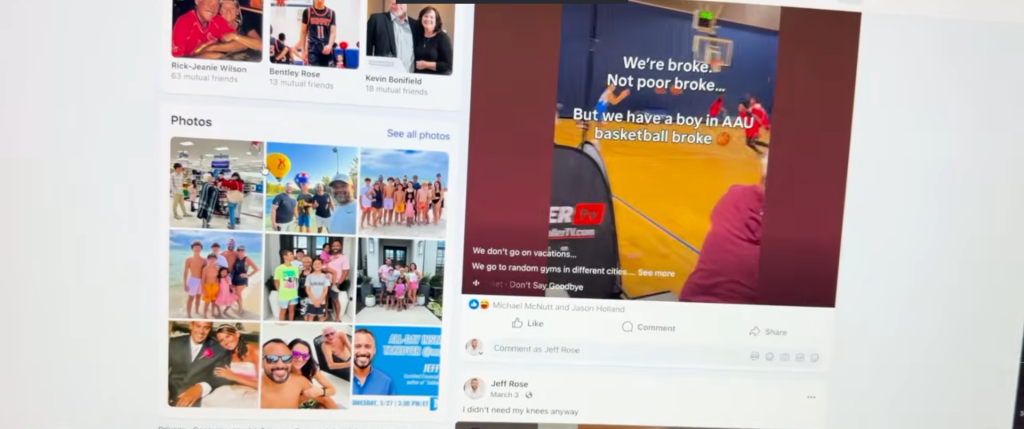
When you’re just starting out, it’s tempting to just use your Facebook profile. It’s emotionally safe, you already have an account, and your friends and family will double-tap your posts out of courtesy.
When it comes to monetization, however, relying on a personal profile is a foundation built on sand. The first step is to create a Facebook Business Page.
Choosing a personal profile might feel fine for sharing updates with friends, but it gives you no long-term leverage. On the other hand, a dedicated Business Page unlocks third-party tools, ad networks, and true operational scalability.
It takes structure, control, and legitimacy to build an asset. With a dedicated Page, you set a professional boundary for your brand, but more importantly, you unlock two critical business levers that profiles block:
Paid advertising infrastructure.
Even if you have zero interest in running ads today, you must retain the flexibility to do so later. To grow my organic following, I didn’t run a single ad. However, the backend infrastructure of your website to run targeted Meta ads via a business page becomes your greatest opportunity when you launch a new product, book, or financial service.
Third-party enterprise software integration.
When it comes to scaling content, you can’t rely on manual uploads or the native Meta Business Suite. In all honesty, Meta’s native scheduling suite is clunky, glitchy, and unintuitive.
If you want to run this like a real media property, you need enterprise scheduling tools like Buffer or PostPlanner. In addition to organizing, analyzing, and queueing content efficiently, these platforms also allow for API integration, and Meta restricts these API integrations heavily to personal accounts.
2. Blast Through the “Comfort Zone” Posting Volume
After your Page is live, the next hurdle is psychological. Most creators fail because they post at a volume that feels emotionally safe rather than one that actually feeds the algorithm data.
In the beginning, I was terrified of annoying my audience. As a result, I only posted one or two times a day, paralyzed by fear that people would get sick of me or send me nasty messages.
It was then that I realized Facebook is a strictly algorithm-driven platform. Every piece of content you distribute only reaches a tiny fraction of your followers.
It’s entirely in your head that you are afraid of “over-posting.” When I realized this, I stepped outside my comfort zone and systematically increased my output.
From my comfortable baseline, I gradually increased my posting frequency to four to six posts per day. After seeing no negative feedback and seeing my engagement metrics rising, I pushed it up to eight to fourteen posts a day. At that point, my subscriber base began to grow rapidly, and I began to see clear visibility patterns. Currently, my page averages twenty to twenty-five posts a day, resulting in maximum algorithmic velocity and compounding revenue drops.
The result of this aggressive schedule? I have not received a single message complaining about their feed. Rather, engagement skyrocketed, and financial returns followed.
Why volume is your best analytical tool.
For the algorithm to give you meaningful feedback, you need a large amount of data. By only posting every few days, you don’t give the algorithm enough opportunity to learn about you and your audience. The best way to discover what hooks grab attention, what types of content get shared, and what actually drives revenue is by doing a high volume of testing.
There is one exception that applies here: don’t launch a brand-new page on day one and drop twenty posts. Meta’s spam filters will flag your account immediately. Begin by posting two or three high-quality posts a day, engaging with other pages in your niche, and asking people you know to comment. Don’t turn up the volume until you prove that you are a human creator and not a spam bot.
3. Stop Guessing, Stop Inventing, and Double Down on Winners
Third, creative exhaustion is a reason why creators quit before day sixty. Every morning, they try to reinvent the wheel with every post.
Winners don’t make guesses. As soon as they recognize the data patterns their page is already producing, they relentlessly double down on what’s already working.
When a particular topic hits, write three additional posts related to that topic. When a certain visual format is shared, replicate it. Reuse that exact headline hook if you notice that it prevents people from scrolling.
The problem with Facebook’s native analytics.
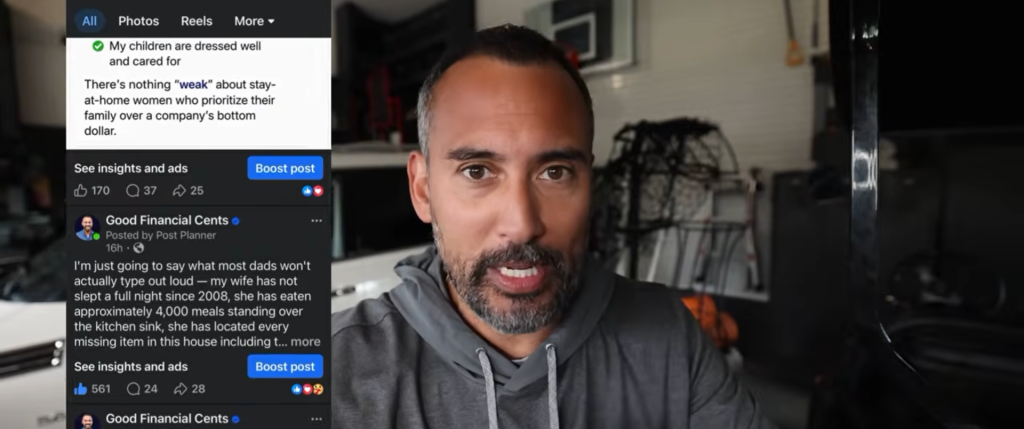
Finding winning content is the first step to doubling down on it. Even though Facebook offers a native professional dashboard, relying solely on it is a big mistake. There are a lot of bugs and data gaps on the internal metrics dashboard.
I once had a high-earning post go viral. Later, I couldn’t locate it within the Meta dashboard to analyze its metrics. When I filtered by month, nothing appeared. Even when I narrowed it down to two-week and one-week intervals, it didn’t work. It only appeared when I searched for the exact, specific calendar day it went live.
You cannot make fast business decisions if you’re fighting with your analytics dashboard.
You should move your tracking from raw algorithmic feedback to a reliable third-party tool like PostPlanner for the most efficient pipeline. As a result, you can identify winners immediately, allowing you to replicate and monetize successful strategies right away.
With clean data access, you can find your absolute best performers, optimize your creative pipeline, and move into the small percentage of creators who actually make real money.
The 60-Day Pivot: From Hobbyist to Media Property
The 60-day mark is a filter, not a death sentence. It clearly differentiates casual hobbyists from business owners who rely on data, systems, and execution.
If you treat Facebook like a diary, you’ll be burnt out by week eight because of the slow growth and clunky tools. But when you treat your page like a real media property, decoupling your emotions, leveraging third-party infrastructure, and feeding the algorithm the right amount of data to find your audience, the game changes.
You don’t need a crystal ball or a guru’s secret loop to build a highly profitable Facebook page. It requires discipline to stop guessing, the willingness to step out of your comfort zone, and the right tools. Get your sandbox set up right from day one, look at the numbers cleanly, and build something that pays. It’s right in front of you. Now stop inventing, look at your data, and execute.
Image Credit: Markus Winkler; Pexels