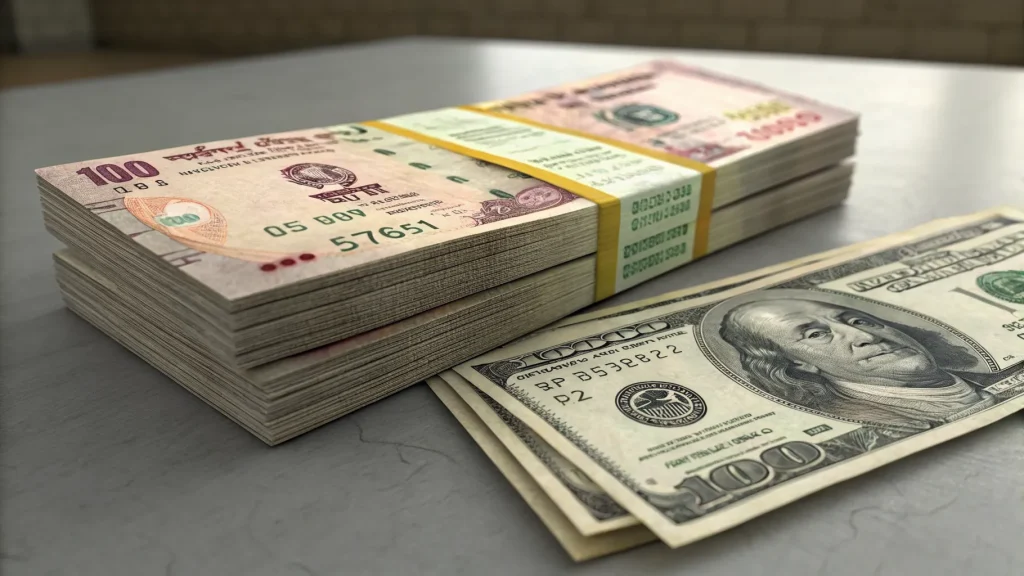
The rupee fell to ₹95.16 against the U.S. dollar, flashing fresh weakness that could ripple through prices, borrowing costs, and household budgets. The move sharpened concern among economists and traders on Wednesday as warnings mounted that, without fresh foreign inflows, the currency could fall further. That would raise import bills, pressure the central bank, and reshape the outlook for growth and inflation.
Economist Steve Hanke cautioned that the slide could persist unless capital returns. He pointed to the strain on consumers and investors if a weaker rupee lingers. The stakes are high for families booking trips, paying EMIs, or planning retirement savings, and for firms with dollar-linked costs.
Table of Contents
ToggleWhat’s Driving The Slide
Currency moves often reflect the global hunt for yield and safety. When investors pull money from emerging markets, local currencies tend to sag. A stronger dollar can compound the effect as traders park cash in U.S. assets.
Domestic factors matter too. High import needs, a wider trade gap, or uneven growth can weigh on a currency. Interest rate gaps with major economies also shape flows. If local rates look less attractive after inflation, investors hesitate.
India’s central bank has a record of stepping in to smooth sharp moves. That can slow swings but rarely reverses deep global tides on its own. Policy signals, such as future rate plans or liquidity steps, will be watched closely.
How A Weaker Rupee Hits Households
A softer currency raises the cost of goods priced in dollars. Fuel, electronics, and some food inputs get pricier. That can push inflation higher and squeeze incomes.
- Inflation: Costlier imports can feed into transport and grocery bills.
- Travel: Foreign trips and tuition abroad rise as the exchange rate worsens.
- EMIs: Loan payments may edge up if rates rise to curb inflation.
- Investments: Equities can swing. Firms with heavy dollar costs face pressure.
- Savings: Inflation can erode purchasing power if deposit returns lag.
There are offsets. Exporters may see better rupee revenues. Remittances from overseas workers stretch further at home. But these gains are uneven and slow to filter through to prices.
Warning From The Experts
“Rupee falls to ₹95.16/USD, highlighting currency weakness,” Steve Hanke said, warning of “a continued slide without inflows,” with knock-on effects for “inflation, travel costs, EMIs, investments and savings across the country.”
Traders echoed the concern. They pointed to light portfolio flows and a firmer dollar as near-term risks. Some said the market will test how far the central bank is willing to lean against volatility.
Other analysts advised patience. They argued that seasonal export receipts and incoming remittances could add support. Corporate hedging, they said, may also limit disorderly moves.
Policy Options And Market Signals
Authorities have a few levers. Intervention can ease intraday swings. Clear guidance on interest rates can anchor expectations. Steps that attract steady capital, such as long-term investments, matter more than short-lived bets.
Fiscal choices also affect the outlook. Faster progress in infrastructure and manufacturing can reduce dependence on imports over time. Energy policy and storage buffers can cushion oil shocks.
Investors will parse data on inflation, trade, and foreign flows in the coming weeks. They will also track global cues, including U.S. rate moves and energy prices.
Winners, Losers, And What To Watch
Export-heavy sectors can benefit if they keep costs in check. IT and some specialty manufacturers fit that bill. Import-reliant sectors face margin strain unless they pass costs on to consumers.
Households can protect budgets by locking travel costs early, reviewing loan terms, and maintaining an emergency fund. Investors may revisit their asset mix, adding hedges or global exposure if suitable.
Key signals to monitor:
- Incoming foreign portfolio and direct investment data
- Central bank guidance on rates and liquidity
- Oil prices and the trade deficit
- Corporate hedging activity and earnings commentary
The drop to ₹95.16 per dollar brings fresh pressure on prices and policy. Without stronger inflows, the risk is more weakness and stickier inflation. With steadier capital and firm guidance, the rupee could find a floor. For now, households and companies should plan for choppier currency moves and keep an eye on the next round of data.