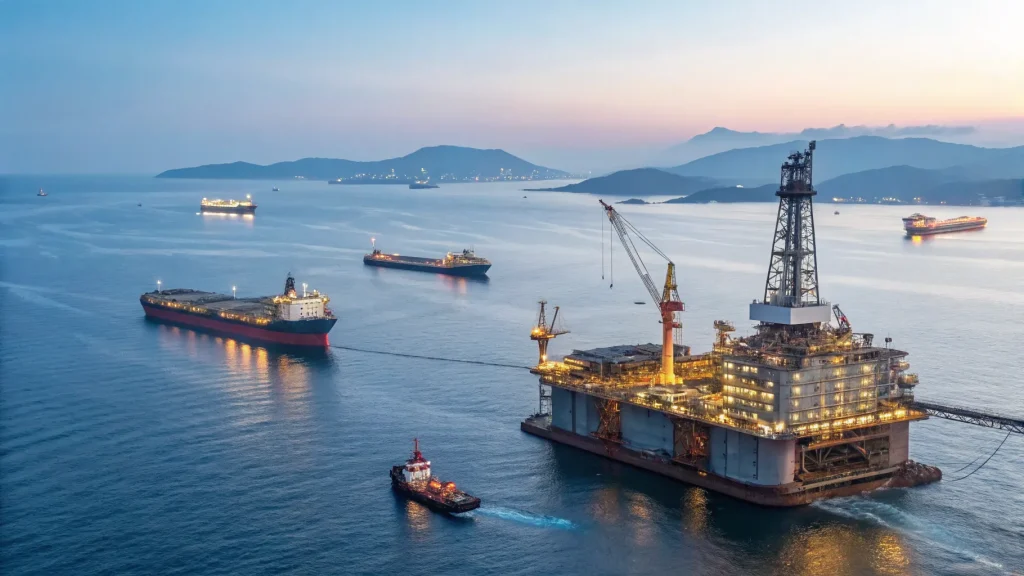
Crude prices climbed for a second session as attacks in the Persian Gulf stirred supply fears and signals from Washington hinted that President Trump might seek a way out of the Iran standoff. Traders pushed futures higher during Thursday’s session, gauging both the immediate risk to shipping routes and the chance of a diplomatic off-ramp.
The move unfolded in a region vital to global energy flows and at a time when markets are hypersensitive to geopolitical shocks. Pricing reflected a duel between fear of disruption and hope for de-escalation.
“Crude prices extended gains as traders weighed escalating attacks in the Persian Gulf and signs that President Donald Trump was contemplating an exit from the Iran conflict.”
Table of Contents
ToggleWhat Drove the Rally
Energy desks focused on two levers. First, reports of new strikes near key transit lanes raised the risk premium. Any hint of trouble can push buyers to cover short positions fast. Second, talk that the White House could soften its stance on Iran offered a counterweight. A lower threat of open conflict can calm nerves and steady flows.
This push-and-pull set the tone. Prices tend to rise quickly on fresh security concerns, then settle as traders assess actual damage and policy signals. On Thursday, the security story won out, but only by a step.
A Strait With Global Stakes
The Persian Gulf connects to world markets through the Strait of Hormuz. It is one of the most important oil chokepoints. About a fifth of global crude and fuel traffic passes through its narrow lanes each day. Disruptions there ripple across shipping, insurance, and refinery planning far from the Middle East.
History shows why. Past tanker attacks and naval incidents have sparked sudden price spikes. Even short-lived tensions can lead shippers to adjust routes, accept delays, or pay higher insurance, which filters into end prices.
Market Reactions and Risks
Analysts said the latest buying was more cautious than conviction. The market has seen many headline shocks fade within days. Still, the setup is sensitive. Inventories have cushioned some recent outages, but storage only buys time.
Refiners in Asia and Europe track Gulf events hour by hour. A modest delay can tighten local supplies of certain grades. That can force short-term switches in crude slates and product yields, nudging gasoline and diesel prices.
For producers, higher prices help cash flow, but stability matters more. Volatility complicates hedging and project budgets. For consumers, the worry is simple. If disruptions persist, pump prices follow.
What an Exit Could Mean
Signals that President Trump is weighing a path out of confrontation with Iran matter for two reasons. First, they shape expectations on sanctions enforcement and regional military posture. Second, they influence how allies and rivals respond.
A clearer diplomatic track could lower the risk premium embedded in oil. Shipping would get relief on insurance and security costs. Regional producers could plan exports with more confidence.
But a messy or partial step-back could do the opposite. Mixed messages can keep crews, insurers, and traders on edge. Markets dislike guessing games. Without clarity, volatility lingers.
Competing Viewpoints
Bulls argue that supply risk is underpriced. They note that repeated attacks raise the odds of a longer disruption. They also point to steady global demand for transport fuels.
Bears counter that growth is uneven and that non-OPEC supply has been resilient. They expect any spike to draw more barrels from storage and spare capacity, capping gains.
Both sides watch the same dashboard. Freight rates, shipping patterns, and refinery margins often tell the story before crude benchmarks do.
What to Watch Next
- Security updates from Gulf shipping lanes and insurers.
- Policy signals from Washington and regional capitals.
- Inventory trends in major hubs and refinery runs.
For now, the market is paying a higher risk premium while leaving room for a policy thaw. A credible move to cool tensions could quickly shave that premium. A fresh attack could add to it just as fast.
The path ahead will hinge on security at sea and clarity on strategy. Readers should watch for concrete steps, not just headlines. If tankers move safely and messages stay consistent, prices may settle. If not, expect rougher waters—and a jumpy tape.