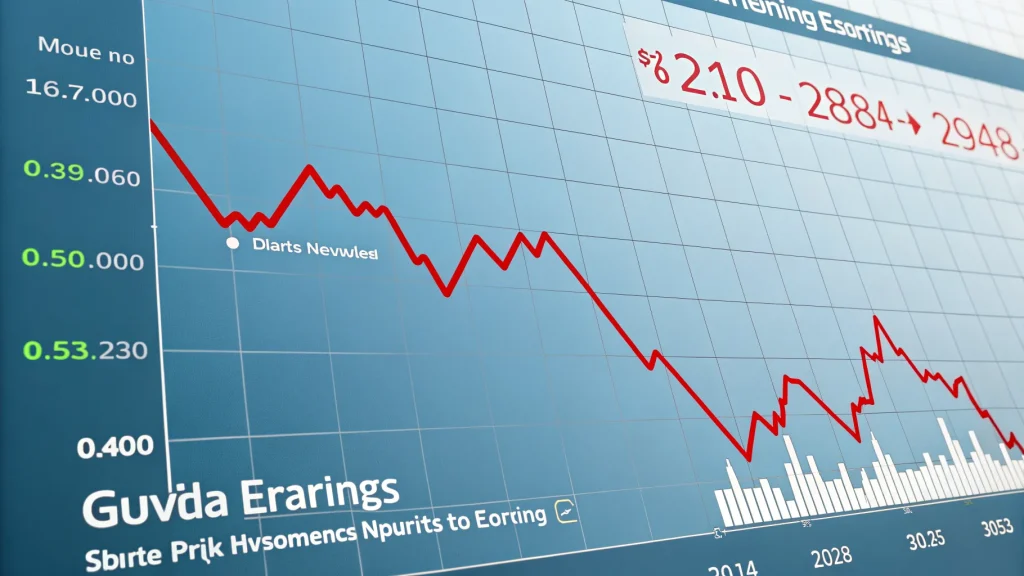
NVIDIA shares fell sharply last Thursday even though the chipmaker delivered results that easily topped Wall Street forecasts. The pullback hit the market’s high-flying AI trade and raised new questions about how much optimism is already priced into the stock.
The move followed the company’s quarterly results, which exceeded analysts’ estimates. Traders reacted by selling, a twist that surprised casual observers but is familiar to veteran investors. Strong results met even stronger expectations, and profit-taking took the wheel.
“Shares of AI chip leader Nvidia plunged Thursday, despite an earnings report that blew past analysts’ expectations.”
Table of Contents
ToggleWhy Great News Can Spark a Selloff
Stocks often slip after blowout reports, even though investors had already bid up prices in anticipation. In such cases, the bar is sky-high. Even a win can look small when expectations run hot.
There are several common drivers in this pattern. Some holders lock in gains after a long rally. Others worry that supply constraints or order timing may slow growth in later quarters. Options positioning can also amplify moves as market makers hedge.
- Prices can outpace fundamentals during long rallies.
- Short-term traders sell to capture profits.
- Options flows magnify volatility after earnings.
- Rising interest rates pressure high-valuation stocks.
The AI Boom Meets Market Math
NVIDIA sits at the center of the race to build and run generative AI. Its graphics processors power massive data centers and advanced model training. The company’s rapid revenue growth and surging demand from cloud providers made it a market bellwether.
That leadership brought heavy attention to its valuation. When a stock runs far ahead of peers, every detail in the outlook matters. Investors scan for hints on supply, pricing, and future capacity. If commentary on demand shifts or next-quarter guidance trails lofty forecasts, shares can wobble even after big beats.
The reaction also ripples across suppliers and customers. Chip designers, memory makers, and data center operators can move in sympathy. A red day for NVIDIA often cools the entire AI trade, at least temporarily.
What Could Be Spooking Investors
Thursday’s reversal likely reflects a mix of short-term and long-term worries. Some traders pointed to simple profit-taking after a powerful run. Others flagged the risk that capital spending by major cloud companies could slow later this year. Higher bond yields can also dent pricey growth stocks by lowering the present value of future profits.
Another factor is supply. Even if demand is strong, the limited availability of advanced chips or supporting components can cap near-term upside. A shift in product mix or timing of large orders can also create quarter-to-quarter noise, which markets dislike.
History Rhymes: Big Tech’s Post-Earnings Swings
This is not new. High-growth leaders have often stumbled right after headline-grabbing quarters. The pattern showed up in past cycles for smartphones, cloud software, and e-commerce. When expectations crowd one side of the boat, even a small wobble can tip it.
For long-term holders, such moves often fade if the growth story stays intact. For short-term traders, they can be sharp and sudden. The difference comes down to time horizon and risk tolerance.
What to Watch Next
Investors will look for details on production capacity, next-generation chips, and customer spending plans. Any updates on supply chain conditions and lead times will matter. Guidance on margins and data center demand will be key signals for the next leg.
Market-wide forces may play a role, too. If rates rise, richly valued names can face a headwind. If earnings breadth improves across sectors, money may rotate out of recent winners and into laggards, adding pressure to high flyers.
Still, NVIDIA’s central role in AI gives it a sturdy seat at the table. The question is not whether demand exists, but how fast it converts into sustained revenue and profit without hiccups. That path will drive the stock more than any one quarter.
Thursday’s drop fits a familiar script: hot expectations, strong results, and a reality check from the market. The next checkpoints are guidance, supply updates, and signals from big buyers of compute power. If those hold up, the setback may be a pause rather than a turn. If they soften, volatility could linger as the AI trade recalibrates.