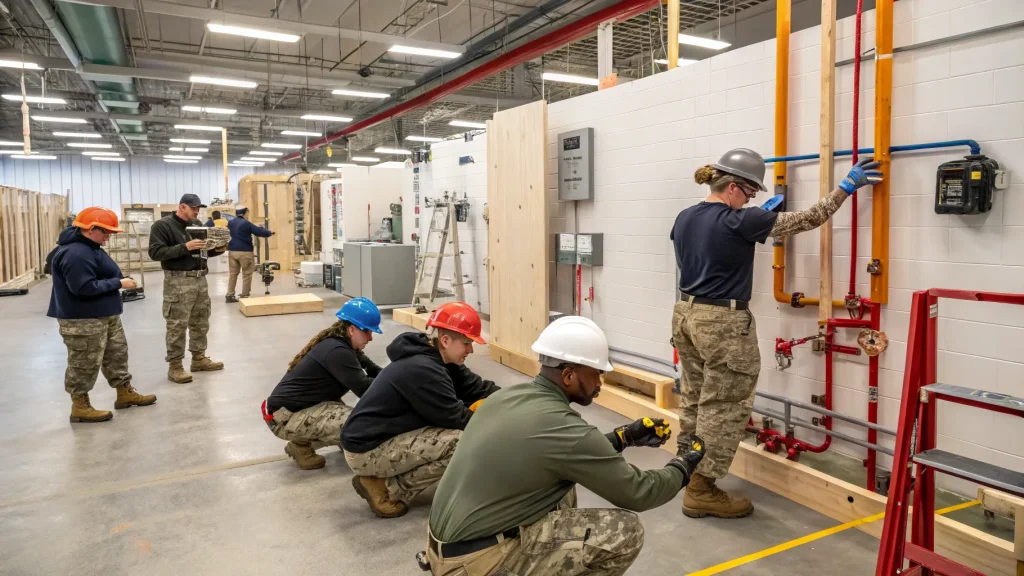
A six-week Skilled Trades Academy is pitching a clear path from military service to steady work, promising fast training and industry safety credentials for veterans and military spouses. The program, offered in a compressed format and focused on jobs in HVAC, plumbing, electrical work, and construction, says it also provides OSHA certifications. Organizers say the goal is simple: prepare candidates for hiring in months, not years, as employers struggle to fill trade roles.
Table of Contents
ToggleWhy Skilled Trades Are Calling
Trade employers across the country report open positions and aging workforces. Many companies say they need entry-level technicians who can show up safe, train fast, and grow on the job. Veterans bring teamwork, reliability, and problem-solving under pressure. Those skills match fieldwork that requires steady hands and clear judgment.
Military spouses also face unique job challenges. Frequent moves and gaps in resumes can make long training programs hard to finish. A shorter course that builds portable credentials can make a difference. OSHA certifications are widely recognized and can help candidates meet site safety requirements from day one.
What The Program Promises
“Six-week Skilled Trades Academy offers veterans and military spouses training in HVAC, plumbing, electrical work and construction with OSHA certifications.”
That line sums up the pitch: targeted training across core trades, plus safety credentials that employers value. The six-week format suggests an accelerated boot camp rather than a lengthy apprenticeship. Graduates would still need on-the-job experience, but the program positions them to compete for entry-level roles quickly.
- Focus areas: HVAC, plumbing, electrical, construction
- Audience: veterans and military spouses
- Duration: six weeks
- Included: OSHA certifications
From Service To Site Work
Transitioning from active duty to civilian life can be tough. Veterans often say they want a clear mission and a team again. Field trades offer both. Jobs involve hands-on work, measurable results, and routes to promotion. For those who prefer working with tools over a desk, the fit can feel natural.
Safety training matters early. Employers face strict rules on job sites, and OSHA credentials help new hires hit the ground running. The program’s inclusion of those credentials signals attention to the realities of the job, not just classroom theory.
Employers Watch For Work-Ready Hires
Contractors often say entry-level candidates lack basic safety and tool familiarity. An academy that concentrates on the essentials can help fill that gap. A six-week course cannot create master tradespeople. But it can form a base. Employers then provide advanced training tied to their tools, codes, and service areas.
Veterans’ soft skills are a frequent draw. Time management, communication, and resilience are hard to teach. Companies prize workers who show up, learn fast, and support the crew. A pipeline focused on veterans and spouses may give hiring managers more of those candidates.
A Short Course With Long-Term Stakes
Short training programs carry trade-offs. The timeline is attractive. The pace can be intense. Candidates may need extra practice to cement skills. Mentorship on the job becomes key. The better the employer partnerships, the smoother the handoff from classroom to fieldwork.
The program’s cross-trade approach can also help. HVAC, plumbing, electrical, and construction often intersect on the same job site. Knowing the basics of each reduces friction, improves safety, and speeds coordination. That breadth can pay off during the first months of employment.
What To Watch Next
Results will hinge on graduate outcomes. Key metrics include job placement, pay growth, retention, and employer feedback. If the Academy can show strong numbers across those measures, it could become a model for quick, targeted training.
Stakeholders will ask how the program supports alumni after week six. Tutoring for certification exams, gear guidance, and interview prep can lift early success rates. Strong links to local contractors and national employers would expand options for graduates who move.
The pitch is direct: a short, focused route into steady work for veterans and military spouses, backed by safety credentials that matter on day one. For trades hungry for talent, and for families seeking stable careers, that promise is timely. The next test is scale—placing grads into good jobs, tracking their progress, and proving that six weeks can open the door to a lasting career.