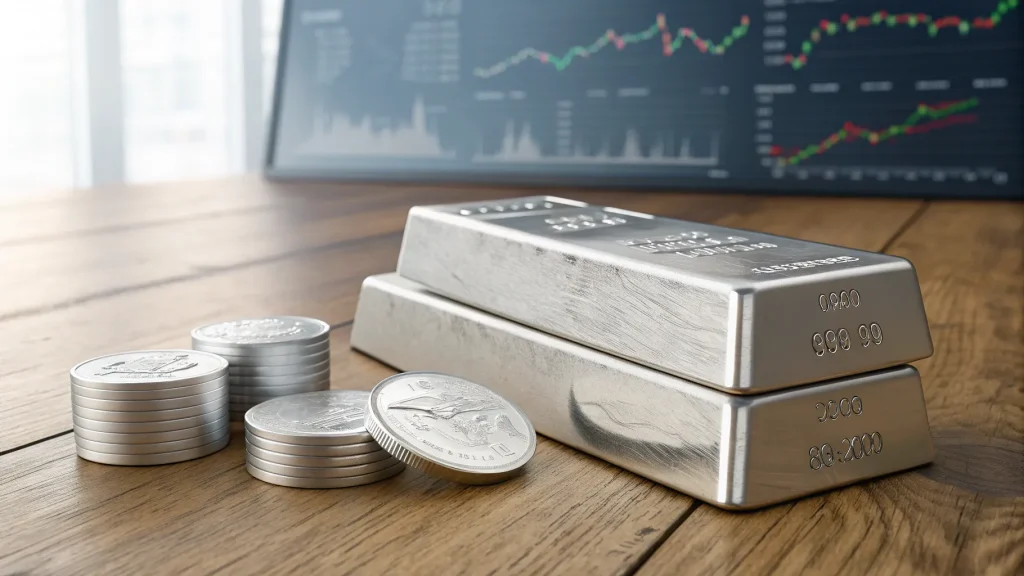
As inflation concerns linger for households and markets, a familiar idea is resurfacing among savers and traders alike: hedge with silver. The pitch is simple and timely. Inflation erodes purchasing power. Silver offers a potential store of value. The timing reflects renewed debate over price pressures and how to protect long-term savings.
The guidance from market commentators is direct and pointed.
“If you’re worried about increased inflation, adding precious metals like silver to your portfolio can be a smart choice.”
That view is spreading on trading forums and in wealth newsletters. It follows a two-year stretch of sticky prices after the 2021–2022 spike. While inflation cooled from its 9.1% June 2022 U.S. peak, it has not settled cleanly to pre-pandemic norms, keeping hedges in focus.
Table of Contents
ToggleWhy Silver Enters the Inflation Conversation
Silver carries a split identity. It is both an industrial metal used in solar panels, electronics, and medicine, and a monetary metal that often trades alongside gold. That dual role can give it a different path than gold during inflationary periods.
Historically, precious metals have served as a hedge when currencies weaken. In the 1970s, high inflation coincided with gains for gold and, at times, silver. More recently, silver has shown sharp rallies during periods of dollar weakness or supply tightness, combined with industrial demand from clean energy buildouts.
Analysts caution that silver’s volatility is higher than gold’s. Price swings can be fast, and pullbacks can be steep. Still, for investors balancing cash, bonds, and stocks, a small allocation to silver is often discussed as a diversifier.
The Case For and Against
Supporters argue that silver can help offset inflation shocks and supply-chain stress. They also point to rising industrial use, which may support demand even if investor interest cools. Some planners suggest a modest slice of a portfolio, rather than an all-in bet, to blunt risk.
Skeptics counter that silver is not a pure inflation hedge. Its price can lag during slowdowns, when industrial orders fade. They also note that the metal does not generate income, so there is an opportunity cost when interest rates are high.
- Pro: Potential inflation hedge and portfolio diversifier.
- Pro: Industrial demand from solar and electronics can add support.
- Con: High volatility and no yield.
- Con: Mixed record across different inflation cycles.
How Investors Get Exposure
There are several routes, each with trade-offs in cost, storage, and risk.
Physical silver includes coins and bars bought through dealers. It offers direct ownership but adds storage and insurance needs. Premiums over spot price can widen in tight markets.
Exchange-traded funds offer convenience and liquidity. Funds that hold silver bullion track spot prices, minus fees. Equity funds own mining companies, which can move more than silver itself based on costs, discoveries, and management decisions.
Futures contracts on major exchanges enable leverage and precise hedging tools for experienced traders. They also increase risk if markets move against the position.
What the Data Suggests
Long-run studies show silver’s correlation with inflation is inconsistent year to year. It can surge in high-stress periods and lag when inflation cools but rates stay high. Gold often shows a steadier response, while silver’s industrial role adds another variable.
Energy prices, global growth, and the U.S. dollar all matter. A stronger dollar can pressure silver. Weak manufacturing can weigh on demand. Conversely, a rise in solar installation targets can lift consumption, helping offset investor outflows.
How to Use It Without Overdoing It
Advisers often frame silver as a satellite holding. That means a small percentage of the overall mix, paired with core holdings like diversified stock and bond funds. Rebalancing rules help lock gains and cap losses when volatility hits.
Costs and security matter. Compare fund expense ratios. For physical holdings, favor reputable dealers, verify authenticity, and plan storage. For mining stocks, review company balance sheets and production costs.
Inflation is hard to predict, but planning does not need to be. Silver can play a role, though not a starring one. The most durable portfolios spread risk, keep fees in check, and rebalance with discipline. Investors watching inflation should also watch interest rates, the dollar, and industrial demand trends. Those forces will shape whether silver shines or sits in the drawer.