Can you imagine being in debt $44,000? The fact that 90% of Americans have some form of debt means that most people are familiar with that feeling of crushing financial pressure. It’s enough to make anyone feel trapped by late-night worries and the stress of monthly payments.
But what if you could turn things around without a lottery ticket or inheritance, but with a laptop and a side hustle that brought in $2,000-$3,000 per month? That’s precisely what Robert Farrington, founder of The College Investor, did. Using passion, persistence, and smart strategy, he turned crushing student loan debt into a thriving online business.
Last updated: February 2026
This is Robert’s story of how his blog evolved from a hobby into a side hustle, to paying off debt, to a full-time job. In 2026, his journey continues to inspire thousands seeking financial freedom through strategic income diversification and retire early strategies.
The Beginning: A Blog No One Knew About
Robert started The College Investor while finishing graduate school in 2009. As a student, he often spent time on Yahoo Finance and other blogs about money and investing.
At the time, he was just another college student who was fascinated with stocks. Despite the fact that blogging was still relatively new, Robert decided to give it a try after reading an article that claimed, “You too can create a blog.”
As he recalls, he opened a Bluehost account, purchased a domain, and just started writing.
Back then, the blog was simply a place where he shared his thoughts about investing. It wasn’t something he told many people about — not his family, friends, or coworkers. His girlfriend (now wife) was the only one who knew.
He admits that it was a little embarrassing. Unless you’ve already been successful at something, Robert recommends not telling people about your start-up plans.
Balancing Work, School, and Debt
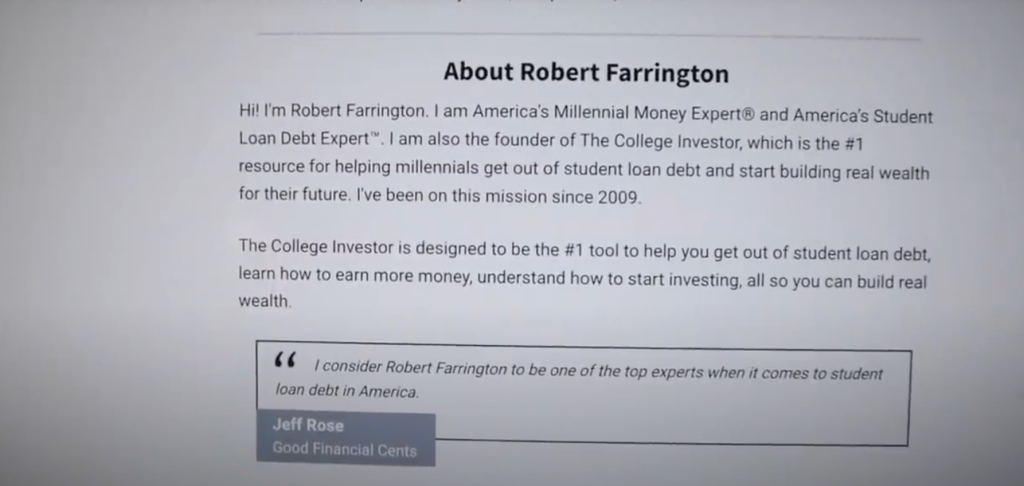
After grad school, Robert took a job at Target as an assistant store manager — an opportunity he’d worked toward while Target funded part of his education. Despite that help, he still owed $43,000 in student loans.
As a result of his full-time job and new responsibilities, blogging was always a side project. In addition to writing during the day, weekends were devoted to learning the ropes.
Robert quickly discovered that making money online wasn’t as easy as the articles suggested.
He says it took him 15 to 16 months to make his first dollar. In the first month, he earned only $25.71 from Amazon affiliate income and a few Google AdSense clicks.
Even though it wasn’t much, it kept him going.
The Turning Point: Community and Connection
When so many others gave up, what kept Robert going? Two things made him love personal finance: his passion and the community he connected with.
He joined a personal finance blogging network in the early days, where members shared tips, swapped stories, and supported one another. By networking, he learned how to increase traffic and write helpful content. Eventually, he monetized his website.
As Robert explains, he stopped writing about stock tips he liked and started writing about what his audience needed. Instead of saying, “Here’s what I’m doing,” he said, “Here’s how you can solve your problem.”
In the end, that mindset change paid off. Soon, his posts about student loans and debt resonated with readers facing similar challenges.
From Hobby to Side Hustle
After another year, Robert’s side hustle income reached $2,000–$3,000 a month. This was a life-changing experience for a young couple earning around $50,000 a year.
Robert and his wife were able to repay their student loans in just 2.5 years thanks to their jobs and blog income. Eventually, they paid off our car loan and became debt-free except for their mortgage.
With that extra income, they weren’t just able to ease financial stress — they were also able to accelerate their financial goals by years. As a result, they built wealth faster than they ever imagined possible through saving, investing, and building wealth. By 2026, strategies like these remain fundamental to achieving wealth milestones by age.
The Plateau
Over several years, the blog’s monthly revenue leveled off at around $3,500 to $4,500. Robert didn’t mind. Besides being promoted at Target and earning more in his day job, the blog basically ran itself.
According to him, it was a great supplement. In addition to saving aggressively and paying off debt, they were establishing a solid financial foundation.
At this point, he didn’t consider blogging a career. He simply used it as a side hustle to help his family cope financially.
The Next Level
So what changed? Networking — again.
Robert began attending FinCon, the annual conference for financial creators. Through his interactions with other bloggers and entrepreneurs, he developed new ideas, formed new partnerships, and gained new perspectives.
As he explains, it wasn’t a big deal. Small improvements started snowballing — better content, smarter monetization, incremental growth.
By 2016, his side hustle was generating more income than his full-time job.
Facing the Big Decision
Despite this, Robert didn’t quit his day job immediately. He enjoyed working at Target, appreciated the stability, and admittedly felt scared to leave after 15 years.
However, as his children grew older, he became more aware of the realities of retail management. Instead of spending time with his family, he spent nights, weekends, and holidays at the store.
It was then that Paula Pant’s advice hit home;
“Show me your money and show me your time, and I’ll show you what you value.”
Although Robert valued family time, his schedule did not reflect that. It was time for a change.
Making the Leap
It wasn’t easy to leave. Even though his business was already outperforming his salary, Robert worried about health insurance and job security.
During his conversation with his wife, he asked questions like;
- “What if the internet goes down tomorrow?”
- “How will we survive if our income drops to zero?”
Although they had saved diligently, built a cushion, and planned for worst-case scenarios, they still faced a difficult decision. Until Robert handed in his notice in 2017, Target had months to prepare for the holiday season.
His boss was stunned. After all, Robert was a top performer at the company. She texted him multiple times that day saying, “I’m still shocked. I don’t understand.'”
However, Robert knew it was time to move on.
Life After Target
Making the transition to full-time entrepreneurship wasn’t easy. According to Robert, it takes six months to a year to adjust. At first, adjusting to being your own boss feels weird because your mind and body are used to the structure of a 9-to-5 job.
Eventually, he found his groove, and business growth accelerated. By focusing more on his site, Robert was able to make The College Investor one of the most valuable student loan, investing, and wealth-building resources in the industry.
Lessons from Robert’s Journey
In addition to being inspiring, Robert’s story is also practical. For those considering a side hustle, here are some takeaways;
- Start small. For 15 months, Robert didn’t make a dime. It was important to remain consistent.
- Focus on solving problems. When he started writing for his audience instead of himself, his blog grew.
- Build a community. His learning and growth were accelerated by networking with others.
- Use extra income wisely. Robert paid off debt and built savings with his side hustle income instead of upgrading his lifestyle.
- Plan your transition. His decision to quit his job was not made on a whim, but after he had become financially stable.
- Align your time with your values. In the end, leaving his job wasn’t about money. His priority was spending time with his family.
Final Thoughts
As Robert has learned, financial freedom doesn’t happen overnight… but it does when persistence and smart strategy are combined.
After starting a small, almost secret blog, it turned into a side hustle that paid off debt, built wealth, and allowed him to walk away from a 15-year career.
Side hustles are powerful debt-elimination tools. Explore more income ideas in our comprehensive guides: proven ways to make money online, freelancer resources, and retirement planning strategies.
The lesson? You don’t need a perfect plan to start. You just need to take the first step. Whether it’s blogging, freelancing, or another side hustle, extra income could transform your financial future more than you can imagine.
FAQs
How long does it take to make money from a blog or side hustle?
It varies.
In Robert’s case, it took about 15–16 months to earn his first dollar, followed by an additional year before it turned into a consistent income. Some side hustles can bring in money faster, but be prepared to work hard and put in some time before you see results.
Do I need to quit my job to start a side hustle?
No. Many successful entrepreneurs recommend starting while you are still bringing in a steady income. For years, Robert worked full-time at Target before starting The College Investor.
How much money can a side hustle really make?
The sky is the limit. Robert’s blog started with $25 per month, grew to $2,000–$3,000 per month, and eventually outpaced his full-time income. Over time, side hustles such as freelancing, consulting, e-commerce, or real estate can all generate significant income.
What’s the best way to use extra side hustle income?
By paying off debt and accelerating savings, Robert was able to make big life choices later on in life. Rather than invest extra income in lifestyle inflation, you would be better off paying off your debts, building a safety net, or investing extra income to pay off debt.
Do I need special skills to start a blog or side hustle?
Not necessarily.
Initially, Robert had nothing more than a laptop, curiosity, and persistence. While technical skills are important, being consistent, willing to learn, and solving real-life problems are even more important.
Image Credit: Photo by Nicola Barts; Pexels