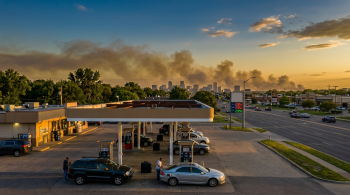
President Trump’s decision to permit an earlier switch to winter-grade gasoline could lower prices during September. The reported savings are about 20 cents per gallon. Yet the change may also increase smog-forming emissions, creating a direct trade-off between household costs and air quality.
Table of Contents
ToggleWhat the Gasoline Policy Changes
Gasoline sold during summer must meet stricter federal limits for fuel evaporation. These rules are intended to reduce emissions during hot weather, when ground-level ozone is more likely to form.
Summer-grade gasoline is more costly to produce. It is usually sold through September, although exact requirements and dates can vary by region.
Under the announced change, gas stations may begin selling winter-grade gasoline on September 1. That moves the transition forward by roughly one month in affected markets.
The Environmental Protection Agency would oversee the regulatory action needed for the early switch. The central goal is straightforward: increase access to less expensive fuel and give drivers some relief at the pump.
The estimated benefit is a gasoline price reduction of about 20 cents per gallon during September.
That figure matters, but it needs context. The actual effect may differ across states, cities, and individual gas stations. Crude oil prices, refinery conditions, transportation expenses, taxes, and local competition also affect retail prices.
View this post on Instagram
Why Summer Gasoline Costs More
Gasoline evaporates more quickly in warm temperatures. Those vapors can react with other pollutants in sunlight and contribute to ground-level ozone, a major part of smog.
Federal summer fuel rules limit gasoline’s volatility. Refiners must produce blends that evaporate less in hot weather. Meeting those standards can require more processing and higher-cost ingredients.
Winter-grade fuel is designed for cooler conditions. It can have a higher vapor pressure, which helps engines start during cold weather. It is generally cheaper to make, but it evaporates more readily during warm periods.
An early September switch therefore offers a financial gain while weakening a seasonal pollution safeguard. The question is whether the expected savings justify the added emissions.
How Much Could Drivers Save?
A 20-cent reduction may sound meaningful at the gas station. Its effect on a household budget depends on how much fuel a driver buys.
- A 10-gallon purchase would cost about $2 less.
- A 15-gallon fill-up would save about $3.
- A household buying 60 gallons during September would save about $12.
- A driver using 100 gallons would save about $20.
For one driver, the monthly benefit may be modest. For a family with two vehicles, long commutes, or a larger truck, it could be more noticeable.
Commercial drivers and small businesses may also benefit. Landscapers, delivery operators, contractors, and other fuel-dependent businesses often buy far more gasoline than the average household.
Even small price changes can add up across millions of purchases. Still, the reduction is expected to last for a limited period. It does not address the larger forces that set gasoline prices over many months.
I view the 20-cent estimate as useful, but not guaranteed. A regulatory change can affect supply costs, yet gas stations do not operate under a single national pricing formula.
The Environmental Cost
The main concern is not carbon dioxide alone. The immediate seasonal issue is the release of volatile organic compounds from gasoline evaporation.
These compounds can react with nitrogen oxides in sunlight, forming ground-level ozone. Hot, sunny conditions can make that process worse.
Ozone high in the atmosphere protects the planet from harmful ultraviolet radiation. At ground level, however, ozone is a pollutant that can irritate the lungs.
People with asthma and other breathing conditions may face greater risks during poor air-quality periods. Children, older adults, and people who work outside can also be more sensitive.
One month of earlier winter-fuel sales will not create the same outcome everywhere. September temperatures differ widely by location. Some regions may already be cooling, while others can remain hot for weeks.
That regional difference is important. A national policy may produce uneven benefits and costs. Areas with persistent heat and existing ozone problems could face more air-quality pressure than cooler locations.
The Case for Earlier Winter-Grade Fuel
Supporters can make a practical affordability argument. Gasoline is a required expense for many Americans, especially where public transportation is limited.
Workers may have no realistic alternative to driving. Families must still reach schools, stores, medical offices, and child care. Higher fuel prices reduce the money available for food, housing, and other bills.
The policy also uses a supply measure rather than a direct subsidy. It allows a less expensive fuel blend to enter the market sooner, potentially lowering production and distribution costs.
The strongest points supporting the change include:
- Immediate relief may reach drivers without a new government payment program.
- Fuel-heavy households and businesses could save more than occasional drivers.
- The change is limited to the September transition period.
- Lower wholesale costs may increase competition among local gas stations.
From this view, the environmental increase may be a limited cost for short-term consumer relief. Supporters may also argue that September is close enough to the normal winter-fuel season to justify flexibility.
The Case Against the Change
Critics can reasonably question whether $2 or $3 per fill-up is enough to weaken air-quality protections. The monthly savings for many households may remain small.
Environmental rules often produce benefits that are less visible than a price posted beside a highway. Cleaner air does not appear as a line on a receipt, but it still has economic and health value.
More smog can contribute to missed work, school absences, medical visits, and greater discomfort for people with respiratory conditions. Those costs may not be paid by the same people who receive the largest fuel savings.
There is also a policy question. Temporary waivers can become a common response whenever gasoline prices rise. Repeated exceptions could weaken the purpose of seasonal fuel standards.
I would not dismiss the savings, especially for people under financial strain. I also would not describe the environmental cost as abstract. Air pollution affects real communities and can carry direct health consequences.
A Choice Between Two Public Concerns
This debate is difficult because both goals have merit. Affordable transportation supports household stability and economic activity. Cleaner air protects public health.
The most useful way to judge the decision is to compare measurable results. That means tracking retail prices, regional temperatures, ozone readings, and any changes in air-quality alerts.
Officials should also explain where the 20-cent estimate comes from. Drivers deserve to know whether it reflects refinery savings, wholesale market projections, past waivers, or another calculation.
If retail prices fall by much less than projected, the case for accepting extra emissions becomes weaker. If the full reduction reaches consumers, supporters will have stronger evidence for the policy.
Geography should also shape future decisions. A cooler region may face less September risk than a hot metropolitan area with recurring ozone violations. A more targeted approach could better account for those differences.
Trump’s early winter-gas decision presents a clear question: Is a temporary reduction at the pump worth an increase in smog-forming pollution?
My recommendation is to avoid treating either side as trivial. Twenty cents per gallon can matter to a strained household. Cleaner September fuel can also matter to someone with asthma.
Judge the policy by verified savings and measured environmental effects, not just its stated goal. Transparent data will show whether consumers received enough relief to justify the cost.
Frequently Asked Questions
Q: What is the difference between summer and winter gasoline?
Summer gasoline is made to evaporate less during warm weather. Winter fuel evaporates more easily, which supports cold-weather engine starts but may add to smog during hot conditions.
Q: Will every driver save exactly 20 cents per gallon?
No. The figure is an estimate. Local taxes, crude oil prices, refinery output, transportation costs, and competition can change the price seen at each station.
Q: Why does an early fuel switch affect air quality?
Winter-grade gasoline releases vapors more readily in warm weather. Those emissions can react with other pollutants and sunlight, helping form ground-level ozone and smog.
Image Credit: