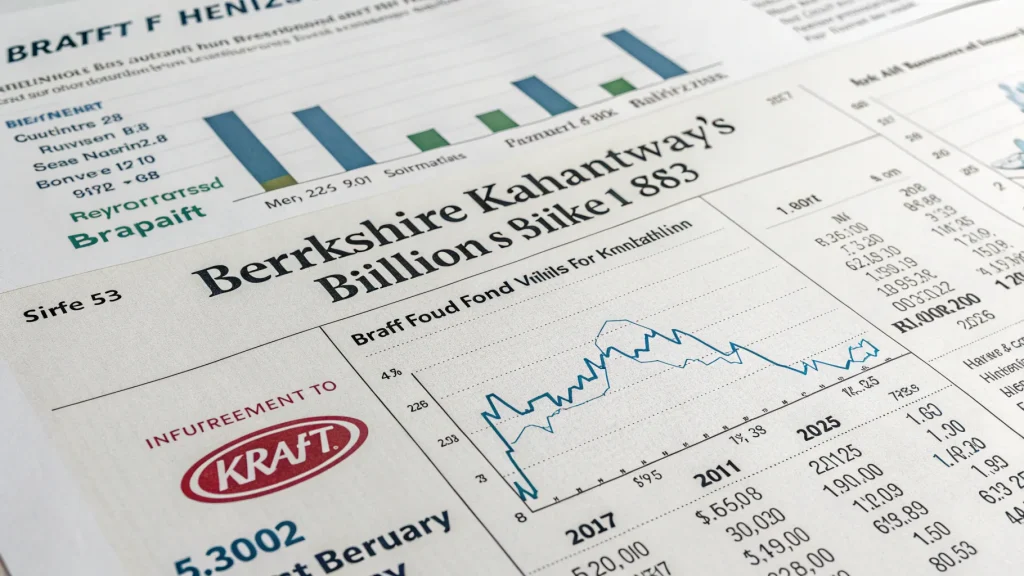
Berkshire Hathaway has recorded a $3.8 billion impairment tied to its stake in Kraft Heinz, signaling fresh doubts about the value of one of Warren Buffett’s most watched investments. The charge reflects a reassessment of Kraft Heinz’s fair value and adds new scrutiny to the food giant’s long-running turnaround. Investors are now weighing what the write-down says about brand power, inflation pressure, and the limits of cost-cutting in packaged foods.
Warren Buffett’s Berkshire Hathaway Inc. took a $3.8 billion impairment on its Kraft Heinz Co. stake.
Table of Contents
ToggleWhat the Impairment Means
An impairment is an accounting charge that recognizes a drop in the value of an asset on the balance sheet. It does not involve cash leaving the company, but it does reduce reported earnings. In this case, Berkshire is marking its Kraft Heinz holding to a lower value after reexamining expected future performance.
The move suggests Berkshire expects slower profit growth or tighter margins at Kraft Heinz than previously assumed. It is also a sign that rising costs, shifting consumer tastes, and fierce competition in store brands continue to pressure legacy food labels.
How Berkshire Got Here
Berkshire became a major backer of Kraft Heinz during the 2015 merger that combined Kraft Foods with H.J. Heinz, in partnership with 3G Capital. That deal promised scale, efficiency, and steady cash flows from household names like Heinz ketchup and Kraft cheese.
But brand strength has been tested. In 2019, Kraft Heinz recorded more than $15 billion in write-downs on iconic brands and goodwill, reflecting weaker outlooks. The company later replaced top leadership, cut debt, and refocused on core products. Progress followed, yet the new impairment at Berkshire hints that the recovery remains uneven.
Food Giants Under Pressure
Big packaged food makers face a tougher mix today. Consumers trade down when prices rise. Discount chains push private labels. Retailers demand sharper pricing. These forces compress margins unless companies deliver new products, stronger marketing, or operational gains.
While Kraft Heinz has pushed into higher-growth sauces and convenient meals, its classic center-aisle products compete with cheaper alternatives. Even modest share losses can sting when input costs for commodities, packaging, and logistics swing higher.
What It Signals for Investors
The impairment is a reminder that even blue-chip holdings need periodic reality checks. Berkshire’s decision points to a more cautious outlook for Kraft Heinz’s future cash flows. It may also curb expectations for near-term dividends or buybacks funded by asset sales at premium valuations.
- The charge reduces Berkshire’s reported earnings for the period.
- It does not change cash on hand or Kraft Heinz’s operations overnight.
- It flags a lower internal estimate of Kraft Heinz’s long-term value.
Multiple Viewpoints on the Path Ahead
Optimists argue that Kraft Heinz has steadied its operations since 2019, trimmed debt, and improved product innovation. They expect gradual margin repair as supply chains normalize and pricing holds. Skeptics point to limited volume growth and intense private-label competition that could keep a lid on profits.
Accounting experts note that impairments often follow market moves rather than foresee them. Still, they can nudge boards to rethink strategy, accelerate divestitures, or sharpen spending priorities. For Berkshire, the charge may prompt fresh questions about the role of large consumer stakes in its equity portfolio.
History Does Not Repeat, but It Rhymes
Past write-downs in consumer staples show that brand equity is not a set-and-forget asset. Companies that invest in product quality, packaging, and digital retail tend to fare better. Those that rely mainly on cost cuts face a ceiling. Kraft Heinz has attempted a pivot toward growth, but the latest mark suggests more work ahead.
The bottom line: Berkshire’s $3.8 billion impairment is a clear signal that expectations for Kraft Heinz have cooled. It does not change the company’s factories, recipes, or shelves tomorrow morning, but it reframes the long game. Watch for management commentary on pricing versus volumes, brand investment, and any portfolio moves. If Kraft Heinz can deliver steadier growth without eroding market share, this hit may prove a reset rather than a retreat. Otherwise, further write-downs across the sector could be on the menu.