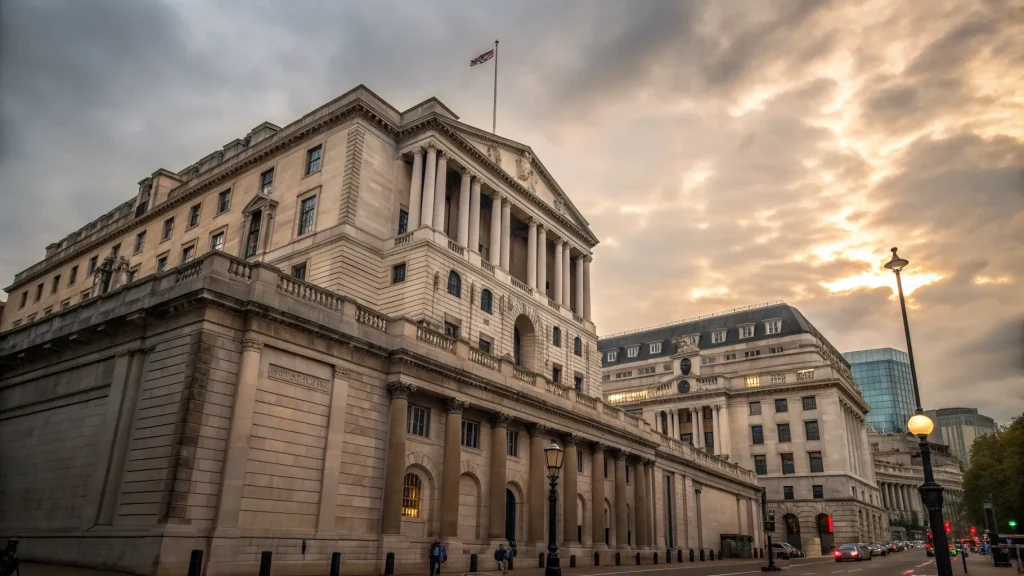
The Bank of England left interest rates unchanged but hinted that reductions could arrive later this year, a shift that suggests relief may be coming for households and businesses after a long squeeze from high borrowing costs.
The decision keeps policy steady while officials assess whether inflation is on a durable path back to target. The signal of possible cuts marks a change in emphasis as growth remains fragile and price pressures continue to ease.
“The Bank of England has kept borrowing costs unchanged but opened the door to cuts later this year.”
Table of Contents
ToggleWhy Holding Now Matters
The Bank has spent the past two years trying to tame inflation that surged after the pandemic and the energy shock. Price growth has cooled sharply from double-digit levels in 2022 to near the target in recent months, helped by falling energy bills and tighter policy.
But officials have worried that wage growth and services inflation might keep price pressures sticky. Pausing gives them more data on pay settlements, consumer demand, and core inflation before starting to ease.
Financial markets have been primed for cuts across major central banks. The European Central Bank began easing in 2024. The U.S. Federal Reserve has kept rates high while signaling flexibility. The Bank of England’s new guidance moves it closer to that global pivot.
Inside The Decision
The Monetary Policy Committee typically splits on the timing of moves, and recent meetings have featured close calls. Today’s hold keeps policy restrictive while acknowledging that the risk balance is shifting.
Economists said the message is subtle but meaningful. Waiting guards against a rebound in inflation. Signaling cuts help households and firms plan. It also nudges down borrowing costs in markets even before any formal move.
One senior economist at a major bank said the guidance “opens the path to gentle, sequential reductions if data cooperate,” adding that the first move could be “a cautious 25 basis points.”
What It Means For Households And Firms
Mortgage holders on variable rates will not see an immediate change. But expectations of future cuts can ease fixed-rate offers and lower gilt yields, which influence lending costs.
Small businesses facing pricier credit may get some breathing room if funding costs drift lower ahead of actual rate cuts. Consumer confidence, still fragile after a cost-of-living shock, could improve if people see a clearer path to cheaper credit.
For savers, deposit rates might settle from recent highs as banks anticipate policy easing. The timing and speed of any shift will matter for returns on cash and income-focused investments.
The Data The Bank Is Watching
Officials have tied future moves to evidence that inflation pressures are fading in a lasting way. Three signals will be key in the months ahead:
- Inflation: Headline near target is helpful; trends in core and services matter most.
- Wages: Slower pay growth would ease the risk of persistent price rises.
- Activity: Weak growth argues for relief; a rebound could delay cuts.
Past guidance has stressed that policy will remain restrictive for “as long as necessary.” Today’s shift hints that “necessary” may not be much longer—if the data cooperate.
Market Reaction And The Road Ahead
Investors often respond to signals as much as actions. A nod to future easing can push gilt yields lower and lift interest-rate sensitive stocks. Sterling may wobble as traders weigh the timing of cuts against peers.
Analysts expect the Bank to map out a gradual path, avoiding abrupt moves that could reignite inflation or strain financial stability. That likely means a slow series of small cuts, paused if the data turns.
Still, risks linger. Energy prices could jump. Global shipping costs remain volatile. A tight labor market might keep service prices high. Any of these could slow or halt easing.
The Bank has placed its marker: inflation is closer to home base, and the bat is off the shoulder. Now, the scoreboard will be written by the next few data prints.
For borrowers, a degree of patience may pay off. For policymakers, caution rules the day. Watch the next inflation release, wage data, and the Committee’s minutes—those will tell readers how soon “later this year” might arrive.