

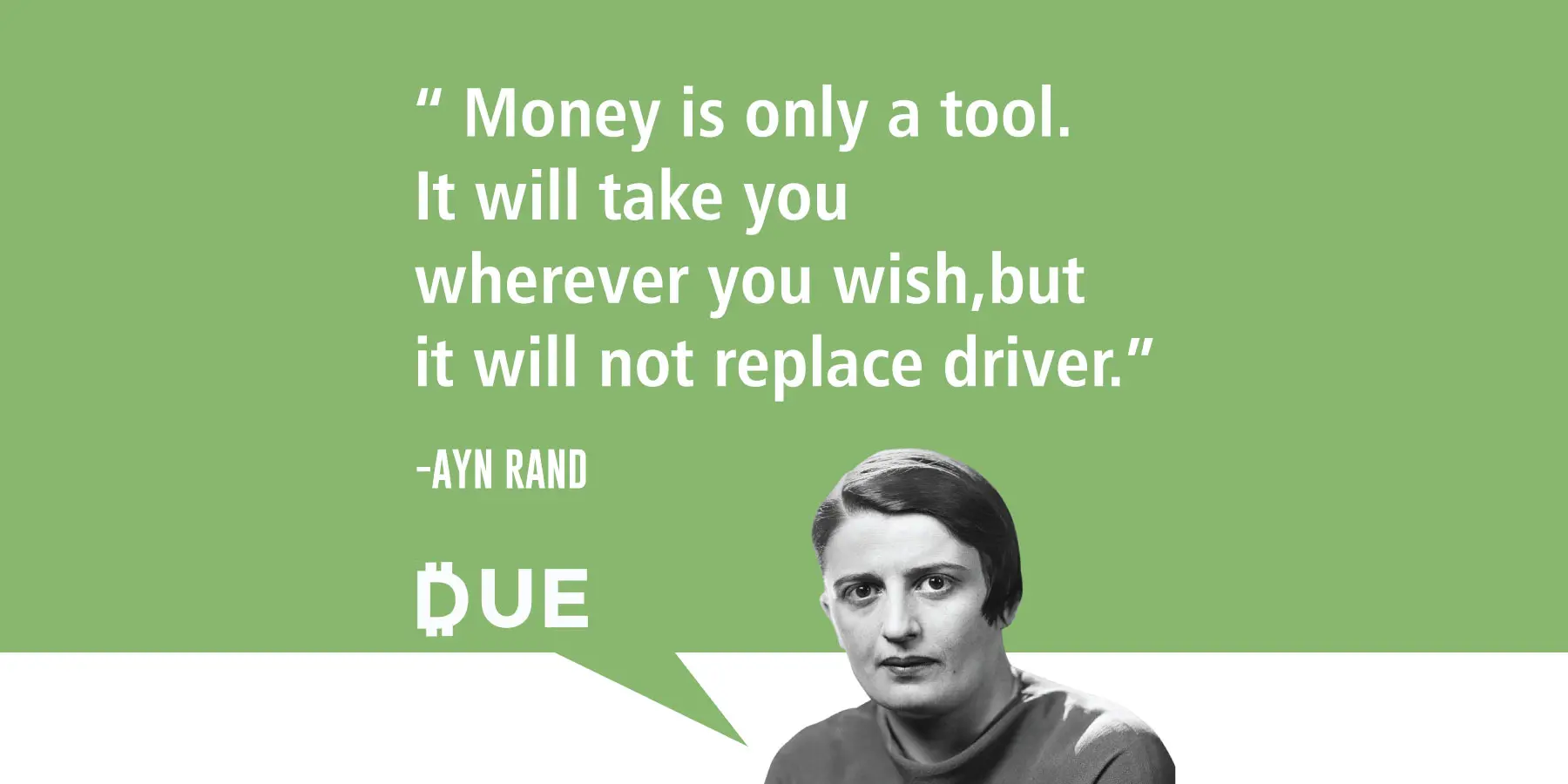
“Money is only a tool. It will take you wherever you wish, but it will not replace you as the driver.” -Ayn Rand
He who has the gold makes the rules, money makes the world go round… You know the drill. We’ve all heard these quotes, and sentiments just like them. Money truly does get you places, but it is only just the catalyst. It may get you where you want to go, but it’s up to you from there. In other words, you can’t replace money with good sense. Money will never make up for lack of imagination, or lack of brainpower. Don’t necessarily shoot for money, shoot for the knowledge, shoot for the stars, and the money will follow.
Check out some of our other quotes
Related Reading: Money as a tool only goes so far — consider the Kanye West money quote on what happens when you lack it.
Related Reading: On wealth versus contentment, see the Pablo Picasso money quote.

What Ayn Rand’s “Money Is Only a Tool” Quote Means
Among the many quotes about money, Ayn Rand’s “money is only a tool” stands out because it draws a clear line between a resource and the person using it. Money can carry you toward almost any destination, but it cannot decide where you should go or make the journey for you. The quote pushes back on the idea that wealth is the goal itself, arguing instead that money amplifies the judgment, skills, and values of whoever holds it.
Money as a means, not an end
Treating money as a tool changes how you use it. A hammer is only as useful as the carpenter swinging it, and a paycheck only builds wealth when paired with good decisions. That is why two people with identical incomes can end up in completely different places. If you want money to take you somewhere meaningful, it helps to first get clear on the destination, an idea explored in our guide on how to focus your mind on building wealth.
Why character drives the outcome
Rand’s point is that money will not replace you “as the driver.” Discipline, patience, and knowledge are what steer the tool. Sound habits beat a lucky windfall over time, as you can see in our look at money management habits that make you richer and the practical playbook in realistic ways to grow your money.
Putting “Money Is Only a Tool” Into Practice
If money is a tool, the goal is to become a better operator of it. That means investing in skills that raise your earning power, then letting disciplined saving and investing compound the results. Legendary investors echo this mindset; our breakdown of the Warren Buffett saving tip for retirees and the wealth philosophy in the Robert Kiyosaki quote on what you keep both reinforce that what you do with money matters more than how much arrives. For a plain-language primer on what money actually is and the roles it plays, the SEC-backed basics at Investopedia’s “What Is Money?” and the everyday guidance from the Consumer Financial Protection Bureau are useful starting points.
Key Takeaways
- Ayn Rand’s “money is only a tool” frames wealth as a means to your goals, not the goal itself.
- Money amplifies the user’s judgment, so the same income can produce very different results.
- Skills, discipline, and habits are the true drivers; money simply carries them further.
- Build earning power first, then let consistent saving and investing compound the outcome.
Frequently Asked Questions
Who said “money is only a tool”?
The quote comes from author and philosopher Ayn Rand. The full line reads, “Money is only a tool. It will take you wherever you wish, but it will not replace you as the driver,” and it appears in a well-known passage about the nature and meaning of money.
What does “money is only a tool” mean?
It means money is a means to an end rather than an end in itself. Like any tool, it is powerful in capable hands and wasted in careless ones, so the results you get depend far more on your decisions, knowledge, and discipline than on the money alone.
What are good quotes about money and what do they teach?
The most useful quotes about money tend to separate wealth from wisdom and remind us to control money rather than be controlled by it. Rand’s “tool” metaphor, for example, teaches that financial success follows clear goals and good habits, not the simple act of acquiring more.
Related Reading: For a wry reminder about debt, see Earl Wilson: if you think nobody cares if you’re alive.
Related Reading: Emerson warned that money often costs too much — a reminder of what wealth can quietly take from us.
Related Reading: Money is a tool, not a master — a point echoed in this Voltaire money quote.




