
Let me save you hours of research and get straight to what matters when choosing renters insurance: most companies sell nearly identical coverage at wildly different prices using completely different service models. The “best” company depends entirely on which trade-offs you’re willing to accept. Speed versus human service, low base rates versus bundling discounts, cutting-edge apps versus established stability.
I’ve worked in insurance for over a decade, reviewed thousands of policies, and processed enough claims to spot the patterns companies don’t advertise. Here’s the unvarnished truth about which renters insurance companies deliver on their promises and which ones hide problems behind slick marketing.
This guide identifies the genuine standouts in specific categories rather than crowning one mythical “best for everyone” that doesn’t exist. Your actual best choice depends on your specific situation, which I’ll help you identify.
What Is Renters Insurance?
Renters insurance is a three-part protection system covering your belongings, your legal liability, and your temporary housing expenses when disasters strike. Unlike your landlord’s insurance, which only protects the building structure, renters’ insurance shields you from personal financial catastrophe.
Most renters drastically underestimate what they own. Between furniture, electronics, clothing, kitchen items, and personal belongings, you likely have $15,000 to $30,000 worth of property in your apartment. A single fire, theft, or water damage incident wipes that out completely without insurance.
Standard renters policies cover three critical areas:
- Personal property protection pays to replace belongings lost to fire, theft, vandalism, windstorms, lightning, and other covered perils. You can choose between actual cash value coverage (which pays the depreciated value) or replacement cost coverage (which pays for brand-new replacements regardless of how old your stuff was).
- Personal liability coverage protects you financially when someone gets injured in your home or you accidentally damage someone else’s property. This includes legal defense costs if someone sues you. Most policies include $100,000 in liability coverage, though you can increase this amount.
- Additional living expenses (also called loss of use) reimburse your hotel, restaurant meals, and other costs when your rental becomes uninhabitable due to a covered loss. If your apartment floods and you need to stay elsewhere during repairs, this coverage ensures you’re not paying for both rent and a hotel.
Average monthly premiums run $10 to $23, depending on your coverage limits and location. That’s significantly cheaper than replacing everything you own out of pocket.
How to Actually Evaluate Insurance Companies
Ignore brand recognition. Focus on these metrics:
- Claims processing speed during normal conditions and high-volume disasters matters more than advertising budgets. Digital platforms maintain speed when traditional adjusters face weeks-long backlogs.
- Premium transparency and renewal pricing stability separate honest companies from bait-and-switch operators. Some insurers lure customers with artificially low initial rates, then jack prices 20-30% at renewal without warning.
- Digital self-service capabilities determine whether you can handle everything from your phone or must call agents during business hours to make simple changes.
- Coverage clarity without deliberate obfuscation matters. Policies written in plain language versus legalese designed to confuse reveal company priorities.
- Financial stability ratings from AM Best or Moody’s ensure the company can pay claims during catastrophic events. Beautiful apps don’t help if the insurer lacks capital reserves.
Brand name recognition means nothing if the company’s service model doesn’t match how you want to interact with insurance.
Best Renters Insurance Companies by Category

Lemonade: Overall Best and Fastest For Everything
Lemonade wins decisively on speed and digital experience. Many simple claims are approved near-instantly, and because AI enables the quick resolution of those claims, Lemonade can more efficiently handle even complex claims. I’ve tested their system personally and watched claims that would take traditional insurers two weeks get resolved before lunch.
When your laptop gets stolen before a work deadline, or water damage destroys your belongings, getting claim money within hours versus waiting two weeks changes everything. Lemonade’s automated processing maintains this speed even during high-volume disaster periods that paralyze traditional insurers.
Setup takes 90 seconds through their app. Policy changes happen instantly without agent involvement. Certificate of insurance generation for landlords is immediate. Everything operates at digital speed rather than traditional insurance timelines that assume you have infinite patience.
Pricing is extremely competitive. Base rates start at $5-10 monthly for basic coverage, typically rising to $12-20 monthly for standard protection ($20,000-$40,000 personal property with $100,000 liability). Their Giveback program makes it so once you sign up for a policy, you select a cause that matters to you – and throughout the year, Lemonade donates funds to charities connected to your cause.
The trade-off is that Lemonade operates in only 31 states (and Washington, D.C.). Customer service is entirely digital through email and chat only, with no phone support for customers who genuinely prefer verbal communication. Complex claims requiring human judgment trigger manual review, eliminating speed advantages for non-straightforward situations.
Best for tech-native users who want the fastest processing, live in Lemonade’s service areas, and never want to call insurance agents. If you’re comfortable managing everything through apps and want instant results, Lemonade delivers better than anyone else. Get a quote on Lemonade.com.

State Farm: Largest Agent Network but Middling Service
State Farm maintains the most extensive agent network in America with local representatives in nearly every city. That local presence appeals to renters who want in-person consultations, but recent customer experience tells a different story.
Agent access comes with significant downsides. Everything routes through agents rather than direct customer service, creating bottlenecks. Simple address changes require contacting your agent during business hours. Coverage modifications need agent involvement. When agents are unavailable or unresponsive, you’re stuck waiting.
Recent customer complaints reveal persistent service problems: hold times exceeding 30 minutes to reach anyone, difficulty connecting with assigned agents, and delayed responses to urgent requests. One 2026 BBB complaint documented multiple failed attempts to reach an agent over several weeks for a simple policy update. Another customer reported unresolved claim delays lasting more than a month, with adjuster unavailability cited as the cause.
State Farm excels at multi-policy bundling. Combine renters and auto insurance, and total costs typically drop 15-20% compared to separate policies with different companies. Standalone renters coverage runs $15-25 monthly, depending on location and coverage levels, higher than digital-first competitors but competitive when bundling applies.
Claims processing happens through traditional adjuster timelines measured in days to weeks rather than minutes. During high-volume periods after disasters, processing extends even further as adjusters face overwhelming backlogs.
Best for customers who absolutely need in-person agent relationships despite documented service delays, plan to bundle with auto insurance for discounts, and accept traditional service speeds measured in business days rather than hours.
Allstate: Customization With Frustrating Service Issues
Allstate offers renters with high-value belongings the flexibility they need through specialized coverage endorsements. You can schedule individual items separately with higher limits than standard policies provide, useful when you own expensive cameras, jewelry, or musical instruments.
However, customer service problems plague this insurer. Reviews from 2025-2026 consistently report excessively long hold times (often over 30 minutes), extreme difficulty reaching actual agents, and unresponsive follow-up after filing complaints. One long-time customer described frustration trying to speak with anyone at their agency after being on hold “numerous times without successfully ever connecting.”
The NAIC flags Allstate for receiving more complaints than the industry average for its size. Customers report claim denials for covered losses, with one renter stating their storm damage was denied despite paying $680 monthly in premiums due to “fine print” exclusions that weren’t clearly explained upfront.
Billing errors and claim processing delays appear frequently in customer feedback. Multiple reviewers described difficulty getting timely responses during the claims process and a perception that policy language is deliberately designed to limit payouts.
Base rates are higher than digital competitors, at $20-30 monthly, while coverage costs $12-18 elsewhere. Bundling with auto insurance reduces this gap, but standalone Allstate renters coverage rarely wins on price alone.
Best for renters with high-value belongings requiring specialized coverage who can tolerate documented customer service frustrations, existing Allstate auto policyholders leveraging bundling discounts, and those comfortable navigating traditional insurance bureaucracy.
USAA: Unmatched Value for Military-Connected Members
For military members, veterans, and their families, USAA consistently provides the best overall value. Their military-focused approach creates coverage genuinely designed around service member needs rather than adapted civilian policies.
USAA coverage often includes protections other insurers exclude or charge extra for: coverage for military uniforms and equipment, protection during relocations and deployments, and continuation during housing transitions. Customer service maintains industry-leading standards. Financial stability is rock-solid. Pricing undercuts competitors by 20-40% for equivalent coverage.
Eligibility restrictions limit access to military-connected individuals only. The vast majority of American renters cannot access USAA regardless of how attractive their coverage appears.
Best for military members, veterans, and families that meet eligibility requirements. If you qualify, choosing anyone else rarely makes financial sense given the substantial price advantage and superior service.
Progressive: Comparison Shopping Platform With Hidden Complexities
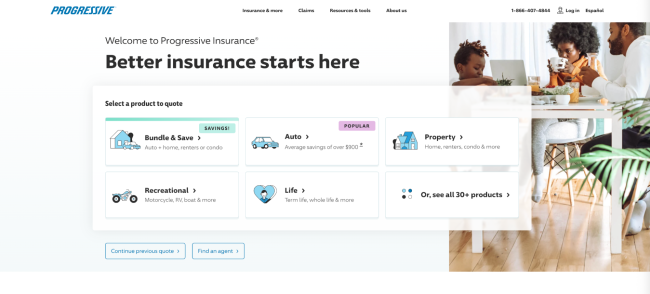
Progressive operates as both a direct insurer and insurance marketplace, allowing comparison of multiple carriers’ rates through one platform. Their “Name Your Price” tool lets you input a desired monthly payment, and then adjusts coverage levels and deductibles to hit that target.
The middleman problem creates confusion, though. Progressive often routes you to partner companies rather than providing direct coverage. Your policy might be with a different insurer entirely, creating service complications when you need to file claims or make changes.
Recent complaints reveal specific service frustrations: difficulty reaching adjusters by phone, delayed claim estimates that take weeks instead of days, and confusion about which company underwrites their policy. One 2026 BBB complaint documented a customer waiting over a month for a final repair estimate, with rental coverage expiring before the issue was resolved.
When Progressive routes you to partner carriers, claims handling and policy service happen through those partners rather than Progressive directly. This splits the experience and leaves customers uncertain who to contact for support. Some report discovering their actual insurer only when filing their first claim.
Premiums tend to be higher than those of many direct competitors, despite comparison-shopping tools. The convenience of one-stop shopping comes with a price premium that negates some of the advertised savings.
Best for budget-focused comparison shoppers who are comfortable with potential partner-carrier complications and are willing to verify which company holds their policy before purchasing.
Nationwide: Solid Middle-Ground Option
Nationwide operates nationally with traditional service models. They provide competent coverage without excelling dramatically in any specific category, making them a safe but unremarkable choice.
Brand New Belongings coverage stands out as Nationwide’s defining feature. Replacement cost coverage comes included as standard rather than requiring upgrades. When claims occur, you receive money for new replacements rather than the depreciated actual cash value. For renters with furniture and belongings that have depreciated significantly but cost hundreds to replace, this feature provides genuine value.
Claims processing follows traditional human adjuster timelines, though. During high-volume periods after disasters, processing extends to weeks rather than days. For renters needing fast claim resolution, Nationwide’s traditional approach creates delays.
Best for renters wanting standard replacement-cost coverage, accepting traditional claims processing timelines, and not requiring cutting-edge digital service or exceptional speed.
Match the Company to Your Actual Priorities
Stop looking for mythical “best for everyone” and identify which specific benefits matter most for your situation:
- Prioritize speed? Choose Lemonade if fast claims processing and instant policy management matter more than phone support or local agents.
- Value agent access? Choose State Farm if you want someone you can call, though be prepared for hold times and potential responsiveness issues.
- Need military benefits? Choose USAA if you qualify. Their military-specific coverage and pricing dominate alternatives for eligible members.
- Budget constraints? Get quotes from multiple companies, focusing on the total cost after applicable discounts. Don’t assume digital equals cheapest or traditional equals expensive without actual quotes for your specific situation.
- High-value belongings? Choose insurers that allow scheduled item coverage (such as Allstate or State Farm) if you own valuables exceeding standard policy category limits.
- Verify coverage matches your risks. Standard policies exclude certain perils. Verify your chosen company covers water damage from sources you face (burst pipes typically covered, flooding typically excluded), theft both inside and outside your apartment, liability protection meeting or exceeding landlord requirements, and loss of use coverage providing adequate temporary housing costs for your area.
Read actual policy documents before purchasing, not just marketing websites. The differences matter when you need to file claims.
Renters Insurance Company Questions
Do cheaper companies provide worse coverage?
Not necessarily. Lemonade’s low base rates come from eliminating agent commissions and operating entirely digitally, not from inferior coverage quality. However, verify specific policy details rather than assuming price correlates with coverage quality.
Compare actual coverage limits, exclusions, and claim payment terms, rather than just premium costs. A $5 cheaper policy that excludes common perils costs more in the long run if it doesn’t pay your claim.
Can I switch companies mid-policy?
Yes. Most insurers allow cancellation anytime. Some charge cancellation fees, others provide prorated refunds for unused coverage time.
Before switching, ensure new coverage activates before canceling existing coverage to avoid gaps. Landlords require continuous coverage, and even one day of coverage lapse violates most leases, potentially triggering eviction clauses.
Does my company’s choice affect coverage during disasters?
Dramatically. Digital platforms with automated claims processing maintain speed during catastrophic events when thousands file simultaneously. Traditional insurers face adjuster shortages, creating weeks-long backlogs that leave you without claim payments when you need them most.
After major disasters, claim processing speed differences range from same-day approval (digital platforms like Lemonade) to 3-4 weeks just for initial adjuster contact (overwhelmed traditional companies). When you need money immediately to replace destroyed belongings, that difference matters enormously.
Are big-name companies more financially stable?
Not always. Check actual financial strength ratings from AM Best or Moody’s rather than assuming brand recognition equals stability. Some newer digital insurers maintain excellent ratings through reinsurance partnerships backing their claims-paying ability, while some established companies have lower ratings than you’d expect.
Financial stability matters most during catastrophic events affecting thousands of policyholders simultaneously. Verify your chosen insurer has capital reserves to pay all those claims at once.
Related Reading
Managing your finances goes beyond insurance. These guides can help you protect and grow your wealth:
- Financial Advisors Don’t Talk About These 9 Things — Wealth-building secrets most advisors keep quiet.
- How to Balance Student Loan Repayment with Other Financial Goals — A practical approach to juggling debt and savings.
- Credit Card Limits: Managing Spending to Protect Your Financial Health — Smart strategies for responsible credit use.
- Employers Adjust Salary Mix, Net Unchanged — How pay structures are shifting and what it means for your finances.
Image Credit: bmhnmnjxr98