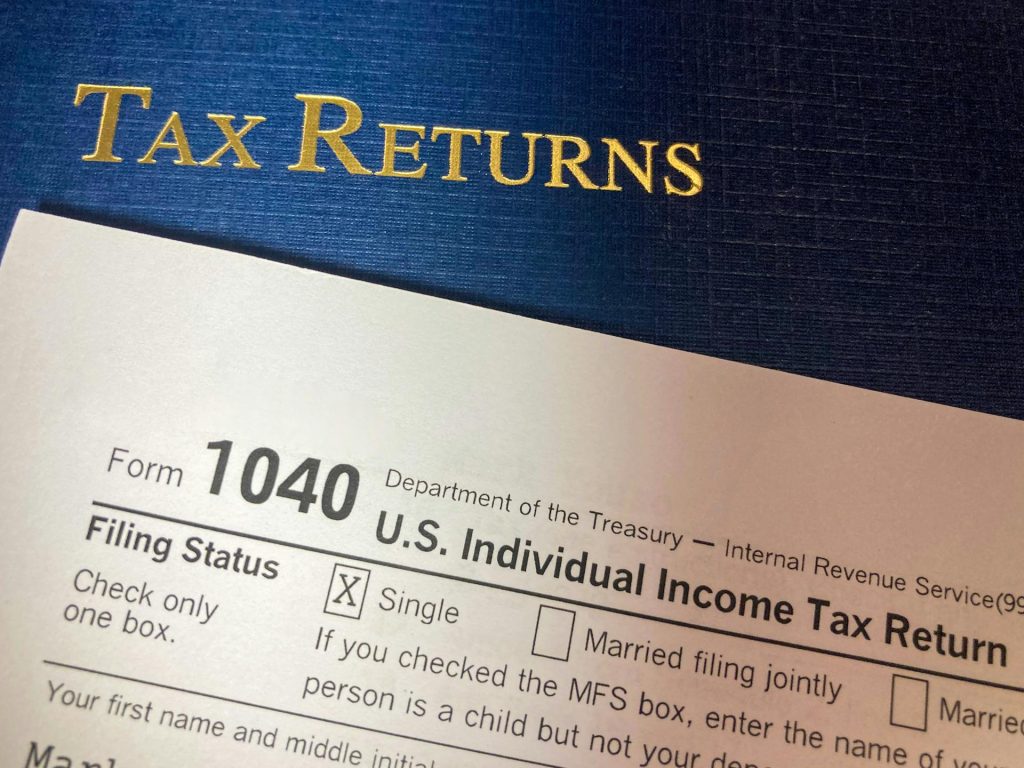
Whether you view it as a “forced savings account” or a pleasant surprise in your direct deposit, the upcoming tax season is going to be a good one for many people. Compared to last year, average refunds are up 10.8% to $3,623 to $3,742.
In large part, the surge can be attributed to the One Big Beautiful Bill Act (OBBBA), which brought retroactive tax cuts, expanded the standard deduction ($16,100 for singles, $32,200 for married filers), and raised the Child Tax Credit. Although it may be tempting to treat this “bonus” as an opportunity to spend, your future self would much rather save.
That said, here’s how to use your 2026 tax refund to boost your retirement prospects and strengthen your personal finances.
The “Safety First” Strategy: Patching the Foundation
Be sure your current ship is watertight before you start thinking about retirement. By taking care of your immediate financial security, you don’t have to worry about your long-term investments getting liquidated.
Top off your emergency fund.
During periods of market uncertainty, the best way to sleep better is to increase your liquidity. With high inflation throughout 2025, the goalposts have been shifted for what constitutes a “safe” cushion. As such, your emergency fund is likely underfunded if it’s still based on 2023 or 2024 expenses.
As a rule of thumb, you should have three to six months’ worth of living expenses. Even if your refund does not get you there, a high-yield savings account (HYSA) provides an immediate buffer against economic volatility in 2026.
Eliminate high-interest “anchor” debt.
In almost every case, stopping the bleed of interest payments is a mathematically superior investment. With credit card interest rates averaging over 20%, and exceeding 26% for certain subprime or retail cards, carrying a balance is like swimming with an anchor. If you have $3,000 in debt at 26%, the interest alone will cost you approximately $800 a year.
By using your refund to wipe this credit card debt out, you’re guaranteed a 26% return on your money-a return you won’t find in the S&P 500.
Create or fuel your sinking funds.
Besides emergencies, life is full of “known unknowns” — upcoming expenses that aren’t surprises, but aren’t part of your monthly budget either. Sinking funds such as car repairs, annual insurance premiums, and home maintenance can be seeded with a portion of your refund. If you earmark these funds now in a separate savings bucket, you will not be derailed from your retirement contribution goals in 2026 because of these inevitable expenses.
The Retirement Accelerator: Maximum Impact
You can fuel tax-advantaged retirement accounts with your refund if your foundation is solid.
IRA boost for 2026.
For 2026, the IRS has increased the annual contribution limit, making refunds even more powerful tools for long-term growth. The elective deferral limit for 401(k) plans has increased to $24,500 for 2026. Additionally, if you’re 50 or older, you can make a catch-up contribution of $8,000, bringing your total contribution to $32,500.
Additionally, the IRA contribution limit has been raised to $7,500 (both traditional and Roth IRAs combined). For those age 50 and older, the inflation-adjusted catch-up is now $1,100, for a total of $8,600.
- Traditional IRA. If you want to reduce your taxable income in 2026, make this move. Contributing your refund now could reduce your tax bill next year, effectively securing a “discount” on your investment.
- Roth IRA. By moving your tax refund to a Roth IRA, you essentially “lock in” your tax-free status for life. Upon retirement, all qualified withdrawals are tax-free, as well as your contributions and future earnings.
Key reminder. Direct Roth IRA contributions are subject to income limits, unlike traditional IRAs. In 2026, the phase-out range starts at $153,000 for single filers and $242,000 for married filers filing jointly. For those who earn more than these thresholds, a “Backdoor Roth” strategy may be necessary to transfer the funds into a tax-free account.
It’s time to take advantage of the Solo 401(k).
For digital entrepreneurs and freelancers, the Solo 401(k) remains the ultimate “cheat code.” In 2026, it will have an elective deferral limit of $24,500. If you haven’t maxed your regular contributions yet, making a lump-sum contribution from your tax refund can make a major difference.
Pro tip. SECURE 2.0’s “super catch-up” rules now allow for even higher catch-up limits of $11,250 for 60-63-year-olds, bringing your maximum possible employee contribution to $35,750.
The “Triple Tax Advantage” Play: Funding Your HSA
HSAs are arguably the most powerful investment vehicle available if you have a high-deductible health plan (HDHP). Besides being tax-deductible, contributions and growth are tax-free, and withdrawals for qualified medical expenses are also tax-free.
As of 2026, the limits have been increased to $4,400 for individuals and $8,750 for families. After age 65, you can withdraw money from your HSA for any purpose you wish (paying standard income tax), effectively making it a “backdoor” IRA.
Investing in “Efficiency”: Defeating the Seasonal Energy Squeeze
In some cases, the best financial move isn’t a ticker symbol; it’s a structural change to your overhead. In 2026, your household faces a two-fold “energy tax.’ Brent crude is hovering near $95 per barrel due to ongoing geopolitical tensions, making heating oil a luxury. Meanwhile, summer cooling costs have reached all-time highs because of record-breaking heatwaves.
Shifting to an all-season heat pump.
Currently, oil is one of the most expensive ways to heat a home. It costs 3-4 times as much per BTU as high-efficiency electric systems.
- The upgrade. The greatest benefit of heat pumps is their efficiency, which is 2–4 times greater than that of oil furnaces. Moreover, they can be used both for heating and cooling.
- The math. A maximum of $3,200 is allowed per year under the Energy Efficient Home Improvement Credit for energy-efficient upgrades (windows, doors, insulation, HVAC). Generally, homeowners are eligible for a $1,200 credit per year. However, special items such as heat pumps, biomass stoves, and biomass boilers are eligible for a $2,000 per-year credit.
- The dividend. In a typical household, combined savings can amount to $1,800 to $3,000 per year.
An ROI-driven approach to “weatherization.”
If you aren’t able to upgrade your entire home’s system, use your refund to make your home’s envelope more durable.
- Attic insulation & air sealing. You can reduce your energy consumption by 15–20% by spending $1,500 of your refund on professional insulation and air sealing.
- The “envelope” credit. Insulation and weatherstripping can be claimed for 30% (up to $1,200).
Digital energy management.
With a smart thermostat with multi-zone sensors, you can stop conditioning rooms you aren’t using with a portion of your refund. During times of volatile energy prices, “zoning” your home can be a sophisticated way to manage cash flow.
Long-Term Growth and Education
Your wealth can be expanded by looking beyond your immediate bills and taking advantage of the market compounding power and your own productivity.
Stock market diversification.
If your tax-advantaged accounts are on track, consider moving your refund to a taxable brokerage account. By investing in low-cost ETFs, you can generate long-term growth with greater liquidity than a retirement account. If you invest a $3,600 refund today, your nest egg could grow significantly over the next 20 years.
529 education savings plans.
For the stability of your family, reducing the financial burden of education is a valuable gift. A 529 Plan allows individuals with children or grandchildren to grow their funds tax-free and use them for qualified education expenses tax-free. Contributions are also tax-deductible or credited in many states.
Professional re-skilling.
Those who can navigate the intersection of AI and traditional industry will be rewarded in the 2026 job market. If you use $1,000 of your refund for a certification or high-level mastermind group, you won’t be spending — you’ll be investing in the asset that generates all your wealth: you.
Strategic Cash Flow & Community Impact
By improving your daily cash flow and supporting causes you care about, you will feel more in control of your finances and more fulfilled.
Paying annual expenses in advance.
Avoiding fees is one of the simplest ways to earn a return. Using your refund, you can prepay annual expenses like car insurance or professional memberships. When you pay in full upfront, providers often offer you a 5% to 10% discount, allowing you to earn more “investable income” for the rest of the year.
Meaningful charitable giving.
In addition to offering a tax deduction, giving to a 501(c)(3) organization can improve mental well-being, making long-term financial planning easier.
Final Thought: Adjust Your Withholding
Refunds are essentially interest-free loans to the government. To estimate your tax withholding for 2025, visit the IRS Tax Withholding Estimator. If you adjust your W-4 now, you’ll receive $300 more per month in your paycheck, allowing you to invest in real-time rather than waiting until next year.
FAQs
Why is the average tax refund higher in 2026?
In 2026, the average is $3,623. The reason for this is primarily the One Big Beautiful Bill Act (OBBBA), which permanently increased the standard deduction ($16,100 for singles) and provided significant inflation adjustments to the 10% and 12% tax brackets.
Can I roll my tax refund into a 529 plan and then into a Roth IRA?
Yes, but there are strict “holding period” rules. As long as the 529 account has been open for at least 15 years, you can roll over up to $35,000 tax-free from a 529 to a Roth IRA under SECURE 2.0.
Does the “Roth Catch-Up” rule affect how I spend my refund?
Catch-up contributions made in 2026 (for those ages 50+) must be Roth (after-tax) contributions if your income exceeds $150,000 in 2025. To pay for these mandatory after-tax contributions, you can use your tax refund.
Is there a new “non-itemizer” deduction for charitable giving in 2026?
Yes. With the introduction of the OBBBA, a permanent charitable deduction was introduced. You can now deduct up to $1,000 ($2,000 for joint filers) for cash donations even if you claim the standard deduction.
How do the 2026 “Super Catch-Up” rules work for those in their early 60s?
In 2026, 401(k) and 403(b) contributions to your retirement account can be made without penalty if you are between the ages of 60 and 63. Compared to the standard catch-up for those aged 50-59, this is a significant increase.
Image Credit: Mark Youso; Pexels