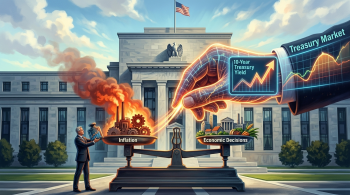
The first quarter of 2026 has delivered a plot twist that many investors didn’t see coming. While equities have stumbled through volatile trading sessions and geopolitical uncertainty, bonds have quietly outperformed stocks by the widest margin in over a decade.
For investors who spent the last 15 years hearing that “stocks always win in the long run,” this reversal demands attention — and possibly action.
Table of Contents
ToggleThe Numbers Tell a Clear Story
Through the first three months of 2026, the Bloomberg U.S. Aggregate Bond Index has returned approximately 4.2%, while the S&P 500 has delivered a negative 1.8% return — a sharp reversal from the S&P 500’s first-quarter surge the year prior. That 6-percentage-point gap represents the largest Q1 bond-over-stock outperformance since 2008, according to Morningstar’s fixed income research.
The outperformance isn’t limited to government bonds either. Corporate investment-grade bonds have returned roughly 3.8%, high-yield bonds have gained 2.1%, and Treasury Inflation-Protected Securities (TIPS) have posted gains of 3.5%. Meanwhile, the Nasdaq Composite is down nearly 4% year-to-date.
Several converging forces explain this divergence. The Federal Reserve has held interest rates steady at 4.75-5.0% through Q1, keeping bond yields attractive. At the same time, rising stagflation risks have weighed on equity valuations, particularly in growth-heavy sectors.
Why This Time Feels Different
Bond market outperformance isn’t unusual during recessions or bear markets. What makes 2026 distinctive is that the economy isn’t in recession — consistent with the soft landing narrative — GDP growth remains positive, albeit sluggish at an estimated 1.4% annualized rate according to the Bureau of Economic Analysis.
Instead, we’re witnessing a repricing of risk. The combination of elevated valuations in tech stocks, uncertainty around tariff policy, and geopolitical tensions in the Middle East has pushed investors toward safety without a full-blown economic crisis. Technical indicators in equity markets have flashed warning signs, reinforcing the shift toward fixed income.
Corporate earnings growth has also decelerated. After two years of AI-fueled optimism, companies are facing harder questions about when massive capital expenditures will translate into revenue. The gap between AI spending and operating cash flow has reached unsustainable levels for some firms, and the market is starting to notice.
What Higher Bond Yields Actually Mean for Your Portfolio
For the first time since the early 2000s, bonds are offering yields that compete meaningfully with the long-term expected returns of stocks. The 10-year Treasury yield sits near 4.5%, and investment-grade corporate bonds yield between 5.2% and 5.8%.
To put that in context, the historical average annual return of the S&P 500 is approximately 10% before inflation — but with significant volatility. A 5.5% bond yield with minimal volatility becomes genuinely attractive when stock market returns are uncertain.
According to research from BlackRock’s Global Fixed Income team, periods where starting bond yields exceed 5% have historically delivered annualized total returns of 6-7% over the following five years. That’s within striking distance of equity returns, with a fraction of the downside risk.
Three Investor Profiles and What Each Should Do
The Pre-Retiree (Ages 55-65)
If you’re within 10 years of retirement, this bond environment is a gift. Consider increasing your fixed income allocation to 50-60% of your portfolio. Focus on a barbell approach: short-term Treasuries (1-3 years) for liquidity and longer-term investment-grade corporates (7-10 years) for yield. Don’t fall for the myth that you need aggressive equity exposure to retire comfortably — at current yields, bonds can do serious work.
A practical move right now: ladder your bond purchases across maturities of 1, 3, 5, and 10 years. This protects you if rates rise further while locking in today’s attractive yields. If the Fed eventually cuts rates, your longer-dated bonds will appreciate in price, adding capital gains on top of the yield.
The Mid-Career Investor (Ages 35-54)
You have time on your side, but that doesn’t mean you should ignore what’s happening. Consider shifting your allocation from 80/20 stocks-to-bonds to 70/30, directing the additional 10% toward intermediate-term bond funds or individual Treasury bonds.
The key insight for mid-career investors: you don’t need to make a permanent change. Tactical adjustments during periods of equity uncertainty can reduce portfolio volatility without sacrificing meaningful long-term returns. Think of it as lowering your portfolio’s “speed” on a winding road — you’ll still reach your destination, but with fewer white-knuckle moments.
The Young Investor (Ages 20-34)
Here’s the contrarian take: this is actually a great time to stay heavily in stocks. When stocks underperform bonds, it often means equities are becoming cheaper. Dollar-cost averaging into a broad index fund during periods of negative sentiment has historically produced excellent 10-year returns.
That said, even young investors should consider holding 3-6 months of expenses in a high-yield savings account or money market fund currently yielding 4.5-5.0%. Setting concrete financial goals matters more than market timing at any age.
The Bond Sectors Worth Watching
Not all bonds are created equal in this environment. Here’s where the opportunities and risks stand:
Treasury Inflation-Protected Securities (TIPS): With inflation running at 3.1% according to the latest CPI data from the Bureau of Labor Statistics, TIPS offer a real yield of approximately 2.1% above inflation. That’s the highest real yield since 2007 and represents genuine purchasing power growth with government backing.
Investment-Grade Corporate Bonds: Companies with strong balance sheets are offering spreads of 100-130 basis points over Treasuries. For investors willing to accept modest credit risk, these bonds deliver 5.5-6.0% yields with low historical default rates.
Municipal Bonds: For investors in high tax brackets, municipal bonds yielding 3.5-4.0% tax-free can deliver tax-equivalent yields above 6%. With potential TCJA sunset changes raising tax rates in 2026, the tax advantages of munis become even more compelling.
High-Yield Bonds: Proceed with caution. While yields of 7-8% look attractive, credit spreads have been widening as economic growth slows. Default rates could tick up if the economy weakens further. Limit high-yield to no more than 5-10% of your fixed income allocation.
Common Mistakes to Avoid Right Now
Don’t chase last quarter’s returns. Moving entirely out of stocks and into bonds after bonds have already outperformed is classic performance chasing. The best approach is gradual rebalancing, not wholesale portfolio reconstruction.
Don’t ignore duration risk. If you’re buying long-term bonds and the Fed unexpectedly raises rates, you’ll face price declines. Match your bond duration to your actual time horizon. If you need the money in three years, don’t buy 30-year bonds just because the yield looks better.
Don’t forget about reinvestment risk. Today’s 5% yields won’t last forever. When bonds mature and you reinvest the proceeds, rates may be lower. Laddering your bond purchases across different maturities helps manage this risk.
What to Watch in Q2 2026
The Fed’s June meeting will be pivotal. If the committee signals rate cuts are coming in the second half of 2026, bond prices will rally further — rewarding those who added fixed income exposure now. If the Fed holds firm or signals further tightening, short-duration bonds will outperform.
Watch the 10-year Treasury yield as your key indicator. A sustained move above 5% would signal that the bond market sees persistent inflation risk — and would make even higher yields available. A drop below 4% would suggest recession fears are intensifying, which would boost bond prices but warrant a defensive equity posture as well.
The Fed’s decisions affect far more than just bonds — mortgage rates, business borrowing costs, and consumer spending all follow. Staying informed about monetary policy isn’t optional for serious investors in 2026.
The Bottom Line
Bonds beating stocks in 2026 isn’t a temporary anomaly — it’s a signal that the investment landscape has fundamentally shifted from the zero-rate era. For the first time in 15 years, conservative investments offer genuinely competitive returns.
The smart move isn’t to abandon stocks entirely. It’s to recognize that a balanced portfolio with meaningful bond exposure is no longer a drag on returns — it’s a strategic advantage. Review your allocation, consider increasing fixed income by 5-15% depending on your age and goals, and lock in yields that may not be available much longer.
Related Reading
- What History Says About 2026 Stock Returns
- Wall Street Strategist Lowers Year-End Goal for S&P 500
- Wall Street Banks to Cut Thousands of Jobs
- Analysis of Fed Rate Decision Impact
- Assessing Cash and Bonds in Investing
- US Economy Has First Contraction in Three Years
- US Economy Contracts Despite Stock Market Rally
- US Consumer Confidence Plummets in February
- US Trade Deficit Reaches Record High
- Alphabet Surges on Strong Q1 Results
- Berkshire Resumes Buybacks as Abel Buys
- Bezos Sells Amazon Stock Amid Tariff Concerns
- Bitcoin Slides in Worst Day Since March
- Three Market Events to Watch This Week
- Bank of Canada Holds Interest Rates Amidst Uncertainty