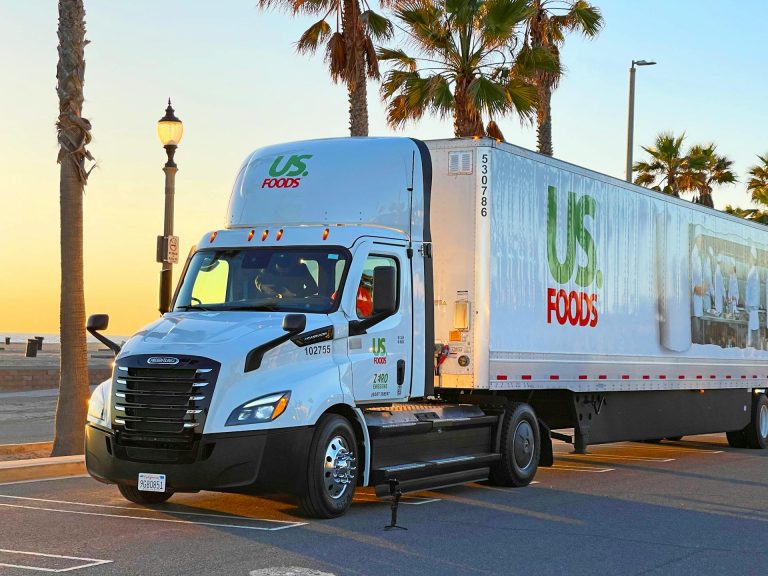
It may be 2026, but the headlines feel like a painful case of déjà vu. For the first time since the 2022 inflation crisis, diesel fuel prices have surged beyond $5.00 per gallon.
It might not be obvious. But diesel is an invisible tax on everything we consume. As such, this impacts not only truckers, but also those managing tight personal finances or on fixed retirement incomes. In short, since semi-trucks carry roughly 70% of all freight in the United States, when their fuel costs spike, every loaf of bread, gallon of milk, and head of lettuce goes up in price.
To make matters worse? In addition to fuel shortages, the ongoing conflict in Iran has choked nitrogen-based fertilizer production. Why? Since the Strait of Hormuz, through which a third of the world’s fertilizer trade passes, has been effectively blocked, urea and ammonia prices have spiked by 30% to 50%, respectively.
With that said, if you’re a retiree watching your purchasing power erode, “business as usual” won’t cut it. Instead, to safeguard your nest egg from rising prices, here are 15 strategies and action plans.
1. Leverage Senior-Specific “Stock-Up” Days
The timing of your grocery trips is just as important as what you put in your cart. Major retailers often offer special “Stock-Up” days on which Senior Citizens can enjoy an additional 5% or 10% savings.
For some of the largest regional and national chains, here is a quick reference guide:
| Retailer | Discount Details | Requirements & Schedule |
| Fry’s Food Stores | 10% OFF most items | Ages 55+; 1st Wednesday of each month. |
| New Seasons Market | 10% OFF “Wisdom Wednesdays” | Ages 65+; Every Wednesday. |
| Harris Teeter | 5% OFF via “Club 60” | Ages 60+; Every Thursday. Requires VIC card. |
| Brookshire’s / Super 1 | 5% OFF | Ages 60+; Tuesdays & Thursdays. Excludes alcohol, tobacco, and fuel. |
| Weis Markets | 10% OFF Weis brand products | Ages 60+; Every Tuesday. Applies to approx. 6,000 items. |
| Fred Meyer | 10% OFF select items | Ages 55+; 1st Tuesday. Includes private brands, apparel, and electronics. |
| Bashas’ | 10% OFF | Ages 55+; 1st Wednesday. Requires “Thank You” card. |
| ShopRite | Varies by Location | Discounts are highly localized. Some offer 5% on 1st Tue/Wed; others weekly. |
| Acme Markets | 5% to 10% OFF | Ages 60+; Every Tuesday. (Replaces older “Senior Hours” programs). |
Bonus tip. Also, plan your once-a-month “big buy” for non-perishables, toilet paper, canned beans, and rice to coincide with these days.
2. Transition to “Low-Input” Proteins
The beef and pork industries, which rely heavily on corn and soy, are suffering the most from fertilizer shortages. As such, consider incorporating “nitrogen-fixers” like lentils, chickpeas, and black beans into your diet.
Unlike crops that deplete the soil, these crops return nitrogen to the soil, making them more price-stable and ideal for budget food storage.
Furthermore, substituting beans in eight to 12 meals per month can save you $50 to $70.
3. Adopt the “Pantry Cycle” Inventory
According to the EPA report Estimating the Cost of Food Waste to American Consumers, each American consumer wastes $728 a year on food. The average weekly cost of waste disposal is $56 for a household of four, totaling $2,913 annually.
In a high-inflation world, waste is a budgetary sin.
Before you head to the store, do a 10-minute audit of your fridge, freezer, and pantry. Write down three items that have been there the longest and make them the basis for your week’s menu.
4. Join or Form a “Bulk Co-Op”
Buying power is often stronger in numbers. That’s why “freezer clubs” are back in style in 2026.
For those unfamiliar, here’s the strategy. You might want to join forces with two or three neighbors to purchase a “quarter-share” of beef from a local farmer, or to split a pallet of dry goods from a wholesaler like Frontier Co-op or DineMarket Shop. With this method, the retail logistics chain is bypassed, which is currently crippled by diesel surcharges.
5. Utilize AI-Powered Price Forecasting
With today’s sophisticated app technology, like Flashfood, it’s possible to predict markdowns based on patterns in store inventory.
For this reason, set alerts for high-cost items like olive oil or coffee. When a specific store is likely to drop prices to clear stock, these apps can notify you.
6. The “Last Hour” Shopping Hack
To avoid holding costs, grocery stores are increasingly aggressive about clearing out “sell-by” items. In other words, if you shop 1–2 hours before closing, you’ll often find 50% markdowns on bakery items, rotisserie chickens, and pre-prepared meats that can be frozen.
Alternatively, some shoppers discover the best deals within the first hour after opening, when employees have just finished marking down expired items.
7. Shift to Frozen “Gems”
Perishable goods are particularly sensitive to diesel price spikes, with recent data showing that higher fuel prices can drive up shipping costs by 20% or more.
So, what’s a budget-friendly alternative? In many cases, frozen vegetables are frozen right at the source, so they don’t need to be delivered refrigerated at high speed across the country. Nutritionally, they’re the same (or better) and significantly cheaper.
8. Mastering Unit Pricing (Price per Ounce)
Don’t be fooled by “sales” signs. It’s common for a “2 for $7” deal to be more expensive than the larger container when you factor in the unit price, which is usually printed in small print on the shelf tag.
When shopping for shelf-stable goods, buy the “family size” and portion them into smaller containers yourself if you live alone.
9. Apply for the SFMNP
If you love fresh, local produce, but your grocery budget is stretched, the Senior Farmers’ Market Nutrition Program (SFMNP) can help. In addition to helping low-income seniors access nutritious food, this federal initiative benefits local farmers.
With SFMNP benefits, you can purchase fresh fruits, vegetables, honey, and herbs at:
- Local farmers’ markets
- Roadside stands
- Community-supported agriculture (CSA) programs
You must be 60 years old or older and have a household income of at least 185% of the federal poverty level to qualify. Currently, this is around $2,413/month for a single-person household.
10. The “Dry Goods” Buffer
Due to the high cost of diesel, heavy or frequent delivery items are the most “taxed.”
The strategy? Switch your carbohydrate sources from high-water-content items (such as premade breads or jarred sauces) to dry ones (flour, pasta, broth). Essentially, you’re not paying someone to “haul water” to you.
11. Consolidate Your “Food Miles”
Inflation isn’t just at the store; it’s also in your own gas tank.
Keeping this in mind, consider “trip chaining.” In other words, never go to the grocery on a standalone trip. To save on your own fuel costs, only go when you are already out for a doctor’s appointment or a social event.
12. Revisit “Store Brands” (Private Labels)
For staples such as milk, flour, and canned goods, the quality gap between name-brand and store-brand products is virtually nonexistent in 2026.
In addition, choosing store-brands or private-label options instead of name brands can save consumers 25% to 30% on grocery bills, according to the Private Label Manufacturers Association (PLMA). A switch to store brands can save thousands of dollars per year, with audits showing it can reduce the total bill by 30% or more.
13. Negotiate Your Fixed Expenses
If food is non-negotiable, find the “give” in your other bills.
Call your cell phone, insurance, or internet provider. Be sure to mention you are on a fixed income and/or looking for “retiree loyalty” rates. During periods of inflation, many companies have unadvertised plans to prevent churn.
14. The “Cash Only” Grocery Run
As prices rise, “budget creep” becomes more evident. To prevent this, withdraw exactly what your grocery budget is in cash. Whenever the cash runs out, the shopping stops. As a result, we’re less likely to make impulse purchases when we simply swipe a card.
15. Always Check Your Receipts
There are times when innocent mistakes are made at checkout. Occasionally, items are scanned incorrectly, and coupons don’t get applied. Errors, however, can be costly. So before leaving the store, review your receipts.
Conclusion: The Path Forward
Despite surging diesel prices and a fertilizer crisis, these hurdles can be overcome. In 2026, savvy retirees will engage in tactical consumption. With local, bulk, and tech-driven savings, you can maintain your lifestyle without draining your savings.
FAQs
Why is the 2026 diesel spike happening now, and how long will it last?
A major cause of the surge to over $5.00 per gallon is the “Operation Epic Fury” military actions in late February 2026, as well as the subsequent closure of the Strait of Hormuz. As a result, nearly 20% of the world’s oil supplies are no longer available.
While the U.S. Energy Information Administration (EIA) had originally projected lower prices this year, the conflict has created a “risk premium.” Until the maritime blockade is lifted and insurance companies resume coverage for tankers in the Persian Gulf, analysts predict prices will remain volatile.
Is the “nitrogen crisis” affecting all crops equally?
No. The impact is highly “crop-specific.”
Wheat and corn are among the most nitrogen-intensive crops, and their production costs have increased the most. Conversely, soybeans and legumes fix atmospheric nitrogen in the soil without synthetic fertilizers. As a result, 2026 planting intentions are shifting toward grain-fed meats and corn-based products, leading to a shortage of corn-based products and higher prices.
Does the U.S. produce its own fertilizer, or are we entirely dependent on the Middle East?
Because of our domestic natural gas reserves, the U.S. is a major producer of nitrogen fertilizer. However, we still import a significant amount of urea and phosphate from the Persian Gulf. Even for domestically produced fertilizer, the price is decoupled from local costs and tied to global benchmarks. In response to the closure of the Hormuz closure and Chinese export bans, domestic producers have raised prices to align with global levels.
How does a diesel hike of $1.00 per gallon affect my grocery bill?
The “cold chain” uses diesel as its primary fuel. Since most U.S. freight moves by truck, carriers impose fuel surcharges. A surcharge of up to 25% of the final retail price may apply to perishable items such as milk and fresh berries that require constant refrigeration and rapid transport. Therefore, shelf-stable and frozen goods remain more resilient to these specific inflationary pressures.
Image Credit: Mr. Location Scout; Pexels