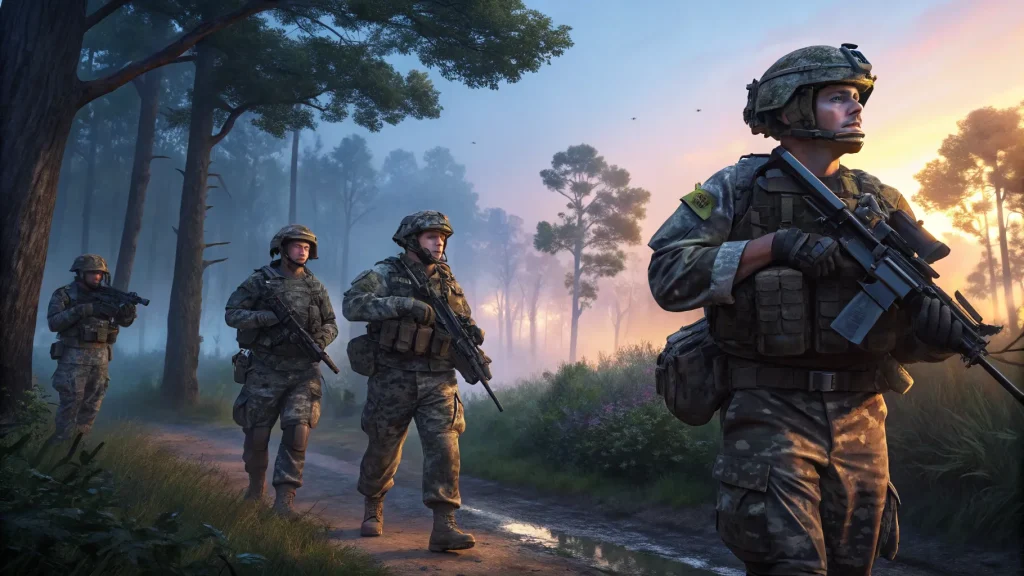
Four American soldiers died last week. I cannot shake that fact. The loss is not a headline. It is a hole in four families that will never close. This is an attempt to slow down, to see the people inside the uniform, and to ask what our duty is to the men and women who carry ours.
As the CEO of LifeGoal Wealth Advisors and a Certified Financial Planner, I spend most days talking about plans. Plans for retirement, college, a first home, or a second chance. War interrupts every plan. It breaks the calendar. It takes a young parent from a kitchen table and drops them into danger. It asks them to carry fear and still do the job. We owe them more than a passing thought and a quick thank you.
“Every soldier is someone’s kid, someone’s best friend, spouse, God forbid, the parent of a little four year old boy or girl.”
Table of Contents
ToggleSeeing the Person Behind the Uniform
It is easy to talk about policy. It is harder to picture real life on the other end of those talks. I try to picture a Tuesday morning for a deployed parent. A video call drops. A child waves. The call freezes. After that, the parent walks out into the heat or cold and carries a weapon. The rest of us drive to work.
Parents know what it feels like to lose even an hour with a child. Now scale that to six months or a year. While we debate, there is a mom or dad who counts down days on a scrap of paper. There is a spouse who meets every late knock on the door with a held breath. There is a grandparent who fills in the gaps and prays for one more phone call.
“Parents, could you imagine leaving your kids at home for six months and going to the belly of the beast where the sole goal of the person fighting you is to make sure you don’t return back home to that little four year old boy or girl?”
I cannot imagine it without feeling small. That is the weight our soldiers carry so we can argue about sports, scroll our phones, and fall asleep in peace. That peace is not free. It is paid in time, fear, missed birthdays, and, too often, in lives that end far from home.
View this post on Instagram
The Mind Comes Home Last
We often talk as if service ends the day the plane lands. The truth is different. The body returns first. The mind needs more time. It has learned to scan every room. It has learned that a sound in the night might be more than a branch. Then it has to learn how to be still again.
“And for the ones that are lucky enough to avoid the bullets and drone strikes, what does that do to someone’s mind? Then we expect them to come back home and assimilate back to our world.”
Think about how your body feels after one bad week. Sleep is hard. Food has no taste. You snap at people you love. Now stretch that out over months and add real danger to every day. Coming back is not a light switch. It is a long ramp. It takes patience from family, friends, and employers. It takes care from doctors and counselors. It takes time.
As a planner, I value routines. For returning soldiers, small routines help. A steady job helps. Fitness helps. Faith helps some. Counseling helps many. We, as neighbors and colleagues, help most when we listen more than we talk. When we hire with intent. When we do not ask a veteran to be a symbol. When we welcome them as a person.
Debate Here, Danger There
I support healthy debate. It is a sign of a free country. But there is a way to argue that forgets the people who are already in harm’s way. The question “Is this our war to fight?” will always matter. It must not erase the people who are already fighting.
“Wars are not just the headlines we argue about. It’s real lives of very real people.”
We can hold two truths at once. We can demand a wise policy. We can also give full and public support to those who stand watch right now. These are not rivals. In fact, our best debates begin by honoring the cost already paid.
What Gratitude Should Look Like
Gratitude often comes easy on holidays and stadium flyovers. Real gratitude is quieter and steadier. It keeps showing up after the banners come down. It pays attention to the family that has just lost the person who paid the highest price. It writes a note. It drops off a meal. It covers a shift. It pays a bill without posting about it. It votes for leaders who take military families seriously.
“As we sit back in the safety of our homes and argue about whether this is our war to fight, let’s not forget those badass soldiers over there that are putting on the line to protect us.”
We can be better with our words. We can make better use of our time. We can be better with our money. I include myself here. Gratitude should not be a speech. It should be a habit.
Families Serve Too
Every deployment drafts a family. Spouses become solo parents. Budgets strain under travel and child care. Plans get pushed into the unknown. Little things turn into big tasks when there is one less set of hands at home. The family carries hope and fear at the same time. They smile when the camera turns on. They cry when it clicks off.
We need to see these families. Employers can offer flexible hours and paid time for military leave. Schools can prepare for sudden moves and welcome new students with care. Communities can build private, practical, and steady support groups. I have seen how much a small group of neighbors can do when they act with focus. It does not take a committee. It takes one person who decides to lead and a few who decide to help.
Leadership and Responsibility
Leaders at every level make choices that add weight or lift it. In business, we can design benefits that meet real needs. In policy, we can fund care that treats the mind as seriously as the body. In our circles, we can correct lazy talk about people we do not know. It matters how we speak. It shapes how we act.
As someone trained to measure risk and reward, I try to remember that our troops do not get to pick the mission. They carry it out. Debate the mission here. Never debate their worth. They do the job so the rest of us can do ours.
What I Hope We Hold On To
I hope we hold on to simple truths. A uniform does not erase a person’s story. Service does not end when a tour ends. Loss does not fade because the news cycle moves on. And thanks is not a one-day act. It is a posture that shapes choices across a year.
After last night’s news, I feel a deep pull to say what we do not say enough. Not as a slogan. As a promise to live by.
“We don’t. From the bottom of our hearts, thank you. We are the civilians that prosper from the safety and security that you put your lives on to protect.”
Practical Ways to Stand With Service Members
- Reach out to a military family you know. Offer a specific task: a school run, a yard job, a meal, or a night of child care.
- Hire veterans with intent. Create clear roles, mentors, and flexible schedules for appointments and transition needs.
- Support local groups that serve military families with counseling, job training, and emergency aid.
- Advocate for strong mental health care and family support in your community and at the ballot box.
- Mark the hard dates. Remember deployment days, return dates, and loss anniversaries. A text on those days matters.
The Weight of Coming Back
Reentry is a long road. The skills that keep you safe in a war zone can make daily life feel sharp and loud. Crowds feel risky. Traffic feels tense. Quiet feels unsafe. It can take months to relax the grip you did not know you had. Families need a map for this road. So do employers and friends.
Build small, steady routines. Keep appointments. Keep promises. Say what you will do and do it. Leave room for bad days without judgment. Ask before you advise. Hold space for silence. Humor helps. So does patience.
I have sat with clients who carried heavy things I could not see. Finances were part of the picture, but never the whole picture. The task was to make a plan simple enough to hold during a hard season. The rest was presence. Often, that was what mattered most.
The Price Paid Last Night
Four died. That is a sentence that should stop us. These were people with inside jokes, favorite songs, and quirks that drove their friends wild. They had wishes for next summer and small things they hoped to fix around the house. That is over now. The families are in a fog that words cannot reach. The least we can do is carry their loved ones’ names with respect and carry their families with care.
We cannot make their loss smaller with good lines. We can make our gratitude larger with our choices. We can pay attention longer than a news cycle. We can say thank you with our hands and not just our mouths.
Holding Space for Both Truths
We can hold space for grief and for pride. We can mourn the dead and honor those still serving. We can argue policy in good faith while feeding a neighbor whose spouse is deployed. We can be loud at the ballot box and quiet in a living room where someone needs rest. That is adult citizenship. It is how a grateful country behaves.
I write this with respect for those who go where they are sent. I also write this as one civilian among millions who sleep under the guard of people we may never meet. Their watch lets us live ordinary days. Let us use those days well. Let us use them in service to one another.
To those who serve and those who wait at home: thank you. That thanks is more than a line. It is a promise to stand with you, to remember you, and to act in ways that honor your burden. We will not forget what was given last night, or any night like it. We can argue the big questions and still do the right small things. That is how we show we mean it.
Frequently Asked Questions
Q: How can I support a military family in practical ways?
Offer something specific and small. Share a meal, run an errand, mow a lawn, or handle a school pickup. Reliability matters more than scale. Keep showing up over time.
Q: What should employers consider when hiring veterans?
Create clear job expectations, pair each hire with a mentor, allow time for appointments, and build steady routines. A stable schedule and direct feedback help the transition.
Q: How do I express gratitude without sounding performative?
Be sincere, be brief, and back it with action. Write a note, respect privacy, and follow through on offers to help. Quiet, consistent support speaks loudest.