“The American Republic will endure until the day Congress discovers that it can bribe the public with the public’s money”
-Alexis De Tocqueville
Author of Democracy in America, Alexis De Tocqueville journeyed to the U.S. in 1931 to examine the way American penitentiaries and prisons were being run. However, during that time, Tocqueville became fascinated by the radical shift the newly formed democracy had taken, and the ways it manifested in Americans day-to-day lives.
He studied everything from the burgeoning middle class and the abolition of primogeniture, to the calamities the state faced with the retention of slavery. Now, while debate still reigns regarding the origins of this quote, its truth still remains. America was a very different country in 1831, and it has been transforming ever since. Through this time we have seen how the legislative branch has found new ways to push new laws and agendas.
Now, while the method Tocqueville was referring to remains ambiguous, the ability for congress to exercise this still exists. Be it through the promise of enhanced tax breaks or the reallocation of resources, it seems that it can be applied to most every campaigning tactic.
However, the grand takeaway for today’s entrepreneur can be to not let the wool be pulled over your eyes. See things for the way they are
Check out some of our other quotes
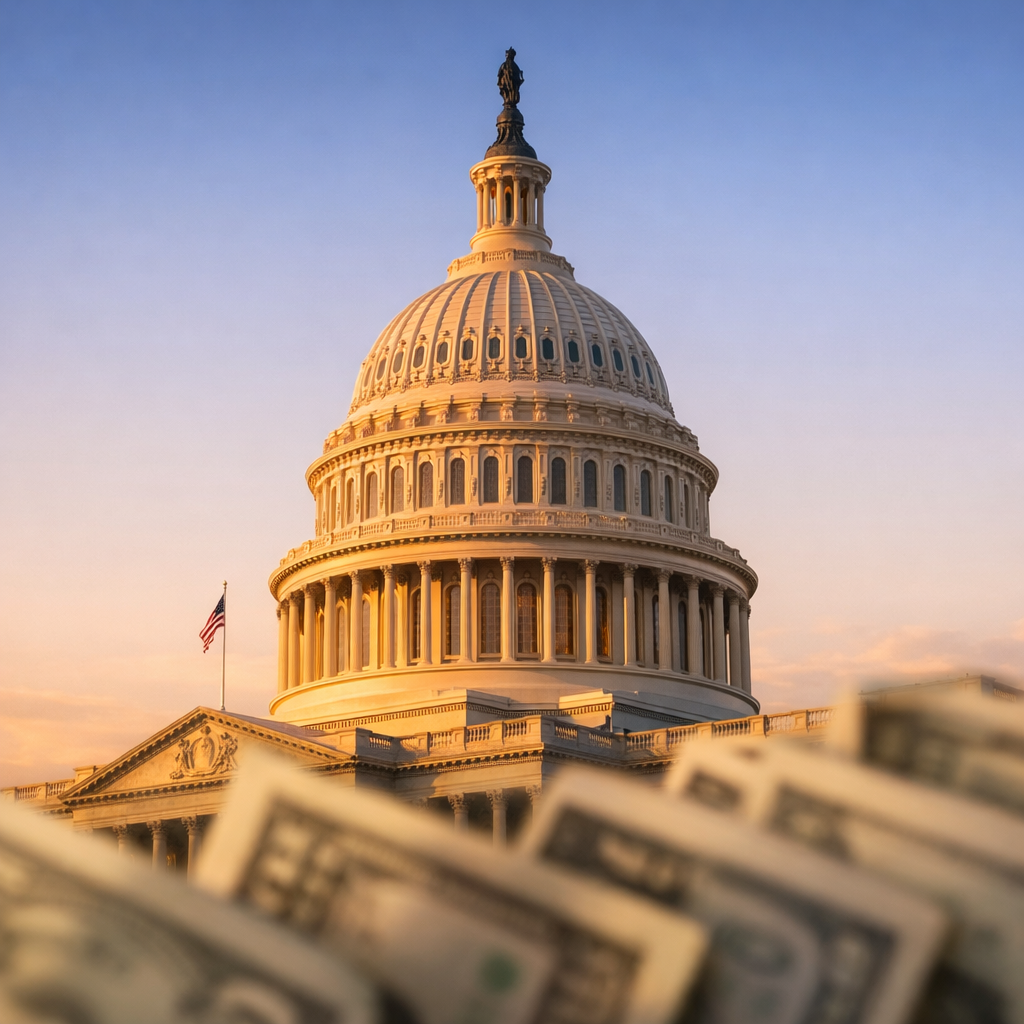
“Congress Can Bribe the Public With the Public’s Money”: What the Quote Means
The most common reading is a warning: a democracy risks fiscal trouble once elected officials realize they can win support by spending public funds — through benefits, subsidies, or tax breaks — without fully accounting for the long-term cost. The line endures because the tension it describes, short-term political rewards versus long-term fiscal responsibility, never really goes away.
Did Alexis de Tocqueville Actually Say It?
Probably not, at least not in these words. Tocqueville, the French author of Democracy in America who toured the United States in 1831, is the name most often attached to this quote, but the sentence does not appear in his published works and is widely regarded by historians as apocryphal. Variations have circulated in American political writing since the mid-twentieth century. You can explore his actual ideas through Britannica’s overview of Tocqueville.
Why It Still Resonates Today
Whoever first wrote it, the idea speaks to ongoing debates about government spending and the national debt. For context, see our plain-English explainer on the U.S. government debt crisis, a closer look at America’s escalating debt, and how leaders are responding through strategies targeting the national debt. You can also track the figure yourself through the U.S. Treasury’s national debt data.
Lessons for Your Own Finances
The quote’s real value for an individual is a reminder to look past short-term incentives. Markets and policy can be swayed by spending decisions, as covered in our piece on fiscal spending concerns and stock performance, and political messaging about money deserves the same skepticism you would apply to any too-good-to-be-true offer — including the tax scams Congress has warned about. Build your plan on durable fundamentals rather than promises.
Frequently Asked Questions
Who said “The American Republic will endure until the day Congress discovers that it can bribe the public with the public’s money”?
It is most often attributed to Alexis de Tocqueville, but the quote does not appear in his writings and is considered apocryphal. The true author is unknown, and the phrasing appears to have emerged in twentieth-century American commentary.
What does the quote mean?
It warns that a democracy can run into trouble once politicians learn they can secure votes by distributing public money. The underlying concern is fiscal discipline: spending aimed at short-term popularity can outpace what a government can sustainably afford.
Is the quote an accurate description of democracy?
It is a rhetorical caution rather than a proven law. It captures a genuine tension between democratic incentives and long-term budgeting, but economists disagree on how and when overspending actually becomes dangerous.