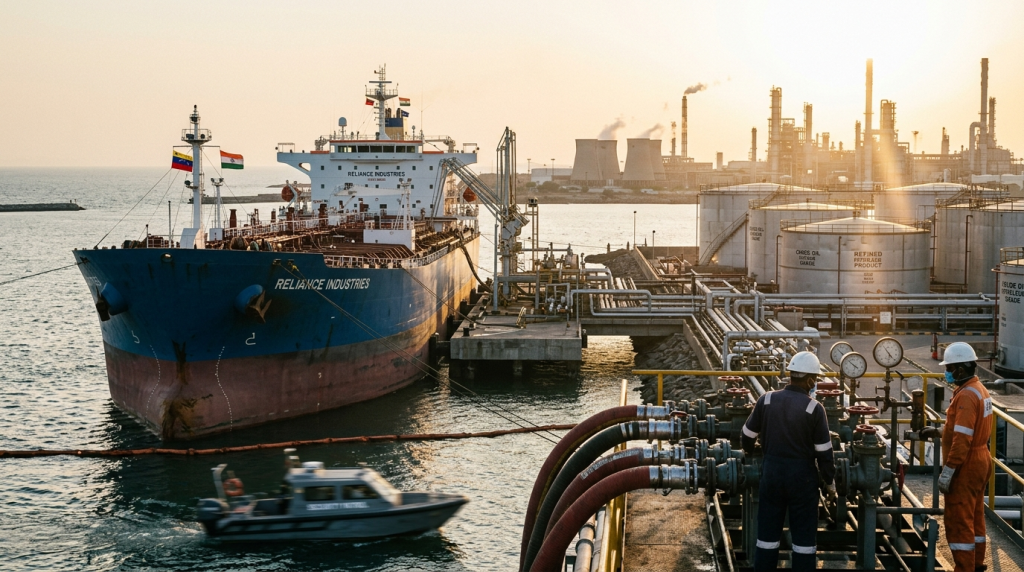
India has become the largest destination outside the United States for Venezuelan oil, with Reliance Industries buying most of those shipments. The trade gives Venezuela a major Asian customer while offering Indian refiners access to another source of heavy crude.
The purchasing pattern also places Reliance at the center of an oil trade shaped by sanctions, shifting government policies and price competition. Any change in trade rules could quickly alter shipment volumes and refinery plans.
Table of Contents
ToggleReliance Leads Indian Purchases
Reliance Industries accounts for the bulk of India’s Venezuelan oil purchases. That position makes the company a key commercial link between the two countries.
“Outside the U.S., India is the biggest destination for Venezuelan oil, with Reliance Industries purchasing the bulk of it.”
Venezuelan crude can suit refineries equipped to process heavier grades. Such oil often requires more treatment than lighter crude, so not every facility can handle it efficiently.
Reliance operates large refining assets and can process varied crude supplies. That flexibility allows the company to compare Venezuelan barrels with competing grades based on price, transport costs and product yields.
Why the Trade Matters
For Venezuela, access to large buyers is important because oil exports remain central to the national economy. India offers a major refining market with strong demand for imported crude.
For India, Venezuelan supply can support a broader purchasing strategy. Refiners generally seek multiple sources to limit exposure to disruptions in any single region.
- Venezuela gains access to a large overseas customer.
- Indian refiners add another potential source of heavy crude.
- Reliance strengthens its role as the main buyer in this trade.
- Policy changes remain a major risk for future shipments.
The United States remains an important reference point because India’s ranking applies to destinations outside the U.S. That distinction shows how a small group of markets can carry substantial weight for Venezuelan exports.
Sanctions Keep Trade Conditions Uncertain
Venezuelan oil sales have faced years of restrictions and licensing changes. Those rules affect which companies may buy crude, how payments are handled, and whether ships can obtain needed services.
As a result, commercial demand is only part of the calculation. Refiners must also consider legal approval, shipping arrangements, insurance and banking access before accepting cargoes.
This creates two competing forces. Attractive pricing may encourage purchases, while compliance risks may limit them. A cargo can look appealing on paper, then become far less attractive once lawyers and freight planners get involved.
What Comes Next
Future volumes will depend on government policy and refinery economics. If permissions remain available and prices stay competitive, India could retain its position as Venezuela’s leading market outside the United States.
If restrictions tighten, Reliance and other refiners may shift to alternative heavy crude suppliers. Venezuela would then need to redirect barrels or offer stronger discounts to maintain sales.
The central fact is clear: India now plays a major role in Venezuela’s external oil trade, and Reliance drives most of that relationship. The next signal will come from shipment data, purchasing decisions and any new sanctions guidance.
Those developments will show whether the trade becomes a steady route or remains vulnerable to policy swings. For now, Venezuelan oil has found a significant Indian customer, but politics still holds a hand near the tap.
Image: Pexels