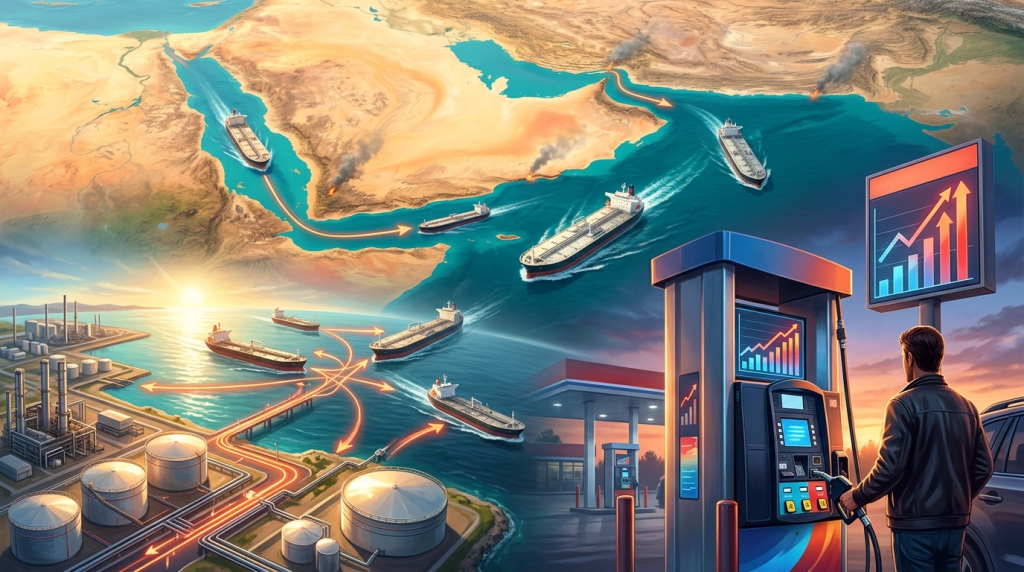
Oil routes through the Middle East can shape what American drivers pay for gasoline. Disruptions near the Strait of Hormuz, Yemen, or the Red Sea may increase shipping costs and market anxiety. Yet no single military event determines fuel prices. The size, duration, and verified impact of any disruption matter most.
I am Taylor Sohns, CEO of LifeGoal Wealth Advisors, a Certified Investment Management Analyst and Certified Financial Planner. From an investment perspective, the key question isn’t just what happened; it’s what continues to happen and what happens next. The Federal Reserve decisions are in the mix; we saw that last week. We must also ask how much oil stopped moving, how long the interruption may last, and whether other routes can absorb the loss.
Table of Contents
ToggleTwo Strategic Shipping Routes Matter
The Strait of Hormuz connects the Persian Gulf with the Gulf of Oman and the Arabian Sea. It is one of the most important oil transit points on Earth. Saudi Arabia, Iraq, Kuwait, the United Arab Emirates, Qatar, and Iran rely on it to varying degrees.
A major disruption there could affect millions of barrels of petroleum shipments each day. Even the threat of closure can influence global prices. Traders may bid up oil because they expect tighter supplies or higher transportation costs.
The second route runs from the Red Sea through the Bab el-Mandeb strait, near Yemen and Djibouti. Ships using this passage can continue through the Suez Canal or the SUMED pipeline in Egypt. This provides a shorter connection between Asian, Middle Eastern, and European markets.
If ships avoid the Bab el-Mandeb, many must travel around Africa’s Cape of Good Hope. That detour takes more time and fuel. It also reduces the number of trips each tanker can complete during a given period.
- The Strait of Hormuz is a major exit route for Persian Gulf energy exports.
- The Bab el-Mandeb links the Red Sea with the Gulf of Aden.
- The Suez route saves time compared with sailing around southern Africa.
- Longer voyages can raise freight, insurance, fuel, and staffing costs.
These routes are related, but they are not interchangeable in every case. Pipeline capacity, port access, tanker availability, and each cargo’s destination all affect whether oil can be redirected.
View this post on Instagram
Who Are the Houthis?
The Houthis, also known as Ansar Allah, are an armed political movement based in Yemen. They control Yemen’s capital, Sana’a, and much of the country’s populated northwest. Iran has provided the group with political and military support.
The movement’s official slogan includes hostile language directed at the United States and Israel. Its forces have used missiles, drones, and armed boats in attacks tied to regional conflicts.
Houthi attacks on commercial vessels have caused many shipping companies to avoid the southern Red Sea. Naval patrols have attempted to protect traffic, but the threat of attack can still alter shipping decisions.
Control of coastal territory does not automatically mean every vessel is blocked. A true closure must be measured through verified shipping data, port activity, tanker movements, and confirmed production changes.
Markets react to headlines quickly, but lasting price changes depend on barrels, routes, and time.
That distinction is important. Reports of an offensive or a territorial gain may create an immediate oil-price reaction. The longer-term effect depends on whether tankers stop sailing and whether export volumes decline.
Saudi Arabia Has Alternatives, but Limits Remain
Saudi Arabia exports large amounts of crude oil and petroleum products. Much of that trade has historically moved through the Strait of Hormuz. The country also operates an east-west pipeline to the Red Sea coast.
The pipeline can move crude from production areas in the east to facilities near Yanbu in the west. This gives Saudi Arabia another option if Persian Gulf shipping faces severe trouble.
Still, a pipeline is not an unlimited substitute. It has a fixed capacity. Maintenance requirements, storage limits, port operations, and available tankers can restrict how much oil reaches customers.
Red Sea security also affects the usefulness of western export terminals. If tankers cannot safely sail south through the Bab el-Mandeb, they may need to travel north. From there, they could use Egyptian infrastructure or continue through the Suez Canal, subject to vessel size and commercial conditions.
Some cargoes could take longer routes. Others might be exchanged through trading arrangements. These steps help, but they can add cost and delay.
Why Gasoline Prices May Rise
American gasoline prices are influenced by global crude oil prices. Crude is usually the largest part of the retail cost of gasoline. A sustained rise in oil can therefore reach fuel stations, although the timing varies.
Refining costs also matter. Refineries must buy suitable crude, process it, and deliver finished products through pipelines, ships, trucks, and storage terminals. Regional fuel rules and refinery outages can create additional price differences.
Taxes and retail margins account for other portions of the pump price. Seasonal demand is also relevant. Gasoline use often increases during summer travel, while refineries switch fuel blends at certain times of year.
A Middle East disruption can affect prices through several channels:
- Traders may raise crude prices because future supplies appear less secure.
- Tanker owners may charge more for voyages through risky waters.
- Marine insurers may increase premiums or restrict coverage.
- Longer routes may tighten the supply of available ships.
- Refiners may pay more to replace delayed or unavailable cargoes.
These effects do not always arrive at the pump at once. Some refiners own inventory purchased at earlier prices. Fuel stations also face local competition, which can slow or speed price changes.
Claims of a Full Closure Need Verification
Statements that Iran has cut off the Strait of Hormuz, or that the Houthis have fully stopped Red Sea oil traffic, describe extreme conditions. Such claims should be confirmed through several independent sources.
Useful evidence includes vessel-tracking records, official port notices, energy agency reports, company disclosures, and confirmed changes in export volumes. Military statements alone may not show the full commercial effect.
A route can face serious danger without being completely closed. Some ships may continue under naval protection. Others may pause, change course, or demand higher payments before sailing.
This difference affects price forecasts. A short interruption may create a temporary spike. A prolonged loss of several million barrels per day could produce a much larger economic shock.
I would watch five indicators before concluding that high gasoline prices must persist:
- Actual oil export volumes from Persian Gulf producers
- Tanker traffic through Hormuz and the Bab el-Mandeb
- Saudi pipeline and Red Sea terminal activity
- Global commercial inventories and emergency reserves
- Changes in crude oil futures and shipping insurance rates
What Governments and Markets Can Do
The United States, Saudi Arabia, and their partners have several possible responses. Naval forces can escort ships or target launch systems that threaten commercial traffic. Diplomats can also seek agreements that reduce attacks.
Oil-producing countries may increase output if they have spare capacity. Governments can release oil from strategic reserves during a severe supply emergency. Refineries and traders can seek cargoes from the Americas, Africa, or other producers.
Each response has limits. Military action may increase regional tension. Spare production may not match the quality or location of lost barrels. Strategic reserves can ease a shortage, but they cannot replace normal trade forever.
Demand can also adjust. Higher prices may reduce discretionary driving, air travel, and industrial fuel use. That response usually takes time and may arrive only after households and companies feel financial pressure.
What Investors and Households Should Consider
Energy shocks can push inflation higher because transportation affects many products and services. Airlines, delivery companies, manufacturers, and farmers all use fuel. Some businesses can pass added costs to customers, while others must accept lower profit margins.
For investors, one dramatic headline should not replace a long-term financial plan. Oil prices can reverse quickly after diplomatic progress, restored shipping, weaker demand, or increased production.
A diversified portfolio should account for many economic outcomes. Making a large investment bet based only on a regional conflict can add risk at the wrong time.
Households may benefit from practical steps instead. Reviewing travel plans, combining errands, maintaining proper tire pressure, and building room in the monthly budget can soften the effect of higher fuel costs.
The central lesson is straightforward. Trouble near Hormuz or Yemen can raise oil and gasoline prices, especially if multiple routes face pressure at once. However, territorial control and threatening statements do not prove that all oil movement has stopped.
Watch confirmed export volumes rather than relying only on alarming claims. If physical supplies remain restricted for an extended period, drivers should expect continued price pressure. If routes reopen quickly, much of the risk premium could fade.
Frequently Asked Questions
Q: Why does a conflict near Yemen affect gasoline in the United States?
Oil is traded through a global market. Shipping threats can raise crude prices, freight charges, and insurance costs. American refiners and drivers may then pay more even if domestic oil production remains steady.
Q: Can Saudi Arabia avoid the Strait of Hormuz?
Saudi Arabia can send some crude through its east-west pipeline to Red Sea facilities. Capacity and security limits mean this route may not replace every disrupted shipment.
Q: Does a shipping attack guarantee higher gas prices?
No. The effect depends on how much oil is delayed, how long the disruption lasts, and whether producers or governments replace the missing supply. Short incidents may cause only temporary price changes.