Many people think building wealth is about discipline, intelligence, or hustle. But after years of hitting invisible plateaus in business and investing, I realized it wasn’t a lack of effort that was holding me back, but a fundamental misunderstanding of how I work.
I realized that after taking the Kolbe A Index. Unlike traditional personality tests like Myers-Briggs or DISC, which measure emotional traits or social styles, the Kolbe Index measures how you instinctively take action.
By learning your creative profile, you can discover both your operational superpowers and your financial blind spots. As soon as you stop fighting your natural wiring and start working with it, growing a business and accumulating wealth becomes a lot easier and faster.
The Four Kolbe Action Modes
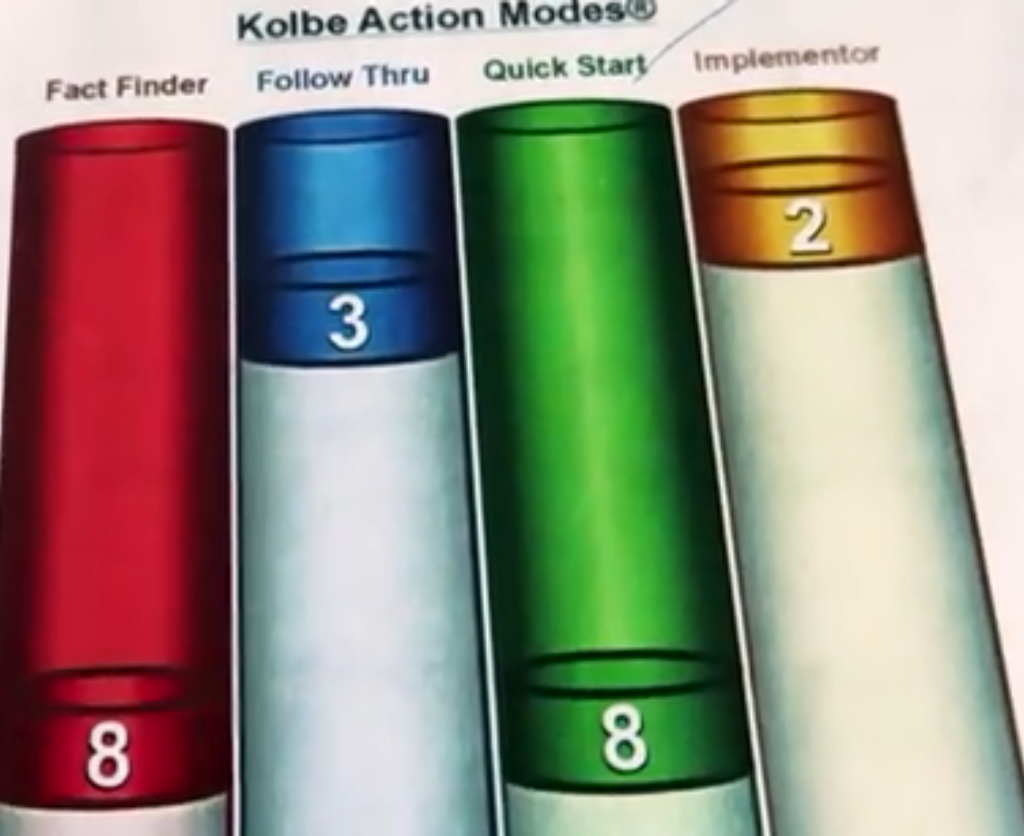
According to the Kolbe Index, problem-solving styles fall into four categories, ranging from 1 to 10:
- Fact Finder: How you collect and share information. If you score high, you love research, details, and data before deciding.
- Follow Through: The way you organize and store information. When you score high, you love structure, systems, and procedures.
- Quick Start: The way you deal with risk and uncertainty. High scores suggest you thrive on big ideas, innovation, change, and rapid response.
- Implementer: The way you handle space, physical objects, and concrete materials. The higher your score, the more you enjoy working with your hands or constructing physical solutions.
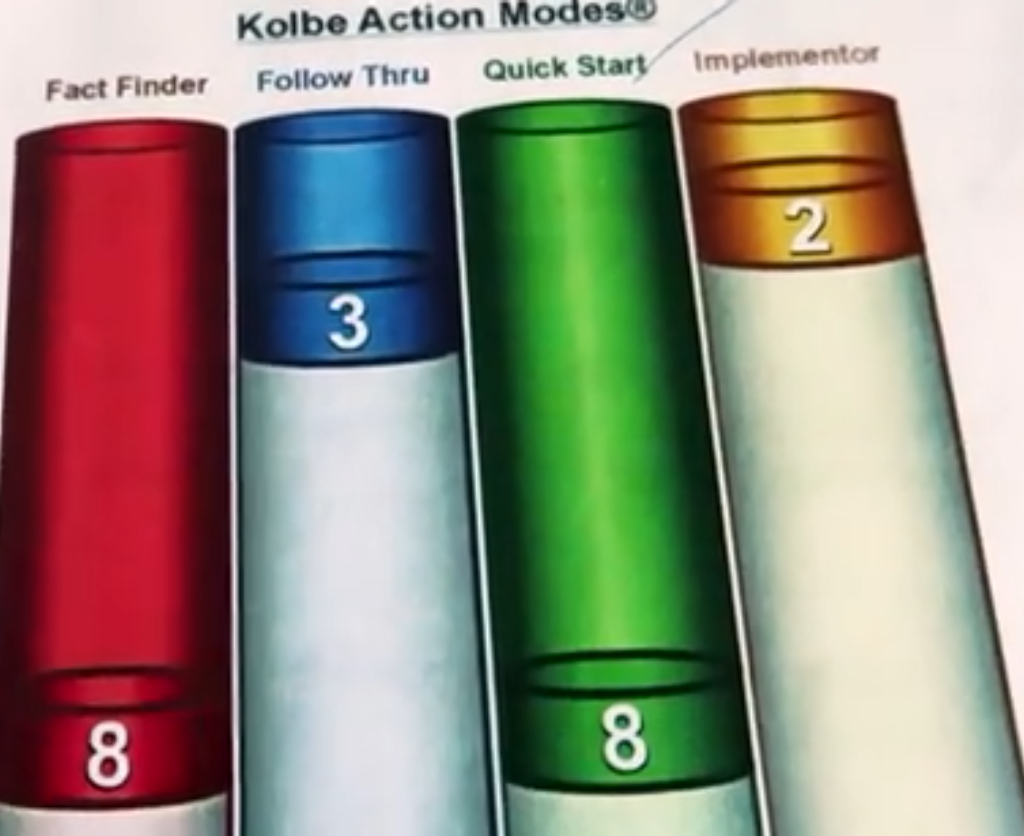
When I received my scores, the mirror held nothing back:
| Kolbe Category | My Score | What It Means |
| Fact Finder | 8 | Deep researcher, needs background data and thorough analysis |
| Quick Start | 8 | Big-idea creator, thrives on risk, constant new concepts |
| Follow Through | 3 | Struggles with routine execution, rigid schedules, and project completion |
| Implementer | 2 | Hates building physical tools, manual setup, or intricate workflows |
The Anatomy of a High Quick Start / High Fact Finder
My entire career suddenly made sense when I saw those numbers.
As a former Certified Financial Planner (CFP®), my 8 in Fact Finder was a superpower when advising clients. In addition to researching every detail, I compared every investment vehicle and ensured my recommendations were solid.
Still, trying to combine the 8 Fact Finder with the 8 Quick Start was a dangerous mix: Analysis Paralysis mixed with Shiny-Object Syndrome.
My Quick Start brain would yell, “Hey! Look at this incredible new business model! Let’s buy every course, read every book, and launch it tomorrow!” Meanwhile, my Fact Finder brain would jump in and say, “Hold on, we need to read 400 articles and listen to 50 podcast episodes before we touch a thing.”
The result? Without ever taking any meaningful action, I spent endless hours consuming information, buying shiny products, and spinning my wheels.
Even worse? My 3 in Follow Through meant that whenever I did start a project, I got 80% done, got bored by the routine execution, and abandoned it for the next shiny idea. Using my 2 in Implementer to build administrative processes? Pure torture. If I had to map out a manual workflow, I would probably be in tears.
The Turnaround: How to Use Your Wiring to Build Wealth

When you can’t execute on your ideas and hate building processes, how can you scale a business?
Instead of fighting your wiring, you learn to work with it. To make my profile an accelerated wealth engine, I made the following adjustments:
Filter your ideas.
Having 100 big ideas before breakfast makes you a Quick Start. The problem is that you only have 24 hours in a day. Rather than acting on impulses or investing in every new tool, enter your ideas into an “Idea Vault” database. You can leave them there. If an idea still aligns with your overarching goals weeks later, and you have the bandwidth, consider taking action.
Set an “information cap.”
As a Fact Finder, you must realize that knowing everything does not mean anything unless you put it into action. At some point, 70% certainty is enough. Cap your research, rely on your baseline knowledge, and force yourself to act.
Delegate your weaknesses.
This was the ultimate game-changer. As soon as I accepted that project follow-through and workflow building drained me, I stopped trying to do them well. To complement my profile, I hired people with a similar background.
My ideal team member, partner, or executive assistant scores high on Follow Through and Implementer. They excel at implementing operational systems, meeting deadlines, and turning half-baked ideas into reality. What drains my battery actually energizes theirs.
Applying Your Profile Outside of Business
Beyond making money, knowing your action mode can save your personal life too.
Take my marriage, for example. In the past, I’d come home to my wife full of Quick Start excitement: “Hey, what if we bought an RV, sold the house, and moved to Montana?!”
In her mind, I would be planning something for tomorrow morning, which would stress her out completely. Honestly, I was just spitballing ideas. Once I realized how my brain operates, I learned to filter those thoughts or preface them with: “This is just a fun Quick Start idea, not an actual plan!”
Know Yourself, Build Wealth
The key to sustainable financial growth isn’t to bend yourself to fit someone else’s rigid formula. If you force a High Quick Start to perform repetitive administrative tasks, they will burn out. You shouldn’t expect a low Fact Finder to make high-stakes investments without data, or they’ll risk everything blindly.
Your success depends on your ability to master your own action modes:
- Fact Finders: Set limits on your research so you don’t get paralyzed by gathering data.
- Follow Throughs: Build repeatable cash-flow automation systems.
- Quick Starts: Work with executors who can turn your vision into a scalable reality.
- Implementers: Focus on tangible asset creation and hands-on solutions.
By aligning your daily habits with your instincts, wealth-building becomes repeatable, not an uphill struggle.