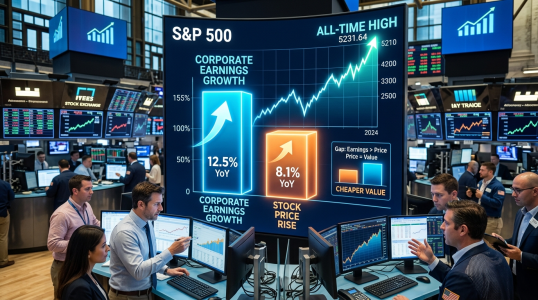
The S&P 500 has surged 14% in about forty days. That kind of speed grabs attention. It should also spark caution. I am seeing a signal that once again sits at the heart of how stocks are priced: inflation expectations. As CEO of LifeGoal Wealth Advisors and as a CIMA and CFP professional, I spend a lot of time watching the indicators that set the tone for interest rates, valuations, and corporate profits. One of the most telling measures is the five-year breakeven inflation rate. It is climbing fast, and it is already near the level we saw in mid-2022. That period did not end well for risk assets.
“There’s a silent killer behind the scenes, inflation.”
Table of Contents
ToggleThe Signal That Moves Markets: Five-Year Breakevens
The five-year breakeven inflation rate is the market’s best guess for average inflation over the next five years. It comes from the difference between yields on regular Treasury notes and Treasury Inflation-Protected Securities (TIPS). If the gap widens, it means investors expect higher inflation.
Today, that breakeven sits around 2.7%. For context, in June 2022, when headline inflation hit 9.1% year-over-year, the five-year breakeven was 2.8%. We are nearly back to that same neighborhood. Prices are not rising by 9% now, but markets expect hotter inflation than earlier this year. That matters because expectations drive interest rates, which drive valuations and borrowing costs.
Breakevens are not some obscure gauge. They feed into how the bond market prices risk. They link directly to the yields that companies and households pay. Higher expected inflation often pulls longer-term yields up or keeps them elevated, even if the Federal Reserve pauses. When that happens, the discount rate used to value future earnings rises, which tends to pressure stock prices, especially in growth-heavy areas.
View this post on Instagram
Why Rising Expectations Hit Stocks
Stocks do not live in a vacuum. They are sensitive to both the level and the direction of interest rates. When inflation expectations rise, bond investors demand higher yields to protect purchasing power. That can push rates higher, even without new Fed hikes. Higher rates reduce the present value of future cash flows. They also lift the hurdle rate for new projects.
There is an added wrinkle today. Many companies are racing to build out artificial intelligence infrastructure. That means big capital spending on data centers, chips, power, and software. Some of that is paid with cash flow. A lot of it is financed. As the cost of debt rises, the math on these projects gets tighter. Margins feel the pinch. Timelines stretch. The market is pricing in aggressive growth from AI. A step up in financing costs can make those growth paths harder to hit.
I am not calling for doom. I am reminding investors that valuation and financing conditions matter. When the market climbs 14% in forty days, the bar rises. It leaves less room for error if inflation reaccelerates or if rates stay higher for longer than expected.
Lessons From 2021 and 2022
Late 2021 felt easy. Liquidity was abundant. Stocks levitated. Many investors leaned into momentum because it worked. Then the warning lights started blinking. Inflation expectations rose. The Fed pivoted. Yields jumped. Valuation multiples compressed. The S&P 500 fell, and high-duration assets took the brunt of it.
What is similar now is the message from breakevens. We are not at a crisis point, but the direction is concerning. In 2022, the five-year breakeven sat near today’s level while realized inflation was raging. That episode reminds us that expectations can move quickly and that equities react before the economic data catches up.
“If you’re looking for a reason to be a little more cautious, here it is.”
Key Takeaways Right Now
- The five-year breakeven is ~2.7%. That is near the 2.8% level from June 2022.
- Stocks are sensitive to rates. Rising inflation expectations can lift yields and pressure valuations.
- AI buildouts need capital. Higher borrowing costs can squeeze returns on large projects.
- Big rallies raise risk. A 14% surge in forty days leaves less margin for bad news.
- Be alert, not alarmed. Position with discipline rather than swinging to extremes.
How This Flows Through the Market
Think about the market in three links: expectations, rates, and earnings.
First, expectations. When investors expect higher inflation, they price it into bonds. That shows up in breakevens, yield curves, and term premiums.
Second, rates. Higher inflation expectations often nudge long-term yields higher. Even if the Fed stands pat for a while, the back end of the curve can rise on its own as buyers demand more compensation for inflation risk.
Third, earnings. Higher rates hit stocks in two ways. They reduce the value of future cash flows. They also raise actual interest expense for companies that borrow. Both can compress profit margins and weigh on multiples.
Growth-heavy sectors tend to be more rate-sensitive because much of their value lies in profits years out. AI winners have strong stories and strong demand, but that cash flow is still in the future for many names. As the discount rate climbs, those future dollars are worth a bit less today. Small changes in the discount rate can have a large effect on present value.
What I’m Watching Now
I track a short list of indicators to gauge the path ahead. They are not perfect. They are useful.
The five-year and ten-year breakevens. If they keep pushing higher, pressure on long-term yields likely persists.
Real yields on TIPS. Higher real yields raise the true hurdle rate for projects, even if inflation stays steady.
Wage growth and unit labor costs. Labor is a major input for service inflation. Slowing wage gains would help the outlook.
Shelter inflation momentum. As lease renewals filter through, a cool-down here would relieve pressure.
Fed funds futures. Markets sometimes pull forward or push out rate cuts. That repricing can move stocks quickly.
Credit spreads. Wider spreads mean tighter conditions for lower-quality borrowers. That often foreshadows slower growth.
Practical Steps for Investors
Prudence does not mean panic. It means tilting a portfolio toward resilience while keeping a plan intact. These are the steps I favor in this setup.
Revisit risk levels. If equity exposure crept higher during the rally, trim it back to the target. Use strength to rebalance, not weakness.
Upgrade quality. Favor companies with strong free cash flow, modest leverage, and pricing power. Those traits help protect margins when financing costs rise.
Stress test assumptions. If you hold AI beneficiaries, run the math with a higher discount rate and slightly slower growth. Make sure the thesis still works.
Ladder short-term Treasuries. T-bills and short-duration bonds offer attractive yields. A ladder can provide a steady income and dry powder for future opportunities.
Stagger entries. If adding to stocks, consider dollar-cost averaging. It reduces timing risk in an uncertain rate path.
Mind taxes and costs. High turnover can hurt returns. Favor tax-aware moves and efficient vehicles.
What Could Go Right
There is a fair case for a better path. If supply chains keep healing, shelter costs ease, and wage growth cools without job losses, inflation can drift lower — consistent with inflation’s return to target. If productivity from new technology offsets wage pressure, companies can protect margins even with higher pay. If inflation expectations stabilize near current levels, yields can settle, and equity markets can digest recent gains without a major reset.
Healthy earnings growth would also help. If top-line growth holds and margins prove resilient, multiples do not need to carry the full load. In that case, even a moderate pullback would be a pause rather than the start of a deeper slide.
How I’m Framing Risk Today
I look at risk in terms of asymmetry. After a rapid 14% climb, upside over the next few months may be smaller than the potential drawdown if inflation expectations continue to rise. That does not call for an exit. It calls for a measured stance. Maintain core exposure. Trim excess. Keep some cash-like assets that pay a real yield. Be selective with new positions.
In short, respect the tape, but respect the math more. Rates still matter. Debt still matters. Expectations can shift faster than headlines. As we learned in 2022, the turn can come when “it feels too easy.”
“When the market’s up 14% in forty days and it feels too easy, just remember, 2021 felt too easy as well.”
The bigger message is simple. Inflation expectations are the quiet gear that turns the whole machine. When they rise, they tug on rates. When rates rise, they tug on valuations and profits. You do not need to predict the exact path to prepare for it. Keep your plan clear and your guard up.
If you are looking for a reason to be more careful, you have one. If the five-year breakeven cools from here, risk assets can breathe easier. If it pushes higher, expect more chop and a tougher road for the most rate-sensitive parts of the market. Either way, staying disciplined beats chasing what just ran.
Frequently Asked Questions
Q: What is the five-year breakeven, and where can I see it?
The five-year breakeven is the market’s inflation outlook over the next five years. It is the gap between five-year Treasury and five-year TIPS yields. You can track it on Federal Reserve data pages, market terminals, or financial news sites that publish TIPS spreads.
Q: How do higher rates affect AI-focused companies?
Many AI projects require significant investment in data centers and chips. If borrowing costs rise, expected returns fall, and timelines can extend. Higher discount rates also reduce the present value of long-dated cash flows, which can pressure valuations even if demand stays strong.
Q: Should I move to cash if inflation expectations rise?
A full shift to cash is rarely necessary. A better approach is to rebalance toward your target mix, hold some short-term Treasuries for income and flexibility, and focus on quality businesses. Diversification and steady entries can help manage timing risk while still participating in growth.
Image Credit: Markus Winkler; Pexels