When it comes to small business accounting, most people know that it is important to keep your records updated for taxes. However, there are many more benefits from small business accounting that you can use to grow, improve, and expand your business. Here are some of the most important accounting reports for your small business that you should know about.
Profit and loss statement/income statement
The most important report for any business is the profit and loss statement, also called a P&L or income statement. This report tells you how much money a business makes, and a lot more. A well-run bookkeeping operation includes details for where you spend and where your money comes from. For example, I can look at my P&L for a quick summary of how much I make from writing, how much I make from advertising, how much I spend on business travel, and how much I pay for computer and internet costs. Each business would have different accounts for its own income and spending categories.
Small business owners should look at this report at least monthly. It is also a good idea to look at trends, comparing current results to the same period in the prior year and comparing the most recent month with the last few months. This should tell you what’s working well, what isn’t, and help you focus on the most profitable parts of the business. This is exactly how I analyzed by business to help me reach $10,000+ in monthly income.
Balance sheet
A balance sheet gives you a snapshot of what a business has and owes at any given time. For small businesses, assets typically include things like bank accounts, accounts receivables, and possibly an investment account. A balance sheet may also include assets like property, computers, equipment, and other saleable physical and intangible property. Liabilities generally include things like credit cards, business loans, and anything else your business owes.
The accounting equation is based on the balance sheet. It tells us that Assets + Liabilities = Equity. The difference in what you have and what you owe should ideally be a positive number and one that grows over time.
When examining the balance sheet, also look at the short-term assets versus short-term liabilities. If you have payments owed soon, you won’t want to run out of cash without noticing that your assets are illiquid.
Accounts receivable aging
You don’t work for free, and your business isn’t a charity. Doing the work and sending the invoice is just part of the battle. You also have to make sure those payments get paid and collected. Your accounts receivable aging report tells you how well you are doing on the collections side. Look out for customers who are perpetually late, usually pay on time and recently started paying late, and growing late balances from any customer.
I’ve been very lucky when it comes to collections, but part of that is choosing the right clients to work with. Upstanding companies like Due always pay quickly. Some less stable, less trustworthy, and companies with financial strain are more likely to pay late or stiff you when it comes time to pay the bill.
Revenue by customer
Just as you should be looking at who owes you money, you should be looking at who gives you the most of it. Your revenue by customer report tells you how much you made from each customer over a period of time. Freelancers and professional service businesses rely heavily on repeat business in many industries. Building good relationships with quality clients can turn in to a lucrative, reliable, and healthy income stream.
However, beware of putting too much faith in any one income source. If too much revenue comes from one source, that is called “revenue concentration risk.” If one client leaving would ruin your entire business, you need to get more diverse in who your business serves. Putting too many eggs in one basket might just bankrupt your company.
Accounts payable aging
You probably wouldn’t like it if a company took too long to pay you. Do your vendors a favor and pay them on time as well. Your Accounts payable aging report tells you who you owe and how much. As long as your books are updated, you can easily look and find who you need to pay so you don’t miss the due dates.
Paying late can sour relationships and may lead to late fees and other costs. Just pay on time. You might even get an early payment discount from some vendors. That’s a big win-win!
Related Reading: Keep cleaner books by pairing your reports with online invoicing software.
The Most Important Accounting Reports for Small Business: A Quick Guide
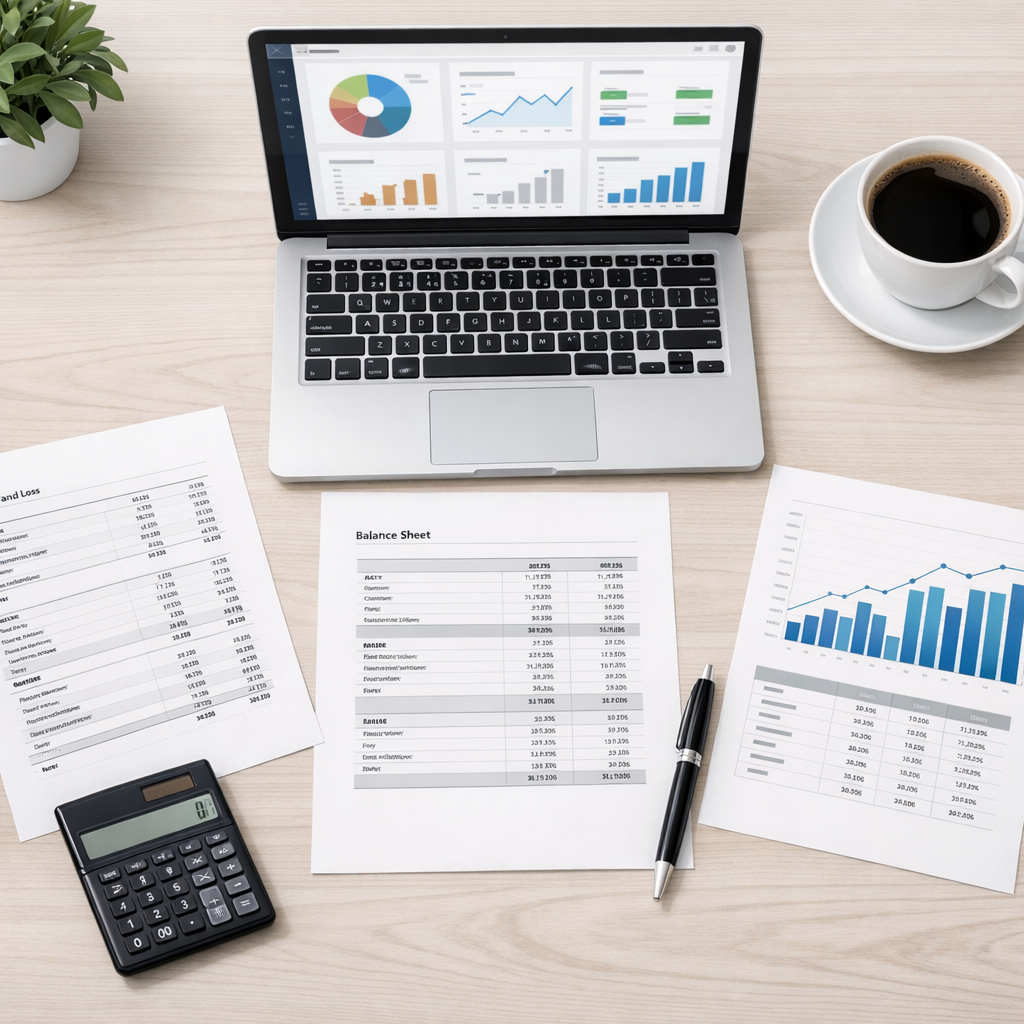
Strong financial decisions start with a handful of reports that, read together, tell the full story of your business. The profit and loss statement shows whether you are making money, the balance sheet shows what you own versus what you owe, and the two aging reports (receivables and payables) keep your cash flow on track. Layering in a revenue-by-customer view helps you spot concentration risk before it becomes a problem. You do not need a finance degree to use these reports, just a habit of reviewing them on a regular schedule.
Due To vs. Due From Accounts: What They Mean
Business owners often search for “due to” and “due from” accounts when they first see these terms on a report. In accounting, a due from account is an asset that tracks money owed to your business by another entity (for example, a related company or a division), while a due to account is a liability that tracks money your business owes to another entity. They are mirror images of each other and are most common when a company runs multiple entities or divisions and needs to record intercompany balances. For most single-entity small businesses, these show up as ordinary accounts receivable and accounts payable instead.
How Often Should You Review Each Report?
Review your profit and loss statement and cash position at least monthly, and compare each month against prior periods to catch trends early. Check your accounts receivable aging weekly during busy seasons so late-paying customers do not quietly drain your cash. Pair these habits with strong billing practices — see our tips for effective invoicing — and a simple framework to manage cash flow anxiety so you stay in control. As you scale, watch for the challenges of a fast-growing company and protect your accounts with the right fraud management tools.
Key Takeaways
The five reports that matter most for small businesses are the profit and loss statement, the balance sheet, the accounts receivable aging report, revenue by customer, and the accounts payable aging report. Reviewed consistently, they reveal profitability, solvency, collection problems, customer concentration, and upcoming obligations. Keep your books current so the numbers are trustworthy, and the reports will do the heavy lifting. For authoritative background, the IRS small business recordkeeping guidance covers what records to keep, and Investopedia’s overview of financial statements explains how the core reports fit together.
Frequently Asked Questions
What are the most important accounting reports for a small business?
The five most important are the profit and loss statement, the balance sheet, the accounts receivable aging report, the revenue-by-customer report, and the accounts payable aging report. Together they show whether you are profitable, what you own and owe, who is paying late, where your revenue concentrates, and what bills are coming due.
What does “due to” and “due from” mean in accounting?
A “due from” account is an asset recording money owed to your business by another entity, and a “due to” account is a liability recording money your business owes to another entity. They are commonly used to track intercompany balances between related companies or divisions and always mirror each other.
How often should a small business run financial reports?
Run and review your profit and loss statement and balance sheet at least monthly, and check your receivables aging weekly when cash flow is tight. Frequent reviews help you spot problems early, compare trends over time, and make informed decisions rather than reacting after the fact.
Related Reading: Keep up with market and industry trends using the best news apps for business owners.
Related Reading: Clean records help you avoid having your tax refund frozen over a return mismatch.
Related Reading: Pair clean reports with the right software—see 11 must-have fintech tools for small business.